
Skip to content

You could say he was born to run with a high school career in cross country that is hard to beat.

On this episode of the Supercast, meet Jackson Spencer who was recently named the National Gatorade Player of the Year in Boys Cross Country. Find out what sets Spencer apart from others in his sport, and how his love for running is paving a path for future success, possibly in the Olympics.


Audio Transcription

Anthony Godfrey:
You are the first in Jordan School District.

Jackson Spencer:
I think it's pretty awesome just to be able to bring another level of excellence into this school district.

Anthony Godfrey:
How much do you run in a week?

Jackson Spencer:
In a week, at this point, probably around 50. Fifty miles a week.

Anthony Godfrey:
Fifty miles a week.

Jackson Spencer:
Yeah. I just like the feeling of pushing that body to the fastest limits.

[Music]

Anthony Godfrey
Hello and welcome to The Supercast. I'm your host, Superintendent Anthony Godfrey. You could say he was born to run with a high school career in cross country that is hard to beat. On this episode of The Supercast, meet Herriman High School's Jackson Spencer, who was recently named the National Gatorade Player of the Year in Boys Cross Country. Find out what sets Spencer apart from others in his sport, and how his love for running is paving a path for future success, quite possibly in the Olympics.

[Music]

Anthony Godfrey
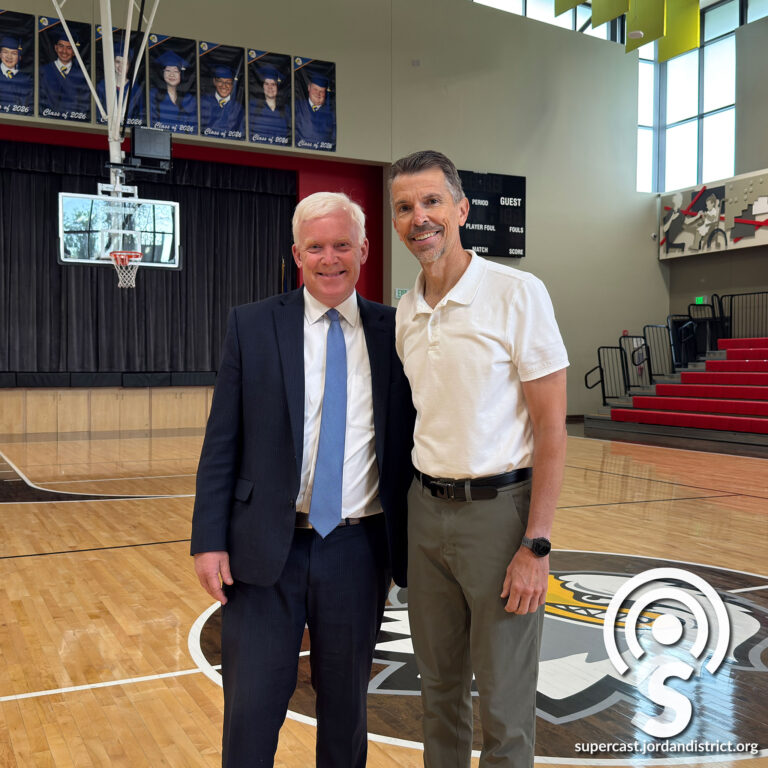
We are here today at Herriman High School talking with Jackson Spencer, the Gatorade National Boys Cross Country Player of the Year. Jackson, thanks for taking a few minutes to talk with us.

Jackson Spencer:
Of course, yeah. Thanks for having me.

Anthony Godfrey
Tell me what it feels like to be the National Gatorade Player of the Year. You are the first in Jordan School District.

Jackson Spencer:
I think it's pretty awesome just to be able to bring another level of excellence into this school district, and to be able to set the bar just a little bit higher.

Anthony Godfrey:
Now, you had a race just this last weekend where you conquered once again. Talk to us about that.

Jackson Spencer:
Yeah, it was super fun. I was up against a lot of good competition from Utah and Idaho, and it's at the Simplot Games, which I really like. But yeah, it was kind of a race for me to just see back into what fitness I was in. I think it actually went really nicely, way better than I expected, so it went well.

Anthony Godfrey:
So how did it go better? Just ultimate time? I know with cross country it's always about the course and the course conditions, and the competition and all of that. Talk us through the race a little bit.

Jackson Spencer:
The time, I think it's more about time on the track. Yeah, I put down a consistent solid effort, and I was able to go out and hold it, which I'm really happy about. I got a really good time better than what I was expecting.

Anthony Godfrey:
Could you see the people behind you coming in second, or how far ahead? What were you?

Jackson Spencer:
Well, after I finished, I looked back and saw them coming in.

Anthony Godfrey:
So you had a good little distance between you and the next kids down the road. What do you do to prepare for a race? What do you do to be at your best and be ready to go?

Jackson Spencer:
I'll make sure to get a really good night's sleep for 9 to 10 hours, and then I'll make sure I eat. I always eat oatmeal, and then I'll do this thing that I'll drink. It's called beetroot powder. I drink that, and it's better. It's good for oxygen consumption in the blood.

Anthony Godfrey:
Beetroot powder?

Jackson Spencer:
Yeah, beetroot powder. Its got lots of nitrates.

Anthony Godfrey:
I've seen the Tik Tok videos, but you're much more persuasive. So you do beetroot powder, oatmeal, and 9 to 10 hours of sleep. Is it ever hard to make sure you get that sleep if you're anticipating a race and thinking it through, or are you well trained at getting good rest as well?

Jackson Spencer:
I've been to a few of these races, but there's definitely some times when it's just I get too excited to go to sleep, but most of the time I can get some good rest. After that, I will eat my lunch, and then I've got my race.

Anthony Godfrey:
Now, the Gatorade Award, does that include having blue Gatorade dumped on top of you when I give you the trophy?

Jackson Spencer:
I'm really glad that they didn't do that.

Anthony Godfrey:
Well, you probably could have run very quickly and gotten away from them after trying to do that. Tell me about receiving the award. You received it from an Olympic runner.

Jackson Spencer:
Yeah, Grant Fisher. I think, if I'm not mistaken, he held a world record in the 3K, which is really cool. Or it might have been the 2-mile.

Anthony Godfrey:
You have your eye on the Olympics, I assume.

Jackson Spencer:
Of course.

Anthony Godfrey:
And talk to us about the timeline for that. How will that work for you?

Jackson Spencer:
Yeah. So I'm going to be going on a mission after I graduate high school. So yeah, that'll be two years. And then the first Olympic cycle, there'll be an Olympic cycle literally right off of my mission, which I don't think I'll make just because I'll be on a lack of training and of experience as well.

Anthony Godfrey:
I mean, if you stay with your companion, you can only run as fast as he can run. So that's going to slow you down significantly.

Jackson Spencer:
A little bit.

Anthony Godfrey:
So there will be the opportunity right after your mission, potentially.

Jackson Spencer:
And then there's the way more realistic opportunity right after college four years later. I think that's 2032 Olympics. Yeah, I'm going to be shooting for those ones. That'll be right after I graduate college.

Anthony Godfrey:
And age-wise and timing-wise, is that about the right time for you to be competing?

Jackson Spencer:
Yeah, I think I'd be 24.

Anthony Godfrey:
So for those runners out there, talk to me about the different events that you compete in with track and with cross-country and the different distances and where you're really at your best.

Jackson Spencer:
So I can do a lot of different distances, or at least I've done a lot of different distances, anywhere from like the 400 all the way up to the, I've done the 8K for a race so far. So I'll start small, like the 400, that's a sprint event. That's one lap around the track. I only do it usually in relays when my team needs me. 48.6 for that. I got the 800, that one is, that's a two-lap race. It's a sprint, but it's like really a hard to maintain sprint. So yeah, you get two, I already said that, two laps on the track. And then I usually do that one for some open and then also lots of relays. And then my time for that is 149.9. Then I got the mile or like the 1600. It's more common, 1600 in high school. That's four laps around the track. That's the one where everyone tries to break four. And my time in that right now is four flat.

Anthony Godfrey:
Four flat. So is that your goal to cut it right below four?

Jackson Spencer:
Yeah, sure.

Anthony Godfrey:
Have you ever done that outside of competition?

Jackson Spencer:
Oh no, only in, see, up at altitude it's a lot harder to run that fast. My best time was down at sea level where there's more oxygen in the air to consume. So yeah, I train up here so it's really hard to do such a thing. But we'll see maybe this year.

Anthony Godfrey:
Maybe this year. I like your chances. So being in Utah, the thin air really prepares you so that when you're at sea level, you're at your best.

Jackson Spencer:
Yeah.

Anthony Godfrey:
And so your goal is under four at the 1600. Is 1600 the same as a mile? I

Jackson Spencer:
The mile is about eight meters longer so it's like a second. My best mile is 4:02.

Anthony Godfrey:
Okay. Close.

Jackson Spencer:
Yeah, and then I got the 3200 which is, that's eight laps around the track. That's pretty much like a long-distance event or, yeah, it's long distance to me at least. And then that was...

Anthony Godfrey:
And what's your time for eight laps?

Jackson Spencer:
8:50 that I actually just got at Simplot. That was my personal best.

Anthony Godfrey:
Wow.

Jackson Spencer:
Yeah.

Anthony Godfrey:
And any time you're racing, you're racing against the other people on the track or on the course, but you're also trying for your best time ever, right? Your personal best.

Jackson Spencer:
Yeah, and then, so 5K, I've only done that... Well, on track I've only done that a few times, but my best on the track is 14:15. That's like... I did it on an indoor track so that's actually 25 laps.

Anthony Godfrey:
25 laps?

Jackson Spencer:
On a normal track it's 12 and a half.

Anthony Godfrey:
Okay.

Jackson Spencer:
And then in cross country my best, I did it on the California State course. I did 14:16. I actually took the record.

Anthony Godfrey:
So really it's, am I beating the people that are on the track? Am I earning a personal best and am I breaking the record?

Jackson Spencer:
Yeah.

Anthony Godfrey:
Really you've got a lot of different times you're racing against. I'm getting a little short of breath just listening to these times and listening to these distances. It's pretty incredible. When did you first realize that you were a talented runner?

Jackson Spencer:
I'd say sixth grade when I started out. I did it. I was really small, but I was competing against...

Anthony Godfrey:
Was it like a three-legged race and you're like, "Hey, if we didn't have the sack and this kid tied to me, I think I could do really well."

Jackson Spencer:
No, it was just a normal cross-country race. So, yeah, it was in the middle school from... I lived in Massachusetts at the time, so the middle school was six to eight. I was this little kid going against all these big kids and we had a time trial that was the first day of running. I got seventh on their team. I was like, "I want to stay on this. I want to race varsity." I was super excited to start running.

Anthony Godfrey:
So as a sixth grader, what grade were the other kids you were racing with?

Jackson Spencer:
Anywhere from six to eight, but I think the ones that I was racing were seventh and eighth.

Anthony Godfrey:
So you saw, "Hey, wait a minute. I'm pretty good at this and I want to keep doing it." What do you love most about running?

Jackson Spencer:
I just like the feeling of pushing my body past its limits, honestly. That's my favorite part.

Anthony Godfrey:
How much do you run in a week?

Jackson Spencer:
In a week? At this point, probably around 50 miles a week.

Anthony Godfrey:
50 miles a week?

Jackson Spencer:
Yeah.

Anthony Godfrey:
Does that vary depending on whether you've got a competition? Do you lower that in advance of a competition or how do you pace that out?

Jackson Spencer:
We actually raised it a couple of weeks before the competition. We'll go up to 60, maybe even 70, but then we'll go down the week of the competition to 50 to 40.

Anthony Godfrey:
I never run over 70 miles a week. I always keep it below 70.

Jackson Spencer:
Yeah, that's fair. I've never ran over 70, I don't think.

Anthony Godfrey:
Yeah, that's my policy as well. Just better for me not to run over 70.

[Music]

Anthony Godfrey:
Stick around. When we come back, we will talk with cross-country sensation Jackson Spencer about his future plans.

[Music]

Male Voice:
Never miss an episode of The Supercast by liking and subscribing on your favorite podcasting platform. Find transcripts for this episode and others at supercast.jordandistrict.org.

[Music]

Sandy Riesgraf:
Hello, I'm Sandy Riesgraf, Director of Communications for Jordan School District, and we want to invite you to connect with us. So many exciting things are happening in your child's school, your neighbor's school, in every school here every day. Don't miss out on following the fun or simply staying informed when there's important information we need to share. Join us at jordandistrict.org or follow us on Facebook, Twitter, and Instagram @jordandistrict. We can't wait to connect.

[Music]

Anthony Godfrey:
Tell me what you prefer. You've got outdoor cross-country courses, indoor track, outdoor track. Where do you really enjoy running the most?

Jackson Spencer:
It's a mix up between indoor and outdoor. Or no, not indoor and cross-country Yeah, I really, really like cross-country just because of the freeness you get while running on the cross-country course. And then I also really like indoor track because it's got such a big ambiance. Everyone's yelling at you and it's so loud and it's just so fun to run through it.

Anthony Godfrey:
Does that impact your running when you know people are cheering for you and you can hear them in the background?

Jackson Spencer:
Yeah, if you're on the verge of a record and you hear people cheering for you, it just makes it so much easier to go and makes it so much more motivating to go after it.

Anthony Godfrey:
Yeah, that's exciting. Tell me about your parents, how, either of them runners or...

Jackson Spencer:
No, but my dad was a really good swimmer in high school. I think he only did it his freshman year or maybe his sophomore year, but he really enjoyed it just because he liked swimming. He was always really good in the time trials as well. He was one of the top guys on the team as a freshman. And then he moved and his new swimmers weren't so nice to him, so he kind of stopped that. But then, yeah, I think he's able to see what he could have done through me, so it's really cool.

Anthony Godfrey:
Yeah, that's exciting. And you have to get up a lot earlier as a swimmer than you do as a runner. What's your routine? Do you run in the morning and evening or how does that work?

Jackson Spencer:
Yeah, I do run twice a day usually. I'll wake up at around seven-ish to go run and then I'll go to school and then I'll come back and then run at three.

Anthony Godfrey:
I understand that you have a scholarship to Brigham Young University coming up. What made you choose Brigham Young?

Jackson Spencer:
Well, first of all, I was actually born in Provo, so yeah, that's kind of my hometown college. They have a really good coach and a really good program and lots of good kids going there.

Anthony Godfrey:
I hear they're top ten a lot of the time.

Jackson Spencer:
Oh, yeah, definitely up there.

Anthony Godfrey:
And you know and like the coach?

Jackson Spencer:
Yeah, Eyestone is a great guy.

Anthony Godfrey:
I'm sure he's very excited to have you come.

Jackson Spencer:
Yeah, I hope so.

Anthony Godfrey:
And so you have BYU coming up, Olympic ambitions. What does the rest of the year hold for you?

Jackson Spencer:
In terms of like racing?

Anthony Godfrey:
Yeah.

Jackson Spencer:
I should be at, so my next race will be New Balance Indoor Nationals. And then, yeah, I'll do the 5K there and then I'll do my big races. It'll probably be Arcadia Invite. I'll probably do the 3200 there and then the Portland Jesuit Nike invite. I don't know what it's called, but that's kind of what it's called. And then I'll try to break four in a mile there if that's what Coach will let me do. And then, yeah, I think my next big one will be New Balance Outdoor Nationals. So those are kind of my big meets that I'll be going to.

Anthony Godfrey:
On top of all that, you have a high GPA. School's going great. It's very impressive that you're able to juggle everything and keep everything going.

Jackson Spencer:
Yeah, thanks.

Anthony Godfrey:
What kind of career are you looking at?

Jackson Spencer:
I'm really interested in architecture, actually. So I think it's really neat to... Ever since I was a little kid, I always found it neat to see how houses were built and how they were designed. And that's just kind of been my passion. So even though it's kind of hard work, I'll try and pursue it.

Anthony Godfrey:
Yeah, that's great. That's exciting. And you'll get to drive by and say, "I helped build that. I designed that." Well, we're thrilled to have you in Jordan and really proud of your success and I can't wait to see what comes next. So thank you very much for taking time with us. I know you've got to run. Okay, I just had to say that. And get to class. But we really appreciate your time. And like I said, very proud of all your accomplishments. Keep up the great work.

Jackson Spencer:
Of course. Thank you.

[Music]

Anthony Godfrey:
Thanks for joining us on another episode of the Supercast. Remember, “Education is the most important thing you will do today.” We'll see you out there.

[Music]


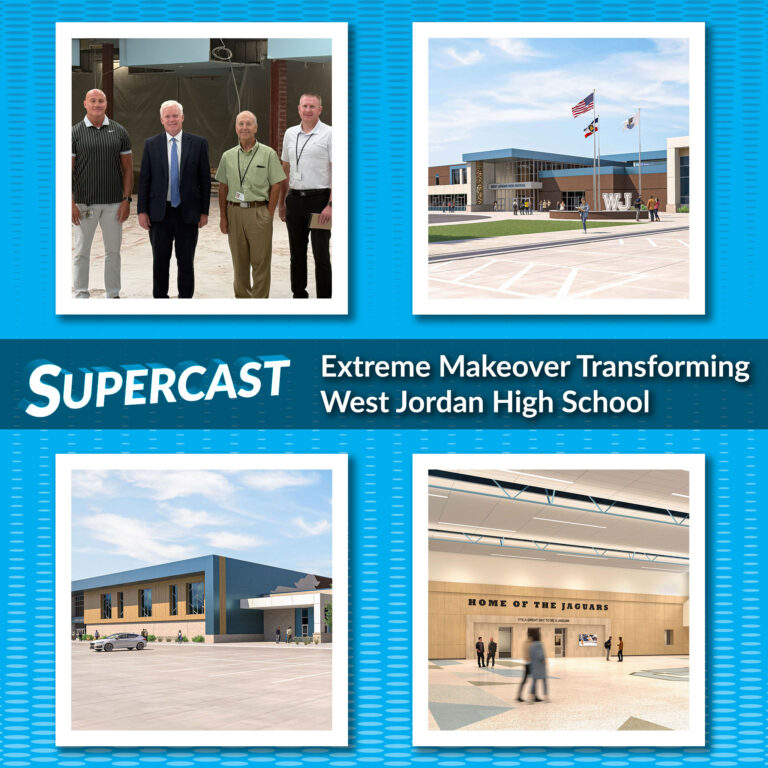
Something really cool is happening in classrooms at Oak Leaf Elementary School these days. Older students are stepping up and leading by example, proving to everyone that life is better with books.

On this episode of the Supercast, meet some sixth-graders who are taking their love for literacy to the kindergarten classroom. They are reading to younger kids as part of the Planet Kindergarten literacy program.


Audio Transcription

Jennifer Ballard:
I've taught for 12 or 13 years now and this has been the biggest breakthrough with kids' reading.

Student:
I like at the end when they feel so like accomplished of finishing a book or something.

Jennifer Ballard:
The kids all take care of each other better. They look out for each other.

Student:
And I love to see how much they improve throughout the year.

Student:
Sometimes when they're like with a friend, they like point at you and say, "Oh my gosh I know him!"

[music]

Anthony Godfrey:
Hello and welcome to the Supercast. I'm your host, Superintendent Anthony Godfrey. Something really cool is happening in classrooms at Oak Leaf Elementary School these days. Older students are stepping up and leading by example, proving to everyone that life is better with books. On this episode of the Supercast, meet some sixth graders who are taking their love for literacy to the kindergarten classroom. They are reading with younger students as part of the Planet Kindergarten literacy program.

[music]

Anthony Godfrey:
We're here at Oak Leaf Elementary School talking with Jennifer Ballard, one of the kindergarten teachers. Talk to us a little bit about this program of having sixth graders read with kindergartners.

Jennifer Ballard:
So this year we started doing Planet Kindergarten that was a pretty cool idea and concept from the Jordan School District literacy department, specifically the kindergarten specialists. And at first we were a little bit nervous because it's a big undertaking, but the program that they've set out is incredible. And we have so many of our students, almost a hundred percent, that have mastered all their letters and sounds, and they did that by November 1st.

Anthony Godfrey:
And all their letters and sounds by November 1st is really a benchmark where we say if you can get there before November, then it really sets you on a good path for the rest of the year.

Jennifer Ballard:
Absolutely. We are learning how to read and write CVC words, blends, and digraphs and we can't do any of that without knowing our letters and sounds.

Anthony Godfrey:
Describe what it looks like when sixth graders are helping kindergartners reach this goal because Planet Kindergarten is something that's happening in elementary schools throughout Jordan School District, but this is the first I've heard of sixth graders being involved in helping kindergartners reach that goal. So tell me what that looks like.

Jennifer Ballard:
So we have a couple time slots through the day that we have students coming down to read with our kindergartners and it is almost all sixth graders, but we do actually have students as young as third grade coming to help our kids read. And so the student council has really taken on the biggest piece of it and they come every day before lunch. At the beginning it was just practicing letters, and kids would go out in the hall with letter flashcards, they would learn letters and their sounds, and as they passed those off, they advanced into reading whole words and then reading in decodable text, which is amazing.

Anthony Godfrey:
Tell me, so do the sixth graders feel the sense of accomplishment as well? I assume that they do, and the student they're working with has a breakthrough.

Jennifer Ballard:
They do. It's really cute because they'll come in afterwards and I won't ask them for feedback on how the kids did, but I have several sixth graders come back to me and say, “Oh my gosh, they're getting so good at this” and they're so proud of them and really all the grades that come to help with them just feel really excited. I've even had several come back and tell me that that's their favorite part of the day is coming to read with our kindergarten students.

Anthony Godfrey:
So third through sixth graders coming to read with the kindergartners, how does that change the motivation for kindergartners? How long have you been teaching and what difference have you seen from years where you haven't had those older students helping?

Jennifer Ballard:
I feel like this year was monumental with that. I've never seen collective efficacy on such a grand scale before where we all had this goal, and it wasn't just teachers having a goal for kids, but the kids had the goal themselves, and now other kids have that goal for them. So we would announce that on Morning News. We talked about it a lot, and everybody just got excited about it. I've taught for 12 or 13 years. I've lost track but 12 or 13 years now and this has been the biggest breakthrough with kids reading.

Anthony Godfrey:
I assume that this is something that will continue for a long time now that you've seen the results.

Jennifer Ballard:
Yes, it absolutely will continue, and we're planning to keep it going all through the rest of this year, not just ending at letters and sounds but with reading books.

Anthony Godfrey:
What has the social impact been on just the culture of the school, with having older students involved with the younger students, because there's a lot of separation in elementary school? You don't always run into each other. You have separate playgrounds, separate lunchtimes. What has it done for unifying the school?

Jennifer Ballard:
I feel like the kids all take care of each other better. They look out for each other. I have little ones on the way to rotations, but the big kids will come and give them high fives and hugs, and they know their names. That's really cute, and when we take them out to the bus area, we get a little nervous to leave our kindergartners, but these big kids they just love them, and they've got them, and they take really good care of them.

Anthony Godfrey:
So there's a sense of belonging in both directions. The younger students have third through sixth graders to look up to and connect with, and the sixth and third graders, sixth through third graders feel this sense of responsibility to the younger students, it sounds like. I think this is tremendous. I think it's amazing.

Jennifer Ballard:
Yeah, it's been a really awesome thing at our school, and I feel like our school has always been really well connected, but this has connected us even more, and it's really cool to see the oldest kids looking out for the youngest ones and wanting them to be successful.

Anthony Godfrey:
Where did the idea come from? Where did this start?

Jennifer Ballard:
We were trying to decide in PLCs how to go about this goal because it did seem like a lofty goal and we knew we could attain it but we needed the right resources. So I believe it was our assistant principal Toni Lasater who had the idea and then we all talked about all the admin, our coach, the whole kindergarten team and it really just kind of steamrolled from, “well maybe it could be the student council that comes to read with them,” and then it evolved into, “well I bet even other grades would want to come read,” and soon enough teachers were telling us their kids were really working hard to come read with kindergarten.

Anthony Godfrey:
Did they need to earn that by working in their own class and making sure they're caught up before they could step away to help kindergartners?

Jennifer Ballard:
Yes, some teachers did use it as incentive. If they did a good job in class and got all their work done and if they were respectful and kind, then they got to come read with the kids.

Anthony Godfrey:
What a cool idea. Well, congratulations on a great program and a huge impact and I'm excited to see where this goes.

Jennifer Ballard:
We're really grateful for all the support from our whole staff because it does take time from upper grades. I know they have a lot of academics they need to cover, but we, as kindergarten teachers, are especially grateful to everyone who has helped out other teachers, aides, parents. It's been all-encompassing at our school.

Anthony Godfrey:
And everyone will benefit as those kindergartners who have the help of older students come up through the grades.

Jennifer Ballard:
Yes absolutely.

Anthony Godfrey:
It's going to have a cumulative ongoing effect, so thank you.

[music]

Anthony Godfrey:
Stay with us. When we come back a conversation with the sixth-grade students who really are book ambassadors.

Male Voice:
Never miss an episode of the Supercast by liking and subscribing on your favorite podcasting platform. Find transcripts for this episode and others at supercast.jordandistrict.org.

Female Voice:
Does your child need the flexibility to learn from anywhere at any time, on a cruise in another country, or simply at home cozy on the couch? The Jordan Virtual Learning Academy is tailor-made for you and your family. It's personalized dynamic virtual learning on your schedule. The Jordan Virtual Learning Academy is an integrated system of three schools in Jordan School District. Rocky Peak Virtual Elementary School, Kelsey Peak Virtual Middle School, and King's Peak High School. Our programs are designed to meet or exceed district and state core curriculum standards, ensuring your child receives a superior educational experience tailored to their needs. Join us today at jordanvirtual.org.

Anthony Godfrey:
We're talking now with the student council at Oak Leaf Elementary about their experience helping kindergartners reach their reading goals. Tell me your name and tell me what you loved most about reading with kindergartners.

Student:
My name is Sadie Mills and I like, because the kindergartners are always so happy and energetic.

Anthony Godfrey:
Have you lost that now in sixth grade?

Student:
It's really fun because they're just little.

Student:
I'm a Stacey Lucero and I love to see how much they improve throughout the year.

Student:
I'm Addie Bennett and I like to see all their happy faces and get to know each one of them better.

Student:
I'm Sadie Fichelos and I like at the end when they feel so like accomplished of finishing a book or something.

Student:
I'm Hayden Sandovich and I like it because we're preparing their future.

Student:
I'm Lydia Smith and I really like to like get excited for them when they finish their words or like letters.

Student:
I'm Stockton Robbins and I like when like it's like we get built-in friends kind of and we get to relate or we get to spend time with our kindergartners.

Student:
I'm Michael Sandoval and my favorite part is when they do a good job, you give them a high five, and they're just smiling. It's awesome.

Student:
My name is Cameron McBride and my favorite part is probably what I hear that their favorite part of the day is to come see us.

Student:
I'm Zae Vyric and I love to see their little cute faces.

Student:
I'm Ryker Bayless and I love seeing how independent they've become on reading.

Anthony Godfrey:
I heard that they now recognize you they see you in the hall and they kind of wave like, “oh I'm cool. I kind of know one of the older kids.” Tell me about that.

Student:
So the other day I was at the playground and a kindergartner came up to me and gave me the biggest hug and said, “thank you so much for helping me.”

Anthony Godfrey:
That's awesome. I love that.

Student:
I think it can be kind of the same thing but for us knowing the kindergartners. I've recognized a few of the kindergartners that I relate with so I just hope that they recognize me too.

Student:
I don't know I think it's just pretty cool to just walk down the hall and see him like come over and smile and like sometimes when they're like with a friend they like point at you and say, “oh my gosh, I know him.” It's so cool.

Anthony Godfrey:
You guys are celebrities.

Student:
Well I have a little kindergartner who's my neighbor and from this she now recognizes me and whenever I see her out and about she always comes up and hugs me.

Anthony Godfrey:
So now she says hello to you in the wild outside of the school. Now are all you guys in sixth grade?

Student:
Yes.

Anthony Godfrey:
They're gonna miss you next year big time. You'll have to come back and see the first graders how much they've grown up, right? And next year you're going to be seventh graders so you'll be basically the kindergartners of middle school so you'll hope that the ninth graders are saying hi to you. Tell me, did you know very many kindergartners before this before you participated in this program?

Student:
Not really. Well I really only like from last year, I knew my little sister and a few other kids because she was in kindergarten. So were her friends, but I've really not known a lot like kindergartners.

Student:
Um, I knew a couple because they're some of my friends’ little brothers and sisters.

Student:
I didn't really know any kindergartners and it was like kind of like scary going in you're like, “oh, I gotta like help the kindergartners,” and I didn't know how to help but it's like they know their words and like it's fun seeing them in the halls and be like, “oh I know them” and like yeah.

Anthony Godfrey:
So tell me what do you love most about either Oak Leaf or being in sixth grade?

Student:
So about Oak Leaf, at my old school we used to always have corn dogs for lunch. Like always, yeah, so this is a big improvement for lunch.

Anthony Godfrey:
And what's your favorite improvement at lunch? Orange chicken?

Student:
No, I like the macaroni they have.

Anthony Godfrey:
The macaroni okay. So do I.

Student:
It's very good.

Student:
Um I like to be in sixth grade because I feel like I get a lot of more opportunities and chances and I feel more like independent.

Anthony Godfrey:
Okay.

Student:
One thing about Oak Leaf was that at my old school um, I didn't know anyone. Like I didn't know any of the staff. I didn't know anybody in my class, but I now feel like we've been like engaging and I know everyone here.

Anthony Godfrey:
You're a part of things.

Student:
Um-hum.

Student:
I also feel the same as Addie like at my old school, I didn't really like know anyone. It felt like I was just trying to like make it through the day. But then now it feels like people are trying to like be inclusive of each other and the staff trying to like get to know you and people are trying to make the most of their day and like when you all do that, it kind of feels like you're like a family.

Student:
It's fun because you really get to know more of the teachers and staff and it just makes it like fun to come to school. The lunch choices are amazing and the teachers are great and just everything that it's awesome.

Anthony Godfrey:
That's fantastic! I love hearing that.

Student:
Um in Oak Leaf it's like super fun, especially since like I was mostly home-schooled, and so when I came back to school, it was honestly really refreshing because everyone's just super nice and really welcoming.

Student:
I love Oak Leaf because we're all so close together, and our PTA and staff go above and beyond for us. They will do whatever it takes for us to be happy.

Anthony Godfrey:
I can't see your principal right now, but I bet she's smiling back there.

Student:
I like Oak Leaf because in my old private school, we had to bring home lunches, and so big improvement to have a warm lunch.

Anthony Godfrey:
Okay.

Student:
One thing I really love about sixth grade is just being a part of student council. I love helping the younger grades, planning events like assemblies, family nights, and I love it.

Student:
I love Oak Leaf because everybody's a lot more loving. You get to know a lot more people here.

Student:
I don't know about the rest of my student council but how about Miss Hoffman and Miss Lasater? They're amazing they're always so welcoming, they always love to take in our ideas of student council and always just try to make us feel at home, which I know when I come here, I never want to go home.

Anthony Godfrey:
That's wonderful that's so exciting to hear how much you love your school and how much of a positive impact you're having here. What a wonderful job you're doing of making kindergartners feel connected and really making the whole school a place where people want to be. Thank you very much for taking time to talk with me today, and thanks for everything you're doing to help support kindergartners and the rest of the school. Have a great rest of the school year.

Students:
Thank you!

[music]

Anthony Godfrey:
Thanks for joining us on another episode of the Supercast. Remember, “Education is the most important thing you will do today!” We'll see you out there.
[music]

They are going about their days demonstrating the characteristics of Jordan School District’s “Portrait of a Graduate.”

On this episode of the Supercast, we head to Copper Canyon Elementary School where students are posing for pictures in their cap and gowns already thinking ahead to graduation. They are being recognized for their actions demonstrating the six characteristics of “Portrait of a Graduate.” At this celebration breakfast, students are being recognized for being a responsible teammate.


Audio Transcription

Bobbie Nixon:
It means the world to the students because the students just want to be acknowledged for things that they're good at and things that they want to be good at.

Anthony Godfrey:
What do you think it means to be a curious thinker?

Student:
I think it means to ask a lot of questions and I want to learn about everything I am.

[music]

Anthony Godfrey:
Hello and welcome to the Supercast. I'm your host, Superintendent Anthony Godfrey. They are already demonstrating the characteristics of Jordan School District's Portrait of a Graduate. On this episode of the Supercast, we head to Copper Canyon Elementary School, where students are posing for pictures in their caps and gowns, already thinking ahead to graduation. They are being recognized for their actions, demonstrating the six characteristics of Portrait of a Graduate. At this celebration breakfast, where parents and grandparents are invited, students are being recognized for being a responsible teammate this month and are recognized for every characteristic throughout the year. We invite you to listen and learn more about all six characteristics of Portrait of a Graduate.

[music]

Anthony Godfrey:
We're talking today with the principal of Copper Canyon Elementary, Bobbie Nixon. Bobbie, thanks for taking time with us.

Bobbie Nixon:
Hello, it's nice to be here with you.

Anthony Godfrey:
You have this great principal program where you give out awards that are based on Portrait of a Graduate, and I loved seeing those awards this morning. It was so fun to see parents, siblings, grandparents there supporting the kids who are getting the awards. As you've done this over the course of the year, before we get into the details, tell me about what this award has meant to the students who receive it and the families who come and support their students.

Bobbie Nixon:
It means the world to the students because the students just want to feel important, to be acknowledged for things that they're good at and things that they want to be good at.

Anthony Godfrey:
They want to be noticed that, hey, you're defining yourself in many ways in elementary school and it's exciting for them to be known for these characteristics that are included in Portrait of a Graduate. And for those listening, principals will often give out awards at elementary schools and a couple of our elementary schools are giving those awards based on Portrait of a Graduate characteristics. The Portrait of a Graduate was developed at the request of the Board of Education with lots of input from employees, students, and parents and with the help of an outside company to really focus on what we want students to be able to do, what characteristics and traits we want them to have as they graduate. And today you are honoring the responsible teammate characteristic that's a part of Portrait of a Graduate. Tell me about some of the students who received that and some of the things teachers had to say about that.

Bobbie Nixon:
So the students at Copper Canyon are incredible students, and one thing that I love is they do a lot of group work, and so they can find students who are good at teams, and we know so much in our jobs that if we can't team, we can't make it because we're better together.

Anthony Godfrey:

Right.

Bobbie Nixon:
So I love that some of the characteristics or some of the attributes that they were saying about the students, the teachers write what they see about the students who characterize that attribute. So some of the things I was hearing that they are easy to get along with, they listen to other people's opinions, they calm a situation down, and they take leadership when they need to.

Anthony Godfrey:
It feels to me like when a student is recognized for these great attributes and for trying to be a really good citizen to help other people, to be very curious and learn all they can, that once they're recognized for it then they really want to live up to it and they're even, they exemplify that characteristic even more than before.

Bobbie Nixon:
Yeah, that's true. They do. They know that it's known that they're doing that and they know that the other students know that they do that. So then they want to be that, and I think that maybe some of those things come naturally, and then some they'll even do it more now when they're in a group because they got that award. We try to do, one thing is we put a video out at the beginning of the year where the students role-play all of the Portrait of a Graduate characteristics. So you know if it's problem solving for example, they would role play some problem and then all the students in the building watch it. And so they know before the year begins what kind of things that they're, what it takes to be in each of the characteristics. And so when they get the award, it's like, “I did it!” But we try to give awards for lots of things and they have like several years to get some award but every student in Copper Canyon gets an award for something during the year. We have a theme award where it's “You've Got a Friend In Me” so they can be friends, or we have a principal's lunch, we have a math award, we have a Friday drawing, but everybody gets an award for something, recognized for something. But I think the Portrait of a Graduate is special, which is why we tried to make it special with the breakfast.

Anthony Godfrey:
Yes so it was and I failed to mention that it's an awards event, but it's also a breakfast, and I did see the bulletin board for You've Got a Friend In Me. You do a very nice job of creating that culture very intentionally and re-emphasizing it, and I love this idea of the video that shows positive examples of the sorts of things you're looking for so that students can win that award potentially on that particular characteristic of Portrait of a Graduate. So that's really exciting. I'll have to see some of those videos because it's really cool when students take responsibility for their own development, their own learning, and really strive to meet the expectations of the teacher, which we know is one of the best predictors of student success, but also to aspire to these characteristics that we've worked so hard to develop.

Bobbie Nixon:
I want to at the end of the year go full circle with the students by having all of the Portrait of a Graduate winners throughout the year, they're going to be on stage and be recognized by the rest of their peers. Because right now they're being recognized by their teachers, by us, by their parents but now they get to be it with the students and so we're working on getting enough graduation robes and to make it a special event for everybody to see and then they'll hopefully want to get it the next year.

Anthony Godfrey:
That's a really exciting next step recognized by your family and your teacher and then in front of your peers. That's a great next step. I love that. The characteristics of Portrait of a Graduate include resilient lifelong learner, curious thinker, empathetic communicator, engaged citizen, responsible teammate being highlighted today, and creative problem solver. Do any of those stand out as something that you remember a particular student or a particular award that was really particularly meaningful?

Bobbie Nixon:
So I feel like the Empathetic Communicator. We have an empathetic communicator and I just think the way this particular student puts things in his classroom is just one of those children everybody wants to be around, and he's nice, and he just is a way of wording things. He'll see you in the hall and he'll say, “hi, Mrs. Nixon.” and he'll give you a fist bump but all the other kids he just doesn't matter how young they are. He'll even open doors for you, and he just is just one of those empathetic people that understands. I've seen you know some kids in his class like that just don't fit in and he's the one that will always volunteer to be their partner or to be around them. He's just one of those kids.

Anthony Godfrey:
He's just wired that way.

Bobbie Nixon:
Yes and he's gonna leave he's a sixth grader.

Anthony Godfrey:
Oh he's a sixth grader

Bobbie Nixon:
Yes, he's a great kid.

Anthony Godfrey:
That's exciting. It sounds like he has a successful middle school experience ahead of him with that empathetic communicator characteristic in his backpack there. You do a lot with culture and you just recently had your lip sync contest, and that's something that involves all of your students. They all have an opportunity, and I've been able to see that in the past. I had to miss this one and it's really interesting to see students come alive as part of that performance, and you can sometimes tell the students who may not have chosen that first, but they really warm up on stage. How did this last event go last week?

Bobbie Nixon:
Oh it was so darling. It's such a winning event for the students. Miss Sherri Harrington she is our BTS person, and she puts so much time into choreography and taking the student that might not always be like the ham or the show person and finding that in them and they come out of their shells and they just do some amazing things. They think of the dances they want to do and the costumes they want to wear. Then they all sing to each other songs and our everybody in the building participates, so our teachers our lunch staff even our custodian who looks like Ed Sheeran. He looks just like him so the kids even think that he's like Ed Sheeran and he even sang an Ed Sheeran song with his guitar. Our lunch ladies sang “Raining Tacos” and all the kids sing with them. But and our our office staff gets involved. We just think it is a special event for every student.

Anthony Godfrey:
Well “Raining Tacos” sounds fantastic. I hope that's in the forecast at some point but I really what I noticed before and you mentioned, is just how inclusive it is; every student feels a part of it and because you're on stage with your whole class, you're able to be as outgoing as you choose to be. You can hide a little bit on stage if you need to but I remember pretty much every kid was right out there. They rehearsed, it was obvious they'd prepared and I think it's very memorable for students. So anyway, congratulations on creating these great programs for students really helping emphasize those positive behaviors and creating that sense of belonging for every student in your school. Thank you for everything you're doing.

Bobbie Nixon:
Thank you, it's a pleasure. The children make it a pleasure. They enrich my life and they just make it fun. The kids the kids are everything.

Anthony Godfrey:
Stay with us. When we come back, we'll hear from some of the students receiving awards from Copper Canyon Elementary School.

[music]

Male Voice:
Never miss an episode of the Supercast by liking and subscribing on your favorite podcasting platform. Find transcripts for this episode and others at supercast.jordandistrict.org.

Female Voice:
In Jordan School District we like to support students in and outside the classroom along with their families that's where the Jordan Family Education Center comes in offering support services and a wide variety of classes for students and their families free of charge. You can take a class called Blues Busters for children feeling sad or worried. Just Breathe is a class that helps students reduce stress or how about a class that supports parents in helping their children make and keep good friends. There are also support groups and free counseling all provided by Jordan School District School psychologists and counselors. To find out how you can benefit from free family support services offered by the Jordan Family Education Center, call 801-565-7442 or visit guidance.jordandistrict.org.

[music]

Anthony Godfrey:
We're talking with four students at Copper Canyon who have received awards for exhibiting the traits outlined in Portrait of a Graduate. They are great examples of these characteristics that we are trying to encourage. I'd like you to introduce yourself and then tell me about the award you received.

Student:
I'm Katie Barr. I'm in fifth grade, and I got the Resilient Lifelong Learner.

Anthony Godfrey:
Can I take this award from you and read this?

Student:
Yeah.

Anthony Godfrey:
Okay. “Katie is an excellent example of being resilient and a lifelong learner. She doesn't give up even when things are hard. She adapts and adjusts and finds new ways to work out a solution. She is constantly giving her best effort and never stops trying.” That's really awesome that you just keep trying, and do you think that's a good description of what you do at school? Do you love to learn?

Student:
Yeah.

Anthony Godfrey:
What do you love most about school?

Student:
I like people.

Anthony Godfrey:
You like people?

Student:
Yeah.

Anthony Godfrey:
Well, we've got a lot of those around, and you get to make a lot of friends and learn with them. That's really exciting. How did your parents feel when they learned that you got the Resilient Lifelong Learner award?

Student:
I think they like were like, “Oh, cool.”

Anthony Godfrey:
“That just seems like you. Of course Katie got that award.” Well, congratulations. I think it's fantastic and it's an award that shows you have great things ahead of you as well because you're going to keep learning. Tell us your name, what grade are you in and tell us about your award.

Student:
My name is Connor. I am in first grade and I got the Curious Thinker award.

Anthony Godfrey:
Can I take this award and read about you here?

Student:
Yeah.

Anthony Godfrey:
All right. “Connor is receiving the Curious Thinker award for his remarkable eagerness to ask thoughtful questions and explore new ideas. He approaches learning with genuine excitement, whether investigating a brand new topic or diving deeper into a familiar one. He brings energy, persistence and creativity to every inquiry. When our subject captures his interest, his passion shines. His curiosity and commitment to learning makes our classroom a more vibrant place for everyone to learn.” Connor, do you ask a lot of questions in class?

Student:
Yes.

Anthony Godfrey:
And you love to know the answers.

Student:
Yes.

Anthony Godfrey:
What do you think it means to be a curious thinker?

Student:
I think it means to ask a lot of thoughtful questions, and I want to learn about everything around me.

Anthony Godfrey:
And that's the key, thoughtful questions. Questions you really want to know the answer to and wanting to know about everything around you. That's really exciting. What's the favorite, what's your favorite subject? What do you like to learn about the most?

Student:
Science.

Anthony Godfrey:
Science. Do you want to be a scientist one day?

Student:
I want to be a mechanical engineer.

Anthony Godfrey:
A mechanical engineer. That's a really solid plan. I like that. And asking questions is really going to help get you there. That's wonderful. Thank you. What makes you want to be a mechanical engineer?

Student:
I watch this YouTube channel called Mark Rober and it inspired me to be one.

Anthony Godfrey:
What's it called?

Student:
Mark Rober.

Anthony Godfrey:
Is he the guy who created the glitter box that blew up on the front step and all that?

Student:
Yeah.

Anthony Godfrey:
He's got interesting stuff going. So mechanical engineer, I love that. All right, introduce yourself.

Student:
My name is Santana and I'm in sixth grade.

Anthony Godfrey:
You're the person who's getting the award today.

Student:
I'm getting the Responsible Teammate award.

Anthony Godfrey:
And why do you think you're getting the Responsible Teammate award?

Student:
Because I do my share of work, I enjoy helping others and I make sure my team works well together.

Anthony Godfrey:
That's a really important role that you're playing in your class. Can I read this? “Santana, you are a great teammate and peer. You work well with everyone around you. Not only do you take care of your part, but you are not afraid to help others out around you. You consistently step up to help your classmates when needed. Your kindness is seen by everyone around you. We are lucky to have you in our class.” That's really cool. That's awesome. Were you surprised to get this or do you kind of know, you know what, “I really do try to help my teammates.”

Student:
Yeah, I was like that. I was like, I really do try to help my teammates.

Anthony Godfrey:
That makes a big difference. That really makes you a leader in your school. Tell me about the satisfaction you get from helping other people.

Student:
It makes me kind of happy when I know that they're included and I know they're doing their share of work and they're getting farther and farther.

Anthony Godfrey:
Helping everyone be at their best. That's how I view my job as well. So, what do you want to be?

Student:
I want to be a football player.

Anthony Godfrey:
A football player. Well, responsible teammate can help get you there. Which position?

Student:
I want to be a quarterback.

Anthony Godfrey:
All right. That sounds good. Right at the center of it all. Well, good luck with everything, and being responsible teammate has got you on that path. Tell me your name.

Student:
My name is Bailey, and I'm in fourth grade.

Anthony Godfrey:
And what's your award?

Student:
I’m an Empathetic Communicator.

Anthony Godfrey:
What are some of the things that you've done to earn this award of Empathetic Communicator?

Student:
I include everyone and try to help them with whatever they need.

Anthony Godfrey:
Can I read your award here? “Bailey is such an amazing student and wonderful addition to our class. She has such a big, tender, loving heart. She cares very deeply for others. It doesn't matter if they are her best friends or not. She's still kind and considerate of their feelings. She will include everyone and try to help them with whatever they need. Bailey is so thoughtful and kind in every situation.” What a nice award. Tell me about how it feels when you help other people and help them feel good because you've looked out for them.

Student:
I feel good, and I feel like I'm doing the right thing.

Anthony Godfrey:
And so is this award, does that feel like it really matches up with what you're trying to do every day?

Student:
Yes.

Anthony Godfrey:
And what do you think it means to be an empathetic communicator?

Student:
I listen to how others feel. I show kindness with my words and actions. I try to see things from others' point of view.

Anthony Godfrey:
Well, the four of you are absolutely making this a great place, not just for yourselves. You're getting the most out of your education, but you're lifting everybody around you with your questions, with your help, with your example. And I'm just really proud to know all of you and really excited that you have earned these awards. So, congratulations and good luck with everything you're doing.

[music]

Anthony Godfrey:
Thanks for joining us on another episode of the Supercast. Remember, “Education is the most important thing you will do today!” We'll see you out there.
[music]


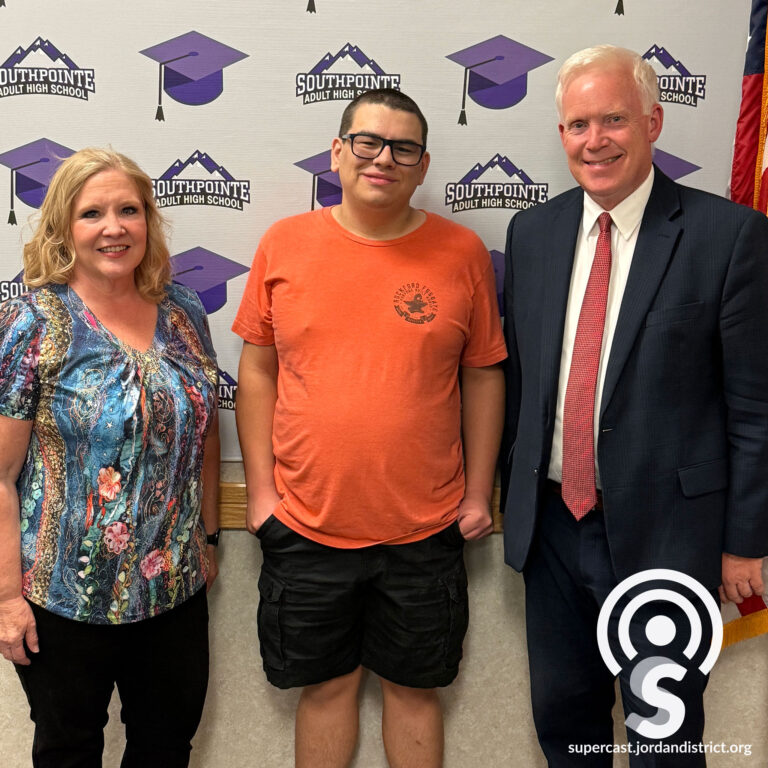
Born with cerebral palsy, she has risen above challenges all her life and inspired countless people; friends, family, even total strangers along the way.

On this episode of the Supercast, we invite you to listen closely as Oquirrh Hills Middle School Para-Educator Aubrey Allen talks about earning a bachelor's and master’s degree in recreational therapy, leading her to a career in the classroom and as a Unified Sports coach. Amber doesn’t let her disorder, which impacts movement, muscle tone, and speech, get in the way of making her dreams come true, and in the process, supporting others with special needs around her.

Listen to Aubrey’s powerful message, watch on YouTube or read along with subtitles in the transcript below.


Audio Transcription

Kathy Taylor:
Aubrey is amazing. She is helping us with warm-ups. She's helping us design activities to do during our practice time, but not just for sports, because she helps with academics.

Aubrey Allen:
Students are the best part of my job.

Anthony Godfrey:
The students are always the best part of our job.

[music]

Anthony Godfrey:
Hello and welcome to the Supercast. I'm your host, Superintendent Anthony Godfrey. Born with cerebral palsy, she has risen above challenges all her life and inspired countless people, friends, family, and even total strangers along the way. On this episode of the Supercast, we invite you to listen closely as Oquirrh Hills Middle School para-educator, Aubrey Allen, talks about earning a bachelor's and master's degree in recreational therapy, leading her to a career as a classroom aide and as a Unified Sports coach. Aubrey doesn't let her disorder, which impacts movement, muscle tone, and speech, get in the way of making her dreams come true and, in the process, supporting others with special needs around her. You won't want to miss Aubrey's powerful message. Subtitles and a transcript for this podcast are available on our website.

[music]

Anthony Godfrey:
We are here at Oquirrh Hills Middle School talking with Aubrey Allen. Aubrey, thank you for taking time to talk with us.

Aubrey Allen:
Thank you so much. I'm excited.

Anthony Godfrey:
I'm really happy to meet you and talk with you. I think I've met you before, but it's been a little while since we've talked.

Aubrey Allen:
Yeah.

Anthony Godfrey:
Tell me about your job here at Oquirrh Hills Middle School.

Aubrey Allen:
I am a para-educator and one of our special educators. I'm here at Oquirrh Hills, and I love it.

Anthony Godfrey:
You love being the aide here in the class, the para-professional.

Aubrey Allen:
Yeah. Yeah.

Anthony Godfrey:
What do you love most about this job?

Aubrey Allen:
I love being able to work with and support the kids. The students are definitely the best part of my job.

Anthony Godfrey:
The students are always the best part of our jobs.

Aubrey Allen:
Yeah.

Anthony Godfrey:
That's wonderful. Who's your favorite student? I'm just kidding. I'm not making you say or answer that question. Now you are a highly qualified individual. Tell me about your degrees and the work that you do outside of Oquirrh Hills.

Aubrey Allen:
Yeah, though I have a bachelor's degree in math, my master’s degree is recreational therapy, and now I'm a certified recreational therapist. I also manage a nonprofit called Adaptive Arena, and we offer free adaptive sports and activities for people of all abilities. I love working there, too.

Anthony Godfrey:
Now I understand that you also are an advocate for those with disabilities on social media.

Aubrey Allen:
Yeah, yeah. I started a social media platform for the video about my day-to-day life just to try to make others aware of what life can be like having a disability.

Anthony Godfrey:
For those listening, tell them about your disability.

Aubrey Allen:
I have cerebral palsy, and I have a moderate case of it. It affects the way I talk. The end is just how my body moves and how my muscles work.

Anthony Godfrey:
I've heard you're a big inspiration to those around you here at the school. What do you think about that?

Aubrey Allen:
I just try to be positive and uplift everyone. I think having my disability has given me a lot of pushback. There are a lot of things in life that are challenging for everyone, and you can either let them know who you are or try your best to write about your challenges and just be happy and positive.

Anthony Godfrey:
You're a great example of rising above your challenges, and I'm sure that your students really look to you for that positivity. I've only met you a couple of times, but you've been extremely positive. You light up, you're so friendly both times, and you really stand out that way. So I appreciate the positivity and the positivity you're bringing into the lives of the students and the people you work with.

Aubrey Allen:
That means so much to me. I really do try my best to overcome my challenges.

Anthony Godfrey:
So tell me more about what happens at the Adaptive Arena.

Aubrey Allen:
Yeah, it's more like a rec center for people with disabilities. We offer different activities. We have a cheer program and a wheelchair basketball program, and the cool thing about us is we let everyone play. So if somebody in a wheelchair has a brother who is not in a wheelchair, we put the brother in a wheelchair, too, and now they can play wheelchair basketball, or whatever together, and families really like that because typically kids with disabilities can't play on the same team as their siblings otherwise. So I just love that we can do well with different types of families and kids with all different abilities.

Anthony Godfrey:
So it really is inclusive. Anyone can participate.

Aubrey Allen:
Yeah. Yeah.

Anthony Godfrey:
And if you are playing with others who are in a wheelchair and you don't need a wheelchair, you're going to get a wheelchair.

Aubrey Allen:
Yes, yes.

Anthony Godfrey:
That seems fair. Now what is your favorite sport? I won't make you tell me who your favorite student is, but what's your favorite sport?

Aubrey Allen:
I think my favorite is wheelchair basketball because everyone gets so into it.

Anthony Godfrey:
Yeah, it's fast-paced.

Aubrey Allen:
Yeah, we do wheelchair basketball every Saturday morning, and we just have a blast.

Anthony Godfrey:
So it's your favorite and everyone else’s also.

[music]

Anthony Godfrey:
Stay with us when we come back. More with Aubrey Allen and her colleagues.

[music]

Male Voice:
Never miss an episode of the Supercast by liking and subscribing on your favorite podcasting platform. Find transcripts for this episode and others at supercast.jordandistrict.org.

[music]

Female Voice:
They are out on the job in the rain, sleet, snow, ice, and in the sunshine, as Jordan School District students navigate their way to and from school every day. We are truly grateful for our city crossing guards, always vigilant and looking out for students to ensure everyone's safety. Because they work so hard protecting our kids, let's give those crossing guards a hand. If you're driving near or around schools, slow down, pay attention, watch for students and staff, and follow instructions from the school crossing guards and know our cities are always looking to hire crossing guards. If you like kids and need some flexible hours, contact your local city and apply to be a crossing guard today. Together, let's make this a safe and successful school year.

Anthony Godfrey:
What advice do you have for folks about how to make sure that people with disabilities in their lives feel included and noticed and a part of things?

Aubrey Allen:
Yes, that’s a great question. I remember when I was growing up and it was so easy to feel invisible because I had a disability. The people that stood out to me the most and that had the most impact on my life are the people who treated me like they were just anybody else and not only that, but they were comfortable talking to me and asking what I needed and if they should be aware of anything. So I think that is very important. Individual people do know that people with disabilities, they often times know they just want to be treated and included like everyone else.

Anthony Godfrey:
I love that. Just treat them like you treat everyone else. And I love that you said the people that have had an impact on your life are the ones who said, "How can I help you?" And just treated you like everyone else, asked you questions, and talked with you.

Aubrey Allen:
Yeah.

Anthony Godfrey:
Let's talk with some of the folks that you work with. Introduce yourself.

Kathy Taylor:
Hi, I'm Kathy Taylor and I am the teacher of the classroom that Aubrey is working in right now and we love Aubrey. She brings so much to our class.

Anthony Godfrey:
Tell me what it's like getting to work with Aubrey day in and day out.

Kathy Taylor:
Well, she's always positive.

Anthony Godfrey:
That's obvious. That’s obvious.

Kathy Taylor:
Even when sometimes it doesn't feel like it's a positive day. Some days are up and some days are down, but Aubrey is always up. Aubrey's expertise with the recreational therapy has been great. We are a Unified Sports school meaning . . .

Anthony Godfrey:
You're a premier Unified Sports school. You're an award-winning Unified Sports school. Talk about that.

Kathy Taylor:
So Unified Sports is a program with Special Olympics where we are participating in team sports with our students that have disabilities and with their peers. Peers and our students with disabilities all play on the same team. And for us, that's a huge deal because a lot of times our students are not on teams. Or parents, they go and watch a lot of sibling games, or they watch a lot of their friends play sports. But a lot of our kids don't play sports on their own. So this gives them the opportunity to be on a team, to get that camaraderie, feel like what competition is like, feel experience at the tournament. And Aubrey has brought so much to that. She is our coach basically. I don't know if you've gone through all the trainings yet. I'm still working on those, too. But our official coaches, hands down Aubrey is amazing in that capacity with the sports. She is helping us with warm-ups. She's helping us design activities to do during our practice times that will help us work on specific skills. And she's able to adapt things for the kids that aren't able to do what everybody else does, and they can still interact with their peers. So it's been amazing having Aubrey, but not just for sports because she helps with academics. She goes to classes with kids. She helps us with their personal care. She does it all. She does it all, and she does it with grace, and she does it with humor, and she is a pleasure to work with.

Anthony Godfrey:
I would think it's pretty hard to be negative around Aubrey or be down on yourself. She doesn't let that happen. The incandescence keeps everyone from getting off the path, I guess.

Kathy Taylor:
She's very positive and the kids have responded really well to her. They really enjoy her.

Anthony Godfrey:
Let's talk with the principal. Introduce yourself and tell us about Aubrey. You contacted me and let me know that we really ought to come talk with her.

Lisa Jackson:
I did. I did. I'm Lisa Jackson, Oquirrh Hills principal. When we interviewed Aubrey, after Aubrey left the room, we all looked at each other and said, "How can we make this work because she needs to be part of our team here at Oquirrh Hills.” When we called for her references at the Adaptive Arena, they said the same thing, “She's amazing. Everything she does. She's just highly qualified. She's kind. She's motivated.” I interact with Aubrey in the halls a lot because she's walking these kids to and from class, and she understands what they need. She's receptive to their needs. And I think the coolest thing about it is just having our kiddos who do have disabilities, who have some struggles, being able to see just what they can accomplish in life and how successful they can be. And I think seeing Aubrey every day and seeing how successful she is just gives them motivation to follow in her footsteps and do some of the things she's done.

Anthony Godfrey:
You're not very convincing when you say you can't do it and Aubrey's in the room and she's bringing the energy and demonstrating that “yes, you can. You absolutely can.”

Lisa Jackson:
You can do it with a smile.

Anthony Godfrey:
Right.

Lisa Jackson:
Right. It might be hard, but you can do it. I think she also inspires all of the kids, though. Like, I feel like they didn't necessarily know, even our peer tutors didn't know what to expect when you meet Aubrey and you're not sure, you've never met Aubrey before. You're not sure. A lot of people don't have experience with somebody that has cerebral palsy. And so it's been great. I think it's an inspiration to them, too, because you're knowledgeable. You're educated. You're well spoken. And when you say they need to do something, you mean business. So, like, it's, you know, there's a level of respect that Aubrey has earned among all the kids and the adults, really.

Anthony Godfrey:
I'm inspired hearing about what you do and meeting you again. What do you like to do when you're not at the Adaptive Arena or here at school?

Aubrey Allen:
Oh, man. I spent a lot of time with my family. I have two younger brothers who I helped raise because there’s a big age gap between them. There are things that my family and I work out every day. So I'm at the gym a lot. I feel like and then I like to hike and bike and just be outside.

Anthony Godfrey:
You're very active sounds like.

Aubrey Allen:
Yeah.

Anthony Godrey:
I sit in a lot of meetings. I do email. But, you know, I try to get as much pleasure from that as I can.

[laughing]

Anthony Godfrey:
Well, it's a real pleasure meeting you. Thank you for everything you're doing, for inspiring me, the people that you work with and the students that you serve. You're awesome. Thank you.

Aubrey Allen:
Thank you for your time and opportunity.

Anthony Godfrey:
Thank you. And thank you both for talking with us.

[music]

Anthony Godfrey:
Thanks for joining us on another episode of the Supercast. Remember, “Education is the most important thing you will do today!” We'll see you out there.
[music]

He has a love for music and theater, has performed with the likes of Donny Osmond, in national commercials, musical theater, and is passionate about teaching and sharing his tremendous talents.
Deleted: On this episode of the Supercast, meet Bingham High School music theater teacher David Martin. He is an incredible educator with an impressive resume, who also happens to perform in a Beatles tribute band, having fun for a good cause, with all concert ticket sales going to charity.


Audio Transcription

David Martin:
This idea of Beatles concerts with a large group, choir, performers, dancers, instrumentals, that's kind of where that idea was formed.

Anthony Godfrey:
Tell me about the impact on you personally.

David Martin:
And knowing that even though our small contribution might seem small, it does make a difference. That's what keeps me coming back. Concert after concert after concert after concert.

[Music]

Anthony Godfrey:
Hello and welcome to the Supercast. I'm your host, Superintendent Anthony Godfrey. He has a love for music and theater, has performed in national commercials, musical theater, and with the likes of Donny Osmond, and is passionate about teaching and sharing his tremendous talents. On this episode of the Supercast, meet Bingham High School music theater teacher David Martin. He is an incredible educator with an impressive resume, who also happens to perform in a Beatles tribute band, having fun for a good cause, with all concert ticket sales going to charity.

[Music]

Anthony Godfrey:
We're here at Bingham High School talking with David Martin right before we go into the rehearsal for tonight's performances. We've got a lot to talk about, but introduce yourself and tell us a little bit about your time here at Bingham. What do you do?

David Martin:
My name is Dave Martin. I am the theater teacher and I teach stage tech. So that's the behind the scenes of all the shows and musical theater. So, all the song and dance and then a couple of film studies classes, which are great. Then I also oversee the student government efforts here at Bingham High School.

Anthony Godfrey:
Tell us how long you've been at Bingham.

David Martin:
I got here in 2022. So this is halfway through my fourth year.

Anthony Godfrey:
Where were you before, and what led you here?

David Martin:
Fun fact, I actually got my degree from the University of Utah in choral education in 2010. I taught choir at Kearns High School for six years and then I had a vocal hemorrhage. So for all you medical people, that's where your voice basically just breaks. I resigned, and I was a stay-at-home dad for six years.  Halfway through that six years. I went and got a master's in public administration from BYU. Then the position opened up and I was a little bit reluctant because I didn't have my degree in theater. I'd done a lot of theater, but I didn't have my degree. Somebody poked and prodded and said, “You should really apply.” Then I got the position. So it's been awesome ever since.

Anthony Godfrey:
Once you applied, you really dove in student government, stage crew, everything else. What has your involvement in theater been?

David Martin:
So my first big production, I'm about to name drop, was . . .

Anthony Godfrey:
This podcast is all about name dropping. Bring it.

David Martin:
I was in “Joseph and the Amazing Technicolored Dreamcoat” with Donnie Osmond at Kingsbury Hall when I was 14.

Anthony Godfrey:
So was he wearing purple socks at the time?

David Martin:
We did the cast party, and we were required. Everybody wore purple socks.

Anthony Godfrey:
Everyone wore purple socks.

David Martin:
Everyone wore purple socks.

Anthony Godfrey:
Wow. That was the real, that was that, you got the full Donnie Osmond experience.

David Martin:
Yeah. Which was just unbelievable. You can't write that. There's no way I could have as a, as a kid, or my parents even said, you know, “We're going to play our cards right. That you're going to be in a touring production of one of the most well-known musicals ever,” and especially a fan favorite here in Utah. So as a kid, 14, I just started. I was in music. I played in the band. I played trumpet and string bass in my middle school band. But to be in Kingsbury Hall with that caliber, and we ran it for three months, it just infected me with the theater bug. Then my next big theater thing was Desert Star Playhouse, like in 2006. I was brought in because somebody else had a vocal injury. So they called me up.

Anthony Godfrey:
I did not go. “Hamridge?”

David Martin:
No, similar though. It's actually . . .  so I did a handful of shows there.

Anthony Godfrey:
What was the spoof?

David Martin:
It was “Mission Credibles.” So it was Tom, Tom Cruise's Mission Impossible movies and then like superheroes. So we had like references to The Fly, the Jeff Goldblum, The Fly movie.

Anthony Godfrey:
Wow.

David Martin:
Really fun parody, really, really great. Then I did a Christmas show and then an Indiana Bones spoof the next year. Then kind of took a hiatus. Then my first show at Hale Center Theater was “Pirates of Penzance” in 2010hen I've done 23 at that theater over the last 10 years. That opened up doors to . . . .

Anthony Godfrey:
Twenty-three different productions.

David Martin:
Twenty-three different productions.

Anthony Godfrey:
Wow.

David Martin:
So that opened up doors to Music Direct and other theaters. So I've done a music direction for arts councils, Revision Arts, Draper Arts, and then Centerpoint, which is up in Centerville, Ogden Musical Theater, which is up in Ogden. I've been just kind of all over the map with doing shows and it's just been so much fun. It's a lot of work. It's a lot of time. But coming to teach here, I draw so much on my time as a performer. I didn't do the education route, which is okay. I have since learned all of the things, you know, for the instructional side of teaching theater in particular. But I really do draw on my experience. I did “Tuck Everlasting” at Hale, and we did it as our musical theater show last year. It was so cool to be on the other side of it.

Anthony Godfrey:
Yeah.

David Martin:
I did “Joseph” twice at Hale, and I've done it once here. So it's just really cool to just say like this show touched me so greatly and I want to present this and have the kids be a part of it. We're doing “Drowsy Chaperone” in the spring of this year in April and it's a number. It's my second show at Hale, actually in 2010 and it was life-changing. So I can be where the students are in their experience and say, "I was just like you when this show was opened, you know, to my eyes."

Anthony Godfrey:
Right. I would imagine it is really fun to see a show from both sides of it, where you were the performer and now you're making it happen for these students.

David Martin:
It's almost more emotional for me, I think, as a director now than it was as a performer. Because as a performer, you're very centered around yourself. You only have your job, your songs, your dances that you're responsible for. But to oversee all of the production elements, set design, building, costumes, everything when it finally comes together. I just have so many moments when I'm in the back of the theater, just like sobbing. I really just get so emotional when I'm like, "These are the moments. These are the moments that I wanted to see. And the kids caught the vision and they did it.” It's just awesome.

Anthony Godfrey:
We are here because you are performing with your band.

David Martin:
Yes.

Anthony Godfrey:
For the Dance-A-Rama, what's it called? Because it's all of the groups, all the dance groups are performing, and you and your Beatles band are playing for them.

David Martin:
Yeah. I love Dance-A-Rama though. I think we should market that, copyright it, and then sell it to the dance teachers here.

Anthony Godfrey:
Fantastic. Let's do it.

David Martin:
All right.

Anthony Godfrey:
Trademark. Trademark. Tell us about tonight's performance and what this looks like tonight.

David Martin:
So we've talked about Beatles concerts when I got here, because I just always talk about the Beatles. I can't not. And I've got a great relationship with Gina and Lori, the dance teachers here. They're unbelievable. They help us out with the musical, and we just have a really awesome Performing Arts department. But she just said, "What are your thoughts on a live performance?" And I said, "Done. No question." She's like, "Seriously?" And I was like, "Yes." I'm like, "There's no question. There's no, we need to work anything out. It's just going to happen." We can work it out. And we will work it out. So she said, "Okay," and so then she just gives us the set list. What's been the funnest part about it is there's a lot of songs that we don't typically do. We're opening the first dance, I think it's Dance Co. is “I Am The Walrus.” I've never done “I Am the Walrus.” They're not full songs, which is kind of sad because they're doing just cuts. Minute, maybe minute and a half of one song and maybe full song on some other ones.

Anthony Godfrey:
I'm the egg man. I'm the egg man. Goo goo g'joob. All right. Next song.

David Martin:
But it's so fun. We've never done that. So just to do that and then we don't typically do “Ob-LaDi” and I love “Ob-LaDi.” It's a fun, fun, fun, fun song to play. And then we lost a guitarist, couldn't make the schedule work. So he left the band, and then they were like, "Well, why don't you just play rhythm guitar on a bunch of stuff?" And so—

Anthony Godfrey:
What all do you play? Keyboard, bass, drums, guitar?

David Martin:
Yeah, that's it.

Anthony Godfrey:
That's it.

David Martin:
Well, and trumpet maybe if I had some time and I did play string bass. But I play well enough to... I'm a passable player and I think that's, you know. So these are going to feature the really elite teams here at Bingham, the Dance Co. and the ballroom team. Ballroom team’s “Let It Be” is awesome. They're also doing “Imagine” and it is awesome. Dance III, we're doing kind of like a mashup of Beatles and Michael Jackson's “Come Together.” So it's a little faster, a little bit more 80s pop, but super, super fun. Then the moments that I've actually really enjoyed, too, are the clinic, little girls that they've brought in. Little girls and boys that I've brought in to do some of these other numbers, and I just love it. I think and then one of the numbers, spoiler alert, is the Dance Co. girls dancing with their moms. I love that kind of stuff. I love moments where we connect people to real life. And we say that, “No, these moms have been in these girls' corner from the time they were five years old, taking them to practice, taking them to whatever.” Then to have a little moment in the spotlight is so cool.

Anthony Godfrey:
So what's the song? “Mother Mary Comes to Me,” “Your Mother Should Know.”

David Martin:
“Mother Nature's Son,”

Anthony Godfrey:
“Mother Nature's Son?”

David Martin:
No, it's not. It's, it's “Hey Jude.”

Anthony Godfrey:
Oh, “Hey Jude.” Very good. Very good. Yeah, that's cool that the mothers and daughters get to, get to dance together.

David Martin:
It's awesome and it's really just full circle when you see the little kids get up there and they're discovering dance for the first time. Then you see your seniors who are the dance ballroom team captains who are so polished in this art form. And I love it. I think if anything, the performing arts are my favorite way to come together, pun intended, because I think there's just something energetic and euphoric about live. So I think that's what's probably the coolest part about this whole thing tonight, is that live dance and live music is just really cool. It's a really cool dynamic.

Anthony Godfrey:
Stay with us when we come back. More with Mr. Martin and his love for everything Beatles

[Music]

Male Voice:
Never miss an episode of The Supercast by liking and subscribing on your favorite podcasting platform. Find transcripts for this episode and others at supercast.jordandistrict.org.

Sandy Riesgraf:
Hello, I'm Sandy Riesgraf, Director of Communications for Jordan School District and we want to invite you to connect with us. So many exciting things are happening in your child's school, your neighbor's school, in every school here every day. Don't miss out on following the fun or simply staying informed when there's important information we need to share. Join us at jordandistrict.org or follow us on Facebook, Twitter and Instagram @ Jordan District. We can't wait to connect.

Anthony Godfrey:
Talk to me about the band and some of the events you've been a part of.

David Martin:
So we formed like in 2014. They were a neighborhood band. They all kind of hung out together and played music, and then the guitarist was a good friend of mine and fellow teacher at Kearns, who said we're putting together this state fair just up off of 48th West. By Glenmore Golf Course and he said,  “We're gonna do five numbers or something. We need a bass player.” So I was like, low stakes, whatever you need. So I came in. I had not really played bass at all. Like I'd picked the bass up every 10 years or something and I had to get ready for a gig or something and they're like we need a bass player. So I met the group. Devin and Lisa Ashby, Skip Cavell and Sean Bastille, and Bob Osberg was my buddy. So we did a handful of numbers. We did “Mustang Sally.” We did “Proud Mary.” We did “Old Time Rock and Roll.” Pretty easy and I just thought this is a one-and-done and they're like, “Well why don't you come back? Why don't you come back and we'll do another thing. We'll find something. We'll go to the state fair.” So I got more and more and I was playing bass a little bit more. About the same time, I was teaching junior high, and no offense to junior high teachers, it did not bode well for me. I had a really hard time.

Anthony Godfrey:
It was not a match.

David Martin:
It was not a match. So I said, “How am I going to spruce up my end of the year? I got to do something because I'm four months in and I'm just tapped.” So I said, “Well, we're going to do a Beatles concert at the end of the year, and we're going to just do all Beatles music and, why not? We'll just do a live band. So the band I used for those concerts was somebody different, but this idea of Beatles concerts with a large group, choir, performers, dancers, instrumentalists, that's kind of where that idea was formed. Then in 2016, about the same time, I was so we played with the band kind of off and on for different functions. In 2016 a good friend of mine was diagnosed with ALS, and I said, “I want to do a Beatles concert for him. We'll call it Beat ALS and we'll feature all of the performers from the community and it'll be awesome.” So it was a one big night at Cottonwood High School. It sold about a thousand tickets and we raised ten thousand dollars and I dished it off all to an organization and basically started from scratch after that. I was like, “What am I thinking?” So I thought, “You know? I love this idea of doing this ALS Beatles concerts, and I love the idea of doing concerts with kids.” So this band was just there and they were like, “We love the Beatles and we love doing this,” and Lisa, one of the female singers in the band, her aunt actually was diagnosed and passed away from ALS. So it was a really interesting connection. So then that band became the Beat ALS band. We've done 15 junior high and high school concerts and they don't ask to be paid. They don't ask for anything outside of a t-shirt, and so that became . . . we would just do all these performances and intermix between these performances would be these ALS concerts and so that's kind of what kept the band going for now. You know we're 11 years.

Anthony Godfrey:
Tell me about the impact on you personally as you have spent this time raising money for those with ALS and just to help others through your music.

David Martin:
So like the first concert we had 23 vocalists, guitarists, instrumentalists, 23. We had a full orchestra from Cottonwood High School, we had members of the Odyssey Dance Troupe, we had aerialists, we had  . . . and I just was depleted by the end of that concert. It was six months of my life trying to prep that. So I was so just, in the headlights the entire time, and I remember when that concert finished it was like, “Oh that's good that's done,” and then I had a guy that worked with me that was like, “We should maybe look at maybe doing another one of these.” So he kind of pushed me on it and since that time 2017, 2018 I just have these moments where I feel like it is making a difference. We don't raise a ton of money just because of the nature of concerts. I mean unless you're debuting at Shea Stadium, you're not going to get you know.

Anthony Godfrey:
Right.

David Martin:
But our main goal has always been to just improve quality of life for the patient and knowing that even though our small contribution might seem small, it does make a difference and it provided hospice or it provided, you know food, or whatever that is. My favorite, very favorite moment of any concert is when a guy that we've benefited named Darren Redden, who had had ALS for six years and he had a trach, which is just so complicated when it comes to quality of life. It was at Elkridge, Elkridge Middle with Keith Goodrich, and it was our biggest. We raised $12,000 that night, but Keith also has 400 kids in his program so we did “Hey Jude” and during the “nah-nah’s” he started doing donuts in his wheelchair, and it was like, and his cute daughters Livia and Lexi, who were barely in high school when their dad got diagnosed . . . to just see an entire auditorium. Bingham was here, it was here at Bingham, which is even cooler. Fifteen hundred people just sending everything that they could to this family saying like, “I don't know you, and I don't know if $12,000 is going to scratch the surface in your financial struggles with this disease.” But I've had so many moments in those concerts where we're singing “Hey Jude” and we're doing the “nah-nah’s” and the kids are just enveloped in the music and the audience is enveloped in the music and it helps that the Beatles are the greatest band. I don't even have to do anything. I just put their music out there, and everybody just embraces it, but then to say these are the meanings behind the songs or these are the takeaways, and these kids get a chance to do something with that talent, do something with their performing arts abilities for the better, that's what keeps me coming back concert after concert after concert.

Anthony Godfrey:
Well that's a huge impact and unforgettable moments for the people involved, and I'm just really excited to have you here Bingham, and bringing that energy here. Now I understand that not only have you had theater experience, but you have had film experience in at least an advertisement I know. Tell me, weren't you were you the doting father when someone was filling out a form or taking a test or what was it?

David Martin:
So that was for the ACT. That was kind of funny, just you know having been in the education realm and doing an ACT commercial was a little, it was a little weird right, because I'm like I do this like you know pre-ACT day, on ACT day, and you guys are like marketing you know. For that it's just it's just a little bit fun. But my first commercial was actually a T.C. Christensen, who did “Seventeen Miracles,” and kind of a well-known Utah film director and it was for Peterson's Fresh Market. I was the watermelon whisperer, so . . .

Anthony Godfrey:
Wow I'm a fan of Peterson's but I have never bought a watermelon there. Maybe I should.

David Martin:
So I talked to watermelon, that was my big acting debut but since then I've actually been really fortunate I did a Subway commercial that like debuted in the in the Midwest, like in Detroit or something Michigan. I can't remember but that was kind of fun. Then Donovan Mitchell, I got to share the screen with Donovan Mitchell for a U of U Health commercial.

Anthony Godfrey:
Wow. I remember that commercial. That was you.

David Martin:
That was me.

Anthony Godfrey:
Wow.

David Martin:
Then probably the biggest one, which is kind of silly to say . . .

Anthony Godfrey:
You fake injuries really well that was good that was good.

David Martin:
So the biggest one probably was Larry H. Miller Used Car Supermarket because Larry H. Miller owns the Megaplexes.

Anthony Godfrey:
Oh so it was shown before movies.

David Martin:
I would get stopped just by so many people left and right like, “you're the, you're the guy from the . . .  I've seen you before.” Then in terms of films, we . . .  there's a group here in Utah called Working with Lemons. They're a family out of Riverton. Their big breakout was they do live action music videos but they did “Do You Want to Build a Snowman” and it got over 400 million views and likes. So then that kick-started them into their film career. They've done countless Disney adaptations or music videos plus some musical theater but they've done three films. They did one called “Night of Wrath” and I played a dad. Then they just did a live a modern day telling of “Sense and Sensibility” and I was the man in the bookstore. So if you're like, what? Who's the man in the bookstore, that's me.

Anthony Godfrey:
That’s you.

David Martin:
Then lastly in 2019, I think, “Forgotten Carols” which is a well-known performance that happens here in Utah. Michael McLean wrote it. It's like 34th year or something, but they recorded a staged version of that to show during COVID and so I got to be in that.

Anthony Godfrey:
Oh, cool.

David Martin:
That was on Amazon Prime and a couple of my students over the Christmas break texted me and they're like, “Is this you?” I'm like, “Yeah.” I'm a huge hit at Deseret Book.

Anthony Godfrey:
That's fantastic. That's great. but really the ACT commercial was your favorite I'm sure.

David Martin:
It was just so funny because they were like, “We're gonna put you in this sweater. You have to be like this cool dad.” I'm like, “Can I not just be a cool dad, just because that's what I am gonna like.” “No, we're gonna put you in a sweater.”

Anthony Godfreyu:
Cool dad sweater.

David Martin:
Yeah, cool dad sweater, and it was just fun. It was fun and I will say though, the Subway gig was the school teacher. So he was talking, he's in the class. The commercial starts with the camera coming up to a row of desks and I'm like, “Listen, the only salvation I have as a teacher, the only sanity I get as a teacher, is when I get to have my bacon. You know cheddar melt.” So the kids, and they had a couple cuts of the of the commercial, where the kids like went straight up “Lord of the Flies” where I'm like you know, fantasizing about the sandwich, and then I come out of my trance. . .

Anthony Godfrey:
Going nuts.

David Martin:
And the kids are like face pain and a disco ball and a tuba. It was, and they actually said but they said in the in the um, like after I got cast and we were kind of meeting, they're like, “We chose you because you were a school teacher,” because I told them in the audition. They were like, “Yeah, we chose you because you were a school teacher.” I'm like, “Thank you.”

Anthony Godfrey:
Yeah, it's opening doors left and right.

David Martin:
Finally.

Anthony Godfrey:
Thanks for everything you do here at Bingham. You do so much and we really are very fortunate to have you here and thanks for taking the time to talk with me today.

David Martin:
Hey, happy to do it and you know one of these times, you're gonna have to strap on the guitar and come over and uh, and play a couple numbers.

Anthony Godfrey:
Pull me in on something less complex than “I Am the Walrus” and you're on, you're on.

David Martin:
You got it.

[music]

Anthony Godfrey:
Thank you for joining us on another episode of the Supercast. Remember, “Education is the most important thing you'll do today!” We'll see you out there.

(upbeat music)