Skip to content

They are going about their days demonstrating the characteristics of Jordan School District’s “Portrait of a Graduate.”

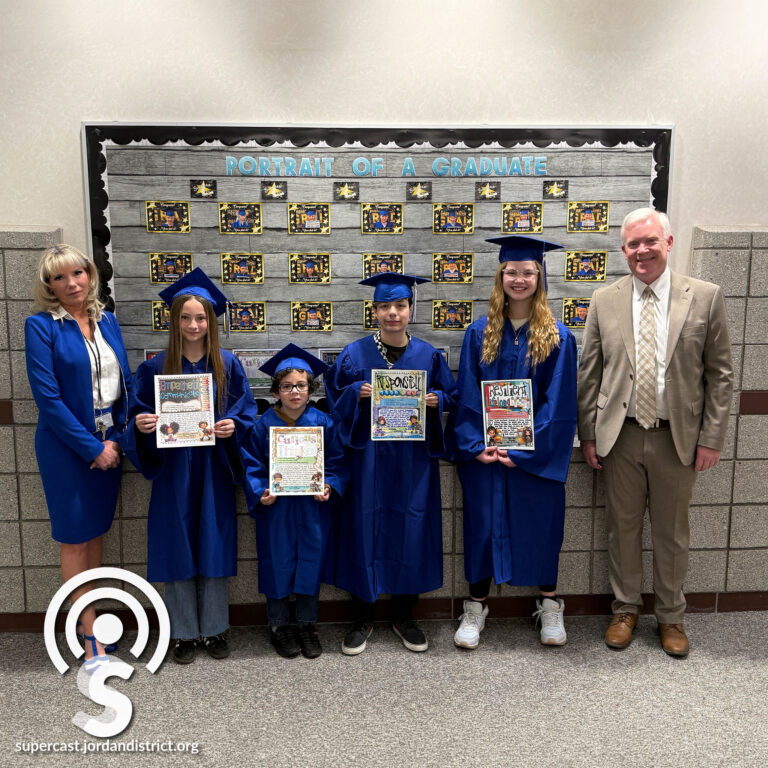
On this episode of the Supercast, we head to Copper Canyon Elementary School where students are posing for pictures in their cap and gowns already thinking ahead to graduation. They are being recognized for their actions demonstrating the six characteristics of “Portrait of a Graduate.” At this celebration breakfast, students are being recognized for being a responsible teammate.


Audio Transcription

Bobbie Nixon:
It means the world to the students because the students just want to be acknowledged for things that they're good at and things that they want to be good at.

Anthony Godfrey:
What do you think it means to be a curious thinker?

Student:
I think it means to ask a lot of questions and I want to learn about everything I am.

[music]

Anthony Godfrey:
Hello and welcome to the Supercast. I'm your host, Superintendent Anthony Godfrey. They are already demonstrating the characteristics of Jordan School District's Portrait of a Graduate. On this episode of the Supercast, we head to Copper Canyon Elementary School, where students are posing for pictures in their caps and gowns, already thinking ahead to graduation. They are being recognized for their actions, demonstrating the six characteristics of Portrait of a Graduate. At this celebration breakfast, where parents and grandparents are invited, students are being recognized for being a responsible teammate this month and are recognized for every characteristic throughout the year. We invite you to listen and learn more about all six characteristics of Portrait of a Graduate.

[music]

Anthony Godfrey:
We're talking today with the principal of Copper Canyon Elementary, Bobbie Nixon. Bobbie, thanks for taking time with us.

Bobbie Nixon:
Hello, it's nice to be here with you.

Anthony Godfrey:
You have this great principal program where you give out awards that are based on Portrait of a Graduate, and I loved seeing those awards this morning. It was so fun to see parents, siblings, grandparents there supporting the kids who are getting the awards. As you've done this over the course of the year, before we get into the details, tell me about what this award has meant to the students who receive it and the families who come and support their students.

Bobbie Nixon:
It means the world to the students because the students just want to feel important, to be acknowledged for things that they're good at and things that they want to be good at.

Anthony Godfrey:
They want to be noticed that, hey, you're defining yourself in many ways in elementary school and it's exciting for them to be known for these characteristics that are included in Portrait of a Graduate. And for those listening, principals will often give out awards at elementary schools and a couple of our elementary schools are giving those awards based on Portrait of a Graduate characteristics. The Portrait of a Graduate was developed at the request of the Board of Education with lots of input from employees, students, and parents and with the help of an outside company to really focus on what we want students to be able to do, what characteristics and traits we want them to have as they graduate. And today you are honoring the responsible teammate characteristic that's a part of Portrait of a Graduate. Tell me about some of the students who received that and some of the things teachers had to say about that.

Bobbie Nixon:
So the students at Copper Canyon are incredible students, and one thing that I love is they do a lot of group work, and so they can find students who are good at teams, and we know so much in our jobs that if we can't team, we can't make it because we're better together.

Anthony Godfrey:

Right.

Bobbie Nixon:
So I love that some of the characteristics or some of the attributes that they were saying about the students, the teachers write what they see about the students who characterize that attribute. So some of the things I was hearing that they are easy to get along with, they listen to other people's opinions, they calm a situation down, and they take leadership when they need to.

Anthony Godfrey:
It feels to me like when a student is recognized for these great attributes and for trying to be a really good citizen to help other people, to be very curious and learn all they can, that once they're recognized for it then they really want to live up to it and they're even, they exemplify that characteristic even more than before.

Bobbie Nixon:
Yeah, that's true. They do. They know that it's known that they're doing that and they know that the other students know that they do that. So then they want to be that, and I think that maybe some of those things come naturally, and then some they'll even do it more now when they're in a group because they got that award. We try to do, one thing is we put a video out at the beginning of the year where the students role-play all of the Portrait of a Graduate characteristics. So you know if it's problem solving for example, they would role play some problem and then all the students in the building watch it. And so they know before the year begins what kind of things that they're, what it takes to be in each of the characteristics. And so when they get the award, it's like, “I did it!” But we try to give awards for lots of things and they have like several years to get some award but every student in Copper Canyon gets an award for something during the year. We have a theme award where it's “You've Got a Friend In Me” so they can be friends, or we have a principal's lunch, we have a math award, we have a Friday drawing, but everybody gets an award for something, recognized for something. But I think the Portrait of a Graduate is special, which is why we tried to make it special with the breakfast.

Anthony Godfrey:
Yes so it was and I failed to mention that it's an awards event, but it's also a breakfast, and I did see the bulletin board for You've Got a Friend In Me. You do a very nice job of creating that culture very intentionally and re-emphasizing it, and I love this idea of the video that shows positive examples of the sorts of things you're looking for so that students can win that award potentially on that particular characteristic of Portrait of a Graduate. So that's really exciting. I'll have to see some of those videos because it's really cool when students take responsibility for their own development, their own learning, and really strive to meet the expectations of the teacher, which we know is one of the best predictors of student success, but also to aspire to these characteristics that we've worked so hard to develop.

Bobbie Nixon:
I want to at the end of the year go full circle with the students by having all of the Portrait of a Graduate winners throughout the year, they're going to be on stage and be recognized by the rest of their peers. Because right now they're being recognized by their teachers, by us, by their parents but now they get to be it with the students and so we're working on getting enough graduation robes and to make it a special event for everybody to see and then they'll hopefully want to get it the next year.

Anthony Godfrey:
That's a really exciting next step recognized by your family and your teacher and then in front of your peers. That's a great next step. I love that. The characteristics of Portrait of a Graduate include resilient lifelong learner, curious thinker, empathetic communicator, engaged citizen, responsible teammate being highlighted today, and creative problem solver. Do any of those stand out as something that you remember a particular student or a particular award that was really particularly meaningful?

Bobbie Nixon:
So I feel like the Empathetic Communicator. We have an empathetic communicator and I just think the way this particular student puts things in his classroom is just one of those children everybody wants to be around, and he's nice, and he just is a way of wording things. He'll see you in the hall and he'll say, “hi, Mrs. Nixon.” and he'll give you a fist bump but all the other kids he just doesn't matter how young they are. He'll even open doors for you, and he just is just one of those empathetic people that understands. I've seen you know some kids in his class like that just don't fit in and he's the one that will always volunteer to be their partner or to be around them. He's just one of those kids.

Anthony Godfrey:
He's just wired that way.

Bobbie Nixon:
Yes and he's gonna leave he's a sixth grader.

Anthony Godfrey:
Oh he's a sixth grader

Bobbie Nixon:
Yes, he's a great kid.

Anthony Godfrey:
That's exciting. It sounds like he has a successful middle school experience ahead of him with that empathetic communicator characteristic in his backpack there. You do a lot with culture and you just recently had your lip sync contest, and that's something that involves all of your students. They all have an opportunity, and I've been able to see that in the past. I had to miss this one and it's really interesting to see students come alive as part of that performance, and you can sometimes tell the students who may not have chosen that first, but they really warm up on stage. How did this last event go last week?

Bobbie Nixon:
Oh it was so darling. It's such a winning event for the students. Miss Sherri Harrington she is our BTS person, and she puts so much time into choreography and taking the student that might not always be like the ham or the show person and finding that in them and they come out of their shells and they just do some amazing things. They think of the dances they want to do and the costumes they want to wear. Then they all sing to each other songs and our everybody in the building participates, so our teachers our lunch staff even our custodian who looks like Ed Sheeran. He looks just like him so the kids even think that he's like Ed Sheeran and he even sang an Ed Sheeran song with his guitar. Our lunch ladies sang “Raining Tacos” and all the kids sing with them. But and our our office staff gets involved. We just think it is a special event for every student.

Anthony Godfrey:
Well “Raining Tacos” sounds fantastic. I hope that's in the forecast at some point but I really what I noticed before and you mentioned, is just how inclusive it is; every student feels a part of it and because you're on stage with your whole class, you're able to be as outgoing as you choose to be. You can hide a little bit on stage if you need to but I remember pretty much every kid was right out there. They rehearsed, it was obvious they'd prepared and I think it's very memorable for students. So anyway, congratulations on creating these great programs for students really helping emphasize those positive behaviors and creating that sense of belonging for every student in your school. Thank you for everything you're doing.

Bobbie Nixon:
Thank you, it's a pleasure. The children make it a pleasure. They enrich my life and they just make it fun. The kids the kids are everything.

Anthony Godfrey:
Stay with us. When we come back, we'll hear from some of the students receiving awards from Copper Canyon Elementary School.

[music]

Male Voice:
Never miss an episode of the Supercast by liking and subscribing on your favorite podcasting platform. Find transcripts for this episode and others at supercast.jordandistrict.org.

Female Voice:
In Jordan School District we like to support students in and outside the classroom along with their families that's where the Jordan Family Education Center comes in offering support services and a wide variety of classes for students and their families free of charge. You can take a class called Blues Busters for children feeling sad or worried. Just Breathe is a class that helps students reduce stress or how about a class that supports parents in helping their children make and keep good friends. There are also support groups and free counseling all provided by Jordan School District School psychologists and counselors. To find out how you can benefit from free family support services offered by the Jordan Family Education Center, call 801-565-7442 or visit guidance.jordandistrict.org.

[music]

Anthony Godfrey:
We're talking with four students at Copper Canyon who have received awards for exhibiting the traits outlined in Portrait of a Graduate. They are great examples of these characteristics that we are trying to encourage. I'd like you to introduce yourself and then tell me about the award you received.

Student:
I'm Katie Barr. I'm in fifth grade, and I got the Resilient Lifelong Learner.

Anthony Godfrey:
Can I take this award from you and read this?

Student:
Yeah.

Anthony Godfrey:
Okay. “Katie is an excellent example of being resilient and a lifelong learner. She doesn't give up even when things are hard. She adapts and adjusts and finds new ways to work out a solution. She is constantly giving her best effort and never stops trying.” That's really awesome that you just keep trying, and do you think that's a good description of what you do at school? Do you love to learn?

Student:
Yeah.

Anthony Godfrey:
What do you love most about school?

Student:
I like people.

Anthony Godfrey:
You like people?

Student:
Yeah.

Anthony Godfrey:
Well, we've got a lot of those around, and you get to make a lot of friends and learn with them. That's really exciting. How did your parents feel when they learned that you got the Resilient Lifelong Learner award?

Student:
I think they like were like, “Oh, cool.”

Anthony Godfrey:
“That just seems like you. Of course Katie got that award.” Well, congratulations. I think it's fantastic and it's an award that shows you have great things ahead of you as well because you're going to keep learning. Tell us your name, what grade are you in and tell us about your award.

Student:
My name is Connor. I am in first grade and I got the Curious Thinker award.

Anthony Godfrey:
Can I take this award and read about you here?

Student:
Yeah.

Anthony Godfrey:
All right. “Connor is receiving the Curious Thinker award for his remarkable eagerness to ask thoughtful questions and explore new ideas. He approaches learning with genuine excitement, whether investigating a brand new topic or diving deeper into a familiar one. He brings energy, persistence and creativity to every inquiry. When our subject captures his interest, his passion shines. His curiosity and commitment to learning makes our classroom a more vibrant place for everyone to learn.” Connor, do you ask a lot of questions in class?

Student:
Yes.

Anthony Godfrey:
And you love to know the answers.

Student:
Yes.

Anthony Godfrey:
What do you think it means to be a curious thinker?

Student:
I think it means to ask a lot of thoughtful questions, and I want to learn about everything around me.

Anthony Godfrey:
And that's the key, thoughtful questions. Questions you really want to know the answer to and wanting to know about everything around you. That's really exciting. What's the favorite, what's your favorite subject? What do you like to learn about the most?

Student:
Science.

Anthony Godfrey:
Science. Do you want to be a scientist one day?

Student:
I want to be a mechanical engineer.

Anthony Godfrey:
A mechanical engineer. That's a really solid plan. I like that. And asking questions is really going to help get you there. That's wonderful. Thank you. What makes you want to be a mechanical engineer?

Student:
I watch this YouTube channel called Mark Rober and it inspired me to be one.

Anthony Godfrey:
What's it called?

Student:
Mark Rober.

Anthony Godfrey:
Is he the guy who created the glitter box that blew up on the front step and all that?

Student:
Yeah.

Anthony Godfrey:
He's got interesting stuff going. So mechanical engineer, I love that. All right, introduce yourself.

Student:
My name is Santana and I'm in sixth grade.

Anthony Godfrey:
You're the person who's getting the award today.

Student:
I'm getting the Responsible Teammate award.

Anthony Godfrey:
And why do you think you're getting the Responsible Teammate award?

Student:
Because I do my share of work, I enjoy helping others and I make sure my team works well together.

Anthony Godfrey:
That's a really important role that you're playing in your class. Can I read this? “Santana, you are a great teammate and peer. You work well with everyone around you. Not only do you take care of your part, but you are not afraid to help others out around you. You consistently step up to help your classmates when needed. Your kindness is seen by everyone around you. We are lucky to have you in our class.” That's really cool. That's awesome. Were you surprised to get this or do you kind of know, you know what, “I really do try to help my teammates.”

Student:
Yeah, I was like that. I was like, I really do try to help my teammates.

Anthony Godfrey:
That makes a big difference. That really makes you a leader in your school. Tell me about the satisfaction you get from helping other people.

Student:
It makes me kind of happy when I know that they're included and I know they're doing their share of work and they're getting farther and farther.

Anthony Godfrey:
Helping everyone be at their best. That's how I view my job as well. So, what do you want to be?

Student:
I want to be a football player.

Anthony Godfrey:
A football player. Well, responsible teammate can help get you there. Which position?

Student:
I want to be a quarterback.

Anthony Godfrey:
All right. That sounds good. Right at the center of it all. Well, good luck with everything, and being responsible teammate has got you on that path. Tell me your name.

Student:
My name is Bailey, and I'm in fourth grade.

Anthony Godfrey:
And what's your award?

Student:
I’m an Empathetic Communicator.

Anthony Godfrey:
What are some of the things that you've done to earn this award of Empathetic Communicator?

Student:
I include everyone and try to help them with whatever they need.

Anthony Godfrey:
Can I read your award here? “Bailey is such an amazing student and wonderful addition to our class. She has such a big, tender, loving heart. She cares very deeply for others. It doesn't matter if they are her best friends or not. She's still kind and considerate of their feelings. She will include everyone and try to help them with whatever they need. Bailey is so thoughtful and kind in every situation.” What a nice award. Tell me about how it feels when you help other people and help them feel good because you've looked out for them.

Student:
I feel good, and I feel like I'm doing the right thing.

Anthony Godfrey:
And so is this award, does that feel like it really matches up with what you're trying to do every day?

Student:
Yes.

Anthony Godfrey:
And what do you think it means to be an empathetic communicator?

Student:
I listen to how others feel. I show kindness with my words and actions. I try to see things from others' point of view.

Anthony Godfrey:
Well, the four of you are absolutely making this a great place, not just for yourselves. You're getting the most out of your education, but you're lifting everybody around you with your questions, with your help, with your example. And I'm just really proud to know all of you and really excited that you have earned these awards. So, congratulations and good luck with everything you're doing.

[music]

Anthony Godfrey:
Thanks for joining us on another episode of the Supercast. Remember, “Education is the most important thing you will do today!” We'll see you out there.
[music]


Born with cerebral palsy, she has risen above challenges all her life and inspired countless people; friends, family, even total strangers along the way.

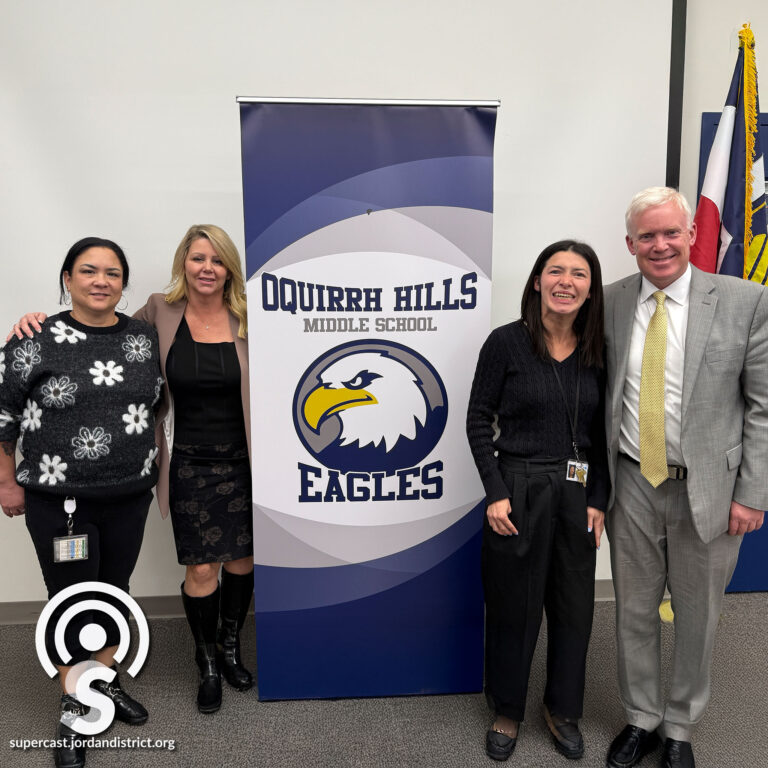
On this episode of the Supercast, we invite you to listen closely as Oquirrh Hills Middle School Para-Educator Aubrey Allen talks about earning a bachelor's and master’s degree in recreational therapy, leading her to a career in the classroom and as a Unified Sports coach. Amber doesn’t let her disorder, which impacts movement, muscle tone, and speech, get in the way of making her dreams come true, and in the process, supporting others with special needs around her.

Listen to Aubrey’s powerful message, watch on YouTube or read along with subtitles in the transcript below.


Audio Transcription

Kathy Taylor:
Aubrey is amazing. She is helping us with warm-ups. She's helping us design activities to do during our practice time, but not just for sports, because she helps with academics.

Aubrey Allen:
Students are the best part of my job.

Anthony Godfrey:
The students are always the best part of our job.

[music]

Anthony Godfrey:
Hello and welcome to the Supercast. I'm your host, Superintendent Anthony Godfrey. Born with cerebral palsy, she has risen above challenges all her life and inspired countless people, friends, family, and even total strangers along the way. On this episode of the Supercast, we invite you to listen closely as Oquirrh Hills Middle School para-educator, Aubrey Allen, talks about earning a bachelor's and master's degree in recreational therapy, leading her to a career as a classroom aide and as a Unified Sports coach. Aubrey doesn't let her disorder, which impacts movement, muscle tone, and speech, get in the way of making her dreams come true and, in the process, supporting others with special needs around her. You won't want to miss Aubrey's powerful message. Subtitles and a transcript for this podcast are available on our website.

[music]

Anthony Godfrey:
We are here at Oquirrh Hills Middle School talking with Aubrey Allen. Aubrey, thank you for taking time to talk with us.

Aubrey Allen:
Thank you so much. I'm excited.

Anthony Godfrey:
I'm really happy to meet you and talk with you. I think I've met you before, but it's been a little while since we've talked.

Aubrey Allen:
Yeah.

Anthony Godfrey:
Tell me about your job here at Oquirrh Hills Middle School.

Aubrey Allen:
I am a para-educator and one of our special educators. I'm here at Oquirrh Hills, and I love it.

Anthony Godfrey:
You love being the aide here in the class, the para-professional.

Aubrey Allen:
Yeah. Yeah.

Anthony Godfrey:
What do you love most about this job?

Aubrey Allen:
I love being able to work with and support the kids. The students are definitely the best part of my job.

Anthony Godfrey:
The students are always the best part of our jobs.

Aubrey Allen:
Yeah.

Anthony Godfrey:
That's wonderful. Who's your favorite student? I'm just kidding. I'm not making you say or answer that question. Now you are a highly qualified individual. Tell me about your degrees and the work that you do outside of Oquirrh Hills.

Aubrey Allen:
Yeah, though I have a bachelor's degree in math, my master’s degree is recreational therapy, and now I'm a certified recreational therapist. I also manage a nonprofit called Adaptive Arena, and we offer free adaptive sports and activities for people of all abilities. I love working there, too.

Anthony Godfrey:
Now I understand that you also are an advocate for those with disabilities on social media.

Aubrey Allen:
Yeah, yeah. I started a social media platform for the video about my day-to-day life just to try to make others aware of what life can be like having a disability.

Anthony Godfrey:
For those listening, tell them about your disability.

Aubrey Allen:
I have cerebral palsy, and I have a moderate case of it. It affects the way I talk. The end is just how my body moves and how my muscles work.

Anthony Godfrey:
I've heard you're a big inspiration to those around you here at the school. What do you think about that?

Aubrey Allen:
I just try to be positive and uplift everyone. I think having my disability has given me a lot of pushback. There are a lot of things in life that are challenging for everyone, and you can either let them know who you are or try your best to write about your challenges and just be happy and positive.

Anthony Godfrey:
You're a great example of rising above your challenges, and I'm sure that your students really look to you for that positivity. I've only met you a couple of times, but you've been extremely positive. You light up, you're so friendly both times, and you really stand out that way. So I appreciate the positivity and the positivity you're bringing into the lives of the students and the people you work with.

Aubrey Allen:
That means so much to me. I really do try my best to overcome my challenges.

Anthony Godfrey:
So tell me more about what happens at the Adaptive Arena.

Aubrey Allen:
Yeah, it's more like a rec center for people with disabilities. We offer different activities. We have a cheer program and a wheelchair basketball program, and the cool thing about us is we let everyone play. So if somebody in a wheelchair has a brother who is not in a wheelchair, we put the brother in a wheelchair, too, and now they can play wheelchair basketball, or whatever together, and families really like that because typically kids with disabilities can't play on the same team as their siblings otherwise. So I just love that we can do well with different types of families and kids with all different abilities.

Anthony Godfrey:
So it really is inclusive. Anyone can participate.

Aubrey Allen:
Yeah. Yeah.

Anthony Godfrey:
And if you are playing with others who are in a wheelchair and you don't need a wheelchair, you're going to get a wheelchair.

Aubrey Allen:
Yes, yes.

Anthony Godfrey:
That seems fair. Now what is your favorite sport? I won't make you tell me who your favorite student is, but what's your favorite sport?

Aubrey Allen:
I think my favorite is wheelchair basketball because everyone gets so into it.

Anthony Godfrey:
Yeah, it's fast-paced.

Aubrey Allen:
Yeah, we do wheelchair basketball every Saturday morning, and we just have a blast.

Anthony Godfrey:
So it's your favorite and everyone else’s also.

[music]

Anthony Godfrey:
Stay with us when we come back. More with Aubrey Allen and her colleagues.

[music]

Male Voice:
Never miss an episode of the Supercast by liking and subscribing on your favorite podcasting platform. Find transcripts for this episode and others at supercast.jordandistrict.org.

[music]

Female Voice:
They are out on the job in the rain, sleet, snow, ice, and in the sunshine, as Jordan School District students navigate their way to and from school every day. We are truly grateful for our city crossing guards, always vigilant and looking out for students to ensure everyone's safety. Because they work so hard protecting our kids, let's give those crossing guards a hand. If you're driving near or around schools, slow down, pay attention, watch for students and staff, and follow instructions from the school crossing guards and know our cities are always looking to hire crossing guards. If you like kids and need some flexible hours, contact your local city and apply to be a crossing guard today. Together, let's make this a safe and successful school year.

Anthony Godfrey:
What advice do you have for folks about how to make sure that people with disabilities in their lives feel included and noticed and a part of things?

Aubrey Allen:
Yes, that’s a great question. I remember when I was growing up and it was so easy to feel invisible because I had a disability. The people that stood out to me the most and that had the most impact on my life are the people who treated me like they were just anybody else and not only that, but they were comfortable talking to me and asking what I needed and if they should be aware of anything. So I think that is very important. Individual people do know that people with disabilities, they often times know they just want to be treated and included like everyone else.

Anthony Godfrey:
I love that. Just treat them like you treat everyone else. And I love that you said the people that have had an impact on your life are the ones who said, "How can I help you?" And just treated you like everyone else, asked you questions, and talked with you.

Aubrey Allen:
Yeah.

Anthony Godfrey:
Let's talk with some of the folks that you work with. Introduce yourself.

Kathy Taylor:
Hi, I'm Kathy Taylor and I am the teacher of the classroom that Aubrey is working in right now and we love Aubrey. She brings so much to our class.

Anthony Godfrey:
Tell me what it's like getting to work with Aubrey day in and day out.

Kathy Taylor:
Well, she's always positive.

Anthony Godfrey:
That's obvious. That’s obvious.

Kathy Taylor:
Even when sometimes it doesn't feel like it's a positive day. Some days are up and some days are down, but Aubrey is always up. Aubrey's expertise with the recreational therapy has been great. We are a Unified Sports school meaning . . .

Anthony Godfrey:
You're a premier Unified Sports school. You're an award-winning Unified Sports school. Talk about that.

Kathy Taylor:
So Unified Sports is a program with Special Olympics where we are participating in team sports with our students that have disabilities and with their peers. Peers and our students with disabilities all play on the same team. And for us, that's a huge deal because a lot of times our students are not on teams. Or parents, they go and watch a lot of sibling games, or they watch a lot of their friends play sports. But a lot of our kids don't play sports on their own. So this gives them the opportunity to be on a team, to get that camaraderie, feel like what competition is like, feel experience at the tournament. And Aubrey has brought so much to that. She is our coach basically. I don't know if you've gone through all the trainings yet. I'm still working on those, too. But our official coaches, hands down Aubrey is amazing in that capacity with the sports. She is helping us with warm-ups. She's helping us design activities to do during our practice times that will help us work on specific skills. And she's able to adapt things for the kids that aren't able to do what everybody else does, and they can still interact with their peers. So it's been amazing having Aubrey, but not just for sports because she helps with academics. She goes to classes with kids. She helps us with their personal care. She does it all. She does it all, and she does it with grace, and she does it with humor, and she is a pleasure to work with.

Anthony Godfrey:
I would think it's pretty hard to be negative around Aubrey or be down on yourself. She doesn't let that happen. The incandescence keeps everyone from getting off the path, I guess.

Kathy Taylor:
She's very positive and the kids have responded really well to her. They really enjoy her.

Anthony Godfrey:
Let's talk with the principal. Introduce yourself and tell us about Aubrey. You contacted me and let me know that we really ought to come talk with her.

Lisa Jackson:
I did. I did. I'm Lisa Jackson, Oquirrh Hills principal. When we interviewed Aubrey, after Aubrey left the room, we all looked at each other and said, "How can we make this work because she needs to be part of our team here at Oquirrh Hills.” When we called for her references at the Adaptive Arena, they said the same thing, “She's amazing. Everything she does. She's just highly qualified. She's kind. She's motivated.” I interact with Aubrey in the halls a lot because she's walking these kids to and from class, and she understands what they need. She's receptive to their needs. And I think the coolest thing about it is just having our kiddos who do have disabilities, who have some struggles, being able to see just what they can accomplish in life and how successful they can be. And I think seeing Aubrey every day and seeing how successful she is just gives them motivation to follow in her footsteps and do some of the things she's done.

Anthony Godfrey:
You're not very convincing when you say you can't do it and Aubrey's in the room and she's bringing the energy and demonstrating that “yes, you can. You absolutely can.”

Lisa Jackson:
You can do it with a smile.

Anthony Godfrey:
Right.

Lisa Jackson:
Right. It might be hard, but you can do it. I think she also inspires all of the kids, though. Like, I feel like they didn't necessarily know, even our peer tutors didn't know what to expect when you meet Aubrey and you're not sure, you've never met Aubrey before. You're not sure. A lot of people don't have experience with somebody that has cerebral palsy. And so it's been great. I think it's an inspiration to them, too, because you're knowledgeable. You're educated. You're well spoken. And when you say they need to do something, you mean business. So, like, it's, you know, there's a level of respect that Aubrey has earned among all the kids and the adults, really.

Anthony Godfrey:
I'm inspired hearing about what you do and meeting you again. What do you like to do when you're not at the Adaptive Arena or here at school?

Aubrey Allen:
Oh, man. I spent a lot of time with my family. I have two younger brothers who I helped raise because there’s a big age gap between them. There are things that my family and I work out every day. So I'm at the gym a lot. I feel like and then I like to hike and bike and just be outside.

Anthony Godfrey:
You're very active sounds like.

Aubrey Allen:
Yeah.

Anthony Godrey:
I sit in a lot of meetings. I do email. But, you know, I try to get as much pleasure from that as I can.

[laughing]

Anthony Godfrey:
Well, it's a real pleasure meeting you. Thank you for everything you're doing, for inspiring me, the people that you work with and the students that you serve. You're awesome. Thank you.

Aubrey Allen:
Thank you for your time and opportunity.

Anthony Godfrey:
Thank you. And thank you both for talking with us.

[music]

Anthony Godfrey:
Thanks for joining us on another episode of the Supercast. Remember, “Education is the most important thing you will do today!” We'll see you out there.
[music]

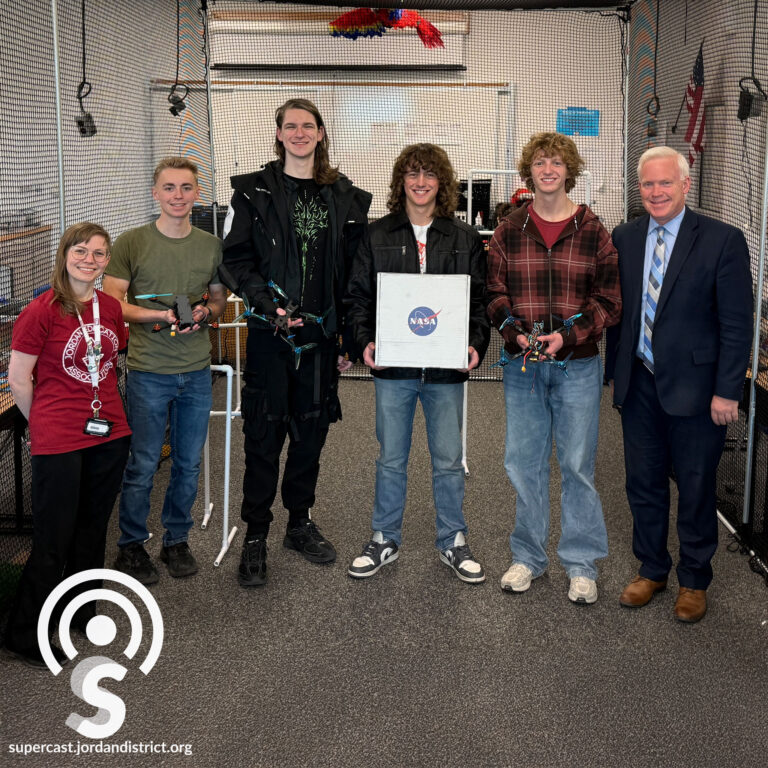
He has a love for music and theater, has performed with the likes of Donny Osmond, in national commercials, musical theater, and is passionate about teaching and sharing his tremendous talents.
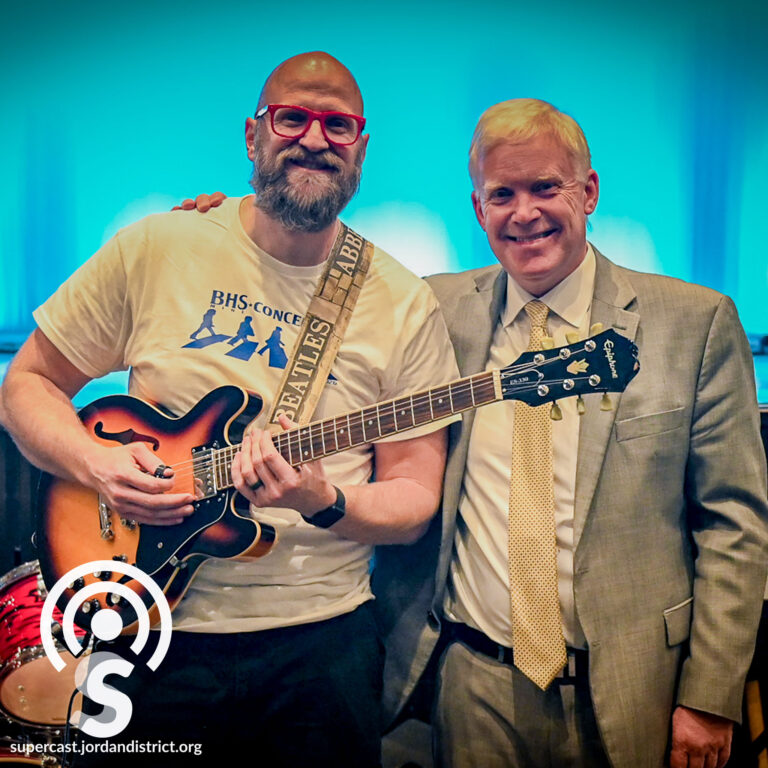
Deleted: On this episode of the Supercast, meet Bingham High School music theater teacher David Martin. He is an incredible educator with an impressive resume, who also happens to perform in a Beatles tribute band, having fun for a good cause, with all concert ticket sales going to charity.


Audio Transcription

David Martin:
This idea of Beatles concerts with a large group, choir, performers, dancers, instrumentals, that's kind of where that idea was formed.

Anthony Godfrey:
Tell me about the impact on you personally.

David Martin:
And knowing that even though our small contribution might seem small, it does make a difference. That's what keeps me coming back. Concert after concert after concert after concert.

[Music]

Anthony Godfrey:
Hello and welcome to the Supercast. I'm your host, Superintendent Anthony Godfrey. He has a love for music and theater, has performed in national commercials, musical theater, and with the likes of Donny Osmond, and is passionate about teaching and sharing his tremendous talents. On this episode of the Supercast, meet Bingham High School music theater teacher David Martin. He is an incredible educator with an impressive resume, who also happens to perform in a Beatles tribute band, having fun for a good cause, with all concert ticket sales going to charity.

[Music]

Anthony Godfrey:
We're here at Bingham High School talking with David Martin right before we go into the rehearsal for tonight's performances. We've got a lot to talk about, but introduce yourself and tell us a little bit about your time here at Bingham. What do you do?

David Martin:
My name is Dave Martin. I am the theater teacher and I teach stage tech. So that's the behind the scenes of all the shows and musical theater. So, all the song and dance and then a couple of film studies classes, which are great. Then I also oversee the student government efforts here at Bingham High School.

Anthony Godfrey:
Tell us how long you've been at Bingham.

David Martin:
I got here in 2022. So this is halfway through my fourth year.

Anthony Godfrey:
Where were you before, and what led you here?

David Martin:
Fun fact, I actually got my degree from the University of Utah in choral education in 2010. I taught choir at Kearns High School for six years and then I had a vocal hemorrhage. So for all you medical people, that's where your voice basically just breaks. I resigned, and I was a stay-at-home dad for six years.  Halfway through that six years. I went and got a master's in public administration from BYU. Then the position opened up and I was a little bit reluctant because I didn't have my degree in theater. I'd done a lot of theater, but I didn't have my degree. Somebody poked and prodded and said, “You should really apply.” Then I got the position. So it's been awesome ever since.

Anthony Godfrey:
Once you applied, you really dove in student government, stage crew, everything else. What has your involvement in theater been?

David Martin:
So my first big production, I'm about to name drop, was . . .

Anthony Godfrey:
This podcast is all about name dropping. Bring it.

David Martin:
I was in “Joseph and the Amazing Technicolored Dreamcoat” with Donnie Osmond at Kingsbury Hall when I was 14.

Anthony Godfrey:
So was he wearing purple socks at the time?

David Martin:
We did the cast party, and we were required. Everybody wore purple socks.

Anthony Godfrey:
Everyone wore purple socks.

David Martin:
Everyone wore purple socks.

Anthony Godfrey:
Wow. That was the real, that was that, you got the full Donnie Osmond experience.

David Martin:
Yeah. Which was just unbelievable. You can't write that. There's no way I could have as a, as a kid, or my parents even said, you know, “We're going to play our cards right. That you're going to be in a touring production of one of the most well-known musicals ever,” and especially a fan favorite here in Utah. So as a kid, 14, I just started. I was in music. I played in the band. I played trumpet and string bass in my middle school band. But to be in Kingsbury Hall with that caliber, and we ran it for three months, it just infected me with the theater bug. Then my next big theater thing was Desert Star Playhouse, like in 2006. I was brought in because somebody else had a vocal injury. So they called me up.

Anthony Godfrey:
I did not go. “Hamridge?”

David Martin:
No, similar though. It's actually . . .  so I did a handful of shows there.

Anthony Godfrey:
What was the spoof?

David Martin:
It was “Mission Credibles.” So it was Tom, Tom Cruise's Mission Impossible movies and then like superheroes. So we had like references to The Fly, the Jeff Goldblum, The Fly movie.

Anthony Godfrey:
Wow.

David Martin:
Really fun parody, really, really great. Then I did a Christmas show and then an Indiana Bones spoof the next year. Then kind of took a hiatus. Then my first show at Hale Center Theater was “Pirates of Penzance” in 2010hen I've done 23 at that theater over the last 10 years. That opened up doors to . . . .

Anthony Godfrey:
Twenty-three different productions.

David Martin:
Twenty-three different productions.

Anthony Godfrey:
Wow.

David Martin:
So that opened up doors to Music Direct and other theaters. So I've done a music direction for arts councils, Revision Arts, Draper Arts, and then Centerpoint, which is up in Centerville, Ogden Musical Theater, which is up in Ogden. I've been just kind of all over the map with doing shows and it's just been so much fun. It's a lot of work. It's a lot of time. But coming to teach here, I draw so much on my time as a performer. I didn't do the education route, which is okay. I have since learned all of the things, you know, for the instructional side of teaching theater in particular. But I really do draw on my experience. I did “Tuck Everlasting” at Hale, and we did it as our musical theater show last year. It was so cool to be on the other side of it.

Anthony Godfrey:
Yeah.

David Martin:
I did “Joseph” twice at Hale, and I've done it once here. So it's just really cool to just say like this show touched me so greatly and I want to present this and have the kids be a part of it. We're doing “Drowsy Chaperone” in the spring of this year in April and it's a number. It's my second show at Hale, actually in 2010 and it was life-changing. So I can be where the students are in their experience and say, "I was just like you when this show was opened, you know, to my eyes."

Anthony Godfrey:
Right. I would imagine it is really fun to see a show from both sides of it, where you were the performer and now you're making it happen for these students.

David Martin:
It's almost more emotional for me, I think, as a director now than it was as a performer. Because as a performer, you're very centered around yourself. You only have your job, your songs, your dances that you're responsible for. But to oversee all of the production elements, set design, building, costumes, everything when it finally comes together. I just have so many moments when I'm in the back of the theater, just like sobbing. I really just get so emotional when I'm like, "These are the moments. These are the moments that I wanted to see. And the kids caught the vision and they did it.” It's just awesome.

Anthony Godfrey:
We are here because you are performing with your band.

David Martin:
Yes.

Anthony Godfrey:
For the Dance-A-Rama, what's it called? Because it's all of the groups, all the dance groups are performing, and you and your Beatles band are playing for them.

David Martin:
Yeah. I love Dance-A-Rama though. I think we should market that, copyright it, and then sell it to the dance teachers here.

Anthony Godfrey:
Fantastic. Let's do it.

David Martin:
All right.

Anthony Godfrey:
Trademark. Trademark. Tell us about tonight's performance and what this looks like tonight.

David Martin:
So we've talked about Beatles concerts when I got here, because I just always talk about the Beatles. I can't not. And I've got a great relationship with Gina and Lori, the dance teachers here. They're unbelievable. They help us out with the musical, and we just have a really awesome Performing Arts department. But she just said, "What are your thoughts on a live performance?" And I said, "Done. No question." She's like, "Seriously?" And I was like, "Yes." I'm like, "There's no question. There's no, we need to work anything out. It's just going to happen." We can work it out. And we will work it out. So she said, "Okay," and so then she just gives us the set list. What's been the funnest part about it is there's a lot of songs that we don't typically do. We're opening the first dance, I think it's Dance Co. is “I Am The Walrus.” I've never done “I Am the Walrus.” They're not full songs, which is kind of sad because they're doing just cuts. Minute, maybe minute and a half of one song and maybe full song on some other ones.

Anthony Godfrey:
I'm the egg man. I'm the egg man. Goo goo g'joob. All right. Next song.

David Martin:
But it's so fun. We've never done that. So just to do that and then we don't typically do “Ob-LaDi” and I love “Ob-LaDi.” It's a fun, fun, fun, fun song to play. And then we lost a guitarist, couldn't make the schedule work. So he left the band, and then they were like, "Well, why don't you just play rhythm guitar on a bunch of stuff?" And so—

Anthony Godfrey:
What all do you play? Keyboard, bass, drums, guitar?

David Martin:
Yeah, that's it.

Anthony Godfrey:
That's it.

David Martin:
Well, and trumpet maybe if I had some time and I did play string bass. But I play well enough to... I'm a passable player and I think that's, you know. So these are going to feature the really elite teams here at Bingham, the Dance Co. and the ballroom team. Ballroom team’s “Let It Be” is awesome. They're also doing “Imagine” and it is awesome. Dance III, we're doing kind of like a mashup of Beatles and Michael Jackson's “Come Together.” So it's a little faster, a little bit more 80s pop, but super, super fun. Then the moments that I've actually really enjoyed, too, are the clinic, little girls that they've brought in. Little girls and boys that I've brought in to do some of these other numbers, and I just love it. I think and then one of the numbers, spoiler alert, is the Dance Co. girls dancing with their moms. I love that kind of stuff. I love moments where we connect people to real life. And we say that, “No, these moms have been in these girls' corner from the time they were five years old, taking them to practice, taking them to whatever.” Then to have a little moment in the spotlight is so cool.

Anthony Godfrey:
So what's the song? “Mother Mary Comes to Me,” “Your Mother Should Know.”

David Martin:
“Mother Nature's Son,”

Anthony Godfrey:
“Mother Nature's Son?”

David Martin:
No, it's not. It's, it's “Hey Jude.”

Anthony Godfrey:
Oh, “Hey Jude.” Very good. Very good. Yeah, that's cool that the mothers and daughters get to, get to dance together.

David Martin:
It's awesome and it's really just full circle when you see the little kids get up there and they're discovering dance for the first time. Then you see your seniors who are the dance ballroom team captains who are so polished in this art form. And I love it. I think if anything, the performing arts are my favorite way to come together, pun intended, because I think there's just something energetic and euphoric about live. So I think that's what's probably the coolest part about this whole thing tonight, is that live dance and live music is just really cool. It's a really cool dynamic.

Anthony Godfrey:
Stay with us when we come back. More with Mr. Martin and his love for everything Beatles

[Music]

Male Voice:
Never miss an episode of The Supercast by liking and subscribing on your favorite podcasting platform. Find transcripts for this episode and others at supercast.jordandistrict.org.

Sandy Riesgraf:
Hello, I'm Sandy Riesgraf, Director of Communications for Jordan School District and we want to invite you to connect with us. So many exciting things are happening in your child's school, your neighbor's school, in every school here every day. Don't miss out on following the fun or simply staying informed when there's important information we need to share. Join us at jordandistrict.org or follow us on Facebook, Twitter and Instagram @ Jordan District. We can't wait to connect.

Anthony Godfrey:
Talk to me about the band and some of the events you've been a part of.

David Martin:
So we formed like in 2014. They were a neighborhood band. They all kind of hung out together and played music, and then the guitarist was a good friend of mine and fellow teacher at Kearns, who said we're putting together this state fair just up off of 48th West. By Glenmore Golf Course and he said,  “We're gonna do five numbers or something. We need a bass player.” So I was like, low stakes, whatever you need. So I came in. I had not really played bass at all. Like I'd picked the bass up every 10 years or something and I had to get ready for a gig or something and they're like we need a bass player. So I met the group. Devin and Lisa Ashby, Skip Cavell and Sean Bastille, and Bob Osberg was my buddy. So we did a handful of numbers. We did “Mustang Sally.” We did “Proud Mary.” We did “Old Time Rock and Roll.” Pretty easy and I just thought this is a one-and-done and they're like, “Well why don't you come back? Why don't you come back and we'll do another thing. We'll find something. We'll go to the state fair.” So I got more and more and I was playing bass a little bit more. About the same time, I was teaching junior high, and no offense to junior high teachers, it did not bode well for me. I had a really hard time.

Anthony Godfrey:
It was not a match.

David Martin:
It was not a match. So I said, “How am I going to spruce up my end of the year? I got to do something because I'm four months in and I'm just tapped.” So I said, “Well, we're going to do a Beatles concert at the end of the year, and we're going to just do all Beatles music and, why not? We'll just do a live band. So the band I used for those concerts was somebody different, but this idea of Beatles concerts with a large group, choir, performers, dancers, instrumentalists, that's kind of where that idea was formed. Then in 2016, about the same time, I was so we played with the band kind of off and on for different functions. In 2016 a good friend of mine was diagnosed with ALS, and I said, “I want to do a Beatles concert for him. We'll call it Beat ALS and we'll feature all of the performers from the community and it'll be awesome.” So it was a one big night at Cottonwood High School. It sold about a thousand tickets and we raised ten thousand dollars and I dished it off all to an organization and basically started from scratch after that. I was like, “What am I thinking?” So I thought, “You know? I love this idea of doing this ALS Beatles concerts, and I love the idea of doing concerts with kids.” So this band was just there and they were like, “We love the Beatles and we love doing this,” and Lisa, one of the female singers in the band, her aunt actually was diagnosed and passed away from ALS. So it was a really interesting connection. So then that band became the Beat ALS band. We've done 15 junior high and high school concerts and they don't ask to be paid. They don't ask for anything outside of a t-shirt, and so that became . . . we would just do all these performances and intermix between these performances would be these ALS concerts and so that's kind of what kept the band going for now. You know we're 11 years.

Anthony Godfrey:
Tell me about the impact on you personally as you have spent this time raising money for those with ALS and just to help others through your music.

David Martin:
So like the first concert we had 23 vocalists, guitarists, instrumentalists, 23. We had a full orchestra from Cottonwood High School, we had members of the Odyssey Dance Troupe, we had aerialists, we had  . . . and I just was depleted by the end of that concert. It was six months of my life trying to prep that. So I was so just, in the headlights the entire time, and I remember when that concert finished it was like, “Oh that's good that's done,” and then I had a guy that worked with me that was like, “We should maybe look at maybe doing another one of these.” So he kind of pushed me on it and since that time 2017, 2018 I just have these moments where I feel like it is making a difference. We don't raise a ton of money just because of the nature of concerts. I mean unless you're debuting at Shea Stadium, you're not going to get you know.

Anthony Godfrey:
Right.

David Martin:
But our main goal has always been to just improve quality of life for the patient and knowing that even though our small contribution might seem small, it does make a difference and it provided hospice or it provided, you know food, or whatever that is. My favorite, very favorite moment of any concert is when a guy that we've benefited named Darren Redden, who had had ALS for six years and he had a trach, which is just so complicated when it comes to quality of life. It was at Elkridge, Elkridge Middle with Keith Goodrich, and it was our biggest. We raised $12,000 that night, but Keith also has 400 kids in his program so we did “Hey Jude” and during the “nah-nah’s” he started doing donuts in his wheelchair, and it was like, and his cute daughters Livia and Lexi, who were barely in high school when their dad got diagnosed . . . to just see an entire auditorium. Bingham was here, it was here at Bingham, which is even cooler. Fifteen hundred people just sending everything that they could to this family saying like, “I don't know you, and I don't know if $12,000 is going to scratch the surface in your financial struggles with this disease.” But I've had so many moments in those concerts where we're singing “Hey Jude” and we're doing the “nah-nah’s” and the kids are just enveloped in the music and the audience is enveloped in the music and it helps that the Beatles are the greatest band. I don't even have to do anything. I just put their music out there, and everybody just embraces it, but then to say these are the meanings behind the songs or these are the takeaways, and these kids get a chance to do something with that talent, do something with their performing arts abilities for the better, that's what keeps me coming back concert after concert after concert.

Anthony Godfrey:
Well that's a huge impact and unforgettable moments for the people involved, and I'm just really excited to have you here Bingham, and bringing that energy here. Now I understand that not only have you had theater experience, but you have had film experience in at least an advertisement I know. Tell me, weren't you were you the doting father when someone was filling out a form or taking a test or what was it?

David Martin:
So that was for the ACT. That was kind of funny, just you know having been in the education realm and doing an ACT commercial was a little, it was a little weird right, because I'm like I do this like you know pre-ACT day, on ACT day, and you guys are like marketing you know. For that it's just it's just a little bit fun. But my first commercial was actually a T.C. Christensen, who did “Seventeen Miracles,” and kind of a well-known Utah film director and it was for Peterson's Fresh Market. I was the watermelon whisperer, so . . .

Anthony Godfrey:
Wow I'm a fan of Peterson's but I have never bought a watermelon there. Maybe I should.

David Martin:
So I talked to watermelon, that was my big acting debut but since then I've actually been really fortunate I did a Subway commercial that like debuted in the in the Midwest, like in Detroit or something Michigan. I can't remember but that was kind of fun. Then Donovan Mitchell, I got to share the screen with Donovan Mitchell for a U of U Health commercial.

Anthony Godfrey:
Wow. I remember that commercial. That was you.

David Martin:
That was me.

Anthony Godfrey:
Wow.

David Martin:
Then probably the biggest one, which is kind of silly to say . . .

Anthony Godfrey:
You fake injuries really well that was good that was good.

David Martin:
So the biggest one probably was Larry H. Miller Used Car Supermarket because Larry H. Miller owns the Megaplexes.

Anthony Godfrey:
Oh so it was shown before movies.

David Martin:
I would get stopped just by so many people left and right like, “you're the, you're the guy from the . . .  I've seen you before.” Then in terms of films, we . . .  there's a group here in Utah called Working with Lemons. They're a family out of Riverton. Their big breakout was they do live action music videos but they did “Do You Want to Build a Snowman” and it got over 400 million views and likes. So then that kick-started them into their film career. They've done countless Disney adaptations or music videos plus some musical theater but they've done three films. They did one called “Night of Wrath” and I played a dad. Then they just did a live a modern day telling of “Sense and Sensibility” and I was the man in the bookstore. So if you're like, what? Who's the man in the bookstore, that's me.

Anthony Godfrey:
That’s you.

David Martin:
Then lastly in 2019, I think, “Forgotten Carols” which is a well-known performance that happens here in Utah. Michael McLean wrote it. It's like 34th year or something, but they recorded a staged version of that to show during COVID and so I got to be in that.

Anthony Godfrey:
Oh, cool.

David Martin:
That was on Amazon Prime and a couple of my students over the Christmas break texted me and they're like, “Is this you?” I'm like, “Yeah.” I'm a huge hit at Deseret Book.

Anthony Godfrey:
That's fantastic. That's great. but really the ACT commercial was your favorite I'm sure.

David Martin:
It was just so funny because they were like, “We're gonna put you in this sweater. You have to be like this cool dad.” I'm like, “Can I not just be a cool dad, just because that's what I am gonna like.” “No, we're gonna put you in a sweater.”

Anthony Godfreyu:
Cool dad sweater.

David Martin:
Yeah, cool dad sweater, and it was just fun. It was fun and I will say though, the Subway gig was the school teacher. So he was talking, he's in the class. The commercial starts with the camera coming up to a row of desks and I'm like, “Listen, the only salvation I have as a teacher, the only sanity I get as a teacher, is when I get to have my bacon. You know cheddar melt.” So the kids, and they had a couple cuts of the of the commercial, where the kids like went straight up “Lord of the Flies” where I'm like you know, fantasizing about the sandwich, and then I come out of my trance. . .

Anthony Godfrey:
Going nuts.

David Martin:
And the kids are like face pain and a disco ball and a tuba. It was, and they actually said but they said in the in the um, like after I got cast and we were kind of meeting, they're like, “We chose you because you were a school teacher,” because I told them in the audition. They were like, “Yeah, we chose you because you were a school teacher.” I'm like, “Thank you.”

Anthony Godfrey:
Yeah, it's opening doors left and right.

David Martin:
Finally.

Anthony Godfrey:
Thanks for everything you do here at Bingham. You do so much and we really are very fortunate to have you here and thanks for taking the time to talk with me today.

David Martin:
Hey, happy to do it and you know one of these times, you're gonna have to strap on the guitar and come over and uh, and play a couple numbers.

Anthony Godfrey:
Pull me in on something less complex than “I Am the Walrus” and you're on, you're on.

David Martin:
You got it.

[music]

Anthony Godfrey:
Thank you for joining us on another episode of the Supercast. Remember, “Education is the most important thing you'll do today!” We'll see you out there.
(upbeat music)

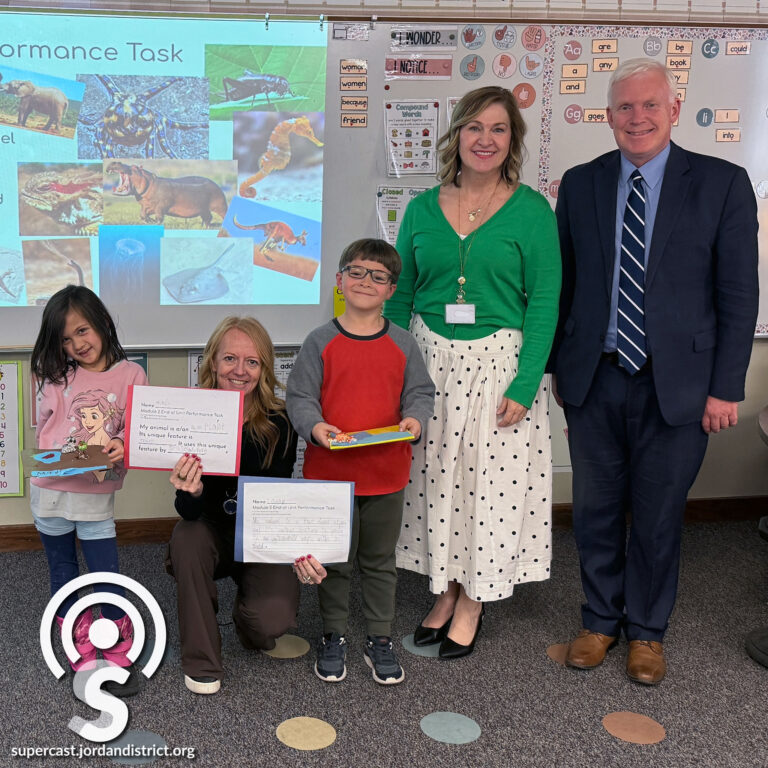
They are learning literacy by making clay model animals like a tiny toxic octopus and a very interesting elephant. It's all part of a Language Arts Curriculum called Wit and Wisdom that is fostering critical thinking in students across Jordan School District.

On this episode of the Supercast, we take you to Terra Linda Elementary School where a first-grade teaching team is taking student success to new heights with this rich Wit and Wisdom reading experience and they're inviting parents to be part of it all.


Audio Transcription

Michelle Lovell:
Terra Linda has risen to the top of the District for first grade data for middle of year.

Aubrey McDonald:
We always talk about in our class what do we want to do?

Students:
Cross our midline.

Aubrey McDonald:
And so when we do something with art and then write about it we're definitely crossing our midline.

Student:
It helps us remember.

Michelle Lovell:
You are being very intentional about your students’ reading needs and the progress they're making.

[music]

Anthony Godfrey:
Hello and welcome to the Supercast. I'm your host, Superintendent Anthony Godfrey. They are improving literacy by making clay model animals, like a tiny toxic octopus and a very interesting elephant. It's all in support of a language arts curriculum called “Wit and Wisdom” that is fostering critical thinking in students across Jordan School District. On this episode of the Supercast, we take you to Terra Linda Elementary School, where a team of first-grade teachers is finding unparalleled student success using this rich Wit and Wisdom reading experience, and they're inviting parents to be part of it all.

[music]

Anthony Godfrey:
We're here with Michelle Lovell and Aubrey McDonald talking about Wit and Wisdom and the way it's used in a first-grade classroom here at Terra Linda. Thanks for talking with us today.

Aubrey McDonald:
I'm happy to. Thanks for coming.

Anthony Godfrey:
Michelle, talk generally about Wit and Wisdom. We added that in the last couple of years in Jordan School District. What is it and what is it intended to accomplish? And then let's talk about how it's been adapted for use in this first grade classroom so effectively.

Michelle Lovell:
So Wit and Wisdom is a curriculum resource that we use in Jordan School District for language arts standards. This program is meant to be a knowledge-based knowledge-building program and it incorporates looking at reading text, it incorporates looking at art, talking and dialoguing about what they're learning, diving into text, finding text evidence, doing writing activities, and it does not have a phonics component. We still use UFLY for phonics, but the big pieces of Wit and Wisdom address those vocabulary, language, speaking, listening, and text-dependent kinds of pieces of the core.

Anthony Godfrey:
This is the rich reading experience that students get in conjunction with the phonics that they're learning.

Michelle Lovell:
Absolutely, and one of the pieces that we love about Wit and Wisdom is how deeply kids learn about topics because the reality is, if you aren't able, if you don't know a lot about a topic, you really can't speak to that topic, and if you can't speak to the topic, you can't write about it either. So being able to talk about something and have a deep knowledge base is a precursor to being able to write effectively about that topic. One of the things that I have really loved about Wit and Wisdom is going into classrooms and seeing the discussions kids have and I've just seen it in classroom after classroom with students talking about a book and bringing out parts of the book and having just amazing discussions about what they're reading, and because they have such strong discussions, that impacts what they can write about.

Anthony Godfrey:
The content knowledge is a really important companion to the just reading skills that we're teaching, so that they're getting this deeper knowledge, they're able to write about it, they're able to discuss it and there's some context for the reading that they're learning and there's some joy in reading these books and learning about the world around them.

Michelle Lovell:
Yes absolutely, and being able to also realize you can go back into a text you once you've read something and you want to talk about the details that we're giving kids the skills to be able to go back into a book, look for text evidence, cite textual evidence, which is — that's a skill that they're going to always need throughout their lives, and then relate those texts to other texts that they've read, relate them to other things that they're learning, art, science, social studies, all of those pieces coming together to build a huge knowledge base for kids.

Anthony Godfrey:
And to make a little twist on a common phrase, you're learning to read and learning while you read about all of these different topics, and as we visit this classroom today, we're going to learn about animals and what students learned about animals, which is really exciting for a first grader in particular.

Michelle Lovell:
Yes, and that's one of their science topics: learning about animal habitats and what animals do.

Anthony Godfrey:
So it's that overlap of getting a lot of things accomplished with the same with the same work that's being done in class.

Michelle Lovell:
That's correct.

Anthony Godfrey:
You've talked about fidelity versus integrity when using Wit and Wisdom in the classroom because this was a big lift. It was a big shift for students and for teachers from what we had been doing previously. So talk about the difference there.

Michelle Lovell:
So when we're talking about fidelity, we mean that we don't want to change any element of a curriculum, that it needs to be read verbatim and we're not going to change anything in the curriculum. Integrity means that we're going to have the outcome of the curriculum, and we're going to meet the learning goals and the objectives but teachers have a little more autonomy to make instructional decisions based upon their student needs. And so our goal with Wit and Wisdom is that teachers would read the analyze section of the lessons and read the learning goals and stay true to those, and as they're going through the lessons, to be able to make those teacher moves regarding how many questions they're asking and what types of questions, scaffolding background knowledge when it's needed, helping students who are reluctant learners to build that that knowledge base, and then even adding in and bringing in other topics as they, as what's happened in this classroom, where they're incorporating pieces that they're staying true to the Wit and Wisdom lessons and the integrity of the lessons, but they're building in and upon that, to bring in art and other pieces of science.

Anthony Godfrey:
Which brings us to Aubrey everything that she's doing with her first graders to make sure that this learning comes alive and is memorable and you've really got their brains firing on all pistons so talk about what you have done here in this classroom and what you did last Friday, your showcase.

Aubrey McDonald :
So for finishing module two, the end of module task is actually to write an informative paragraph about an animal, and we thought what could we do to mix that up a little bit, to add some art and to add a science standard in there as well. So last year my team and I we came up with having the students sculpt an animal. It had to include their unique feature and then we had them write what the animal was, what the unique feature was, and then what how the animal uses that unique feature because that's what the whole module was about is how can we learn from animals and their unique features. Last Friday we held a showcase and we invited students, all the students in the school they could come visit each of the three classrooms, and then we also invited some people from the community and the school district and then from 12:30 to about 12:55 we invited parents to come in and look at the projects. The students were so excited to share with their parents, and many of them have siblings in the school as well so you could just see the little first graders faces light up when big brother and sister came in and they had something exciting to share with them.

Anthony Godfrey:
Yeah and the pride in the learning that's taken place in the project that they have is really fun to see. Now they each wrote a paragraph about their about, their animal and they also sculpted the animal and put it in kind of a setting. So talk us through some of these projects that you have here on the table.

Aubrey McDonald :
Well one student decided, she did jellyfish and she actually made it a little jellyfish family.

Anthony Godfrey:
I would think it would be pretty hard to make a jellyfish out of clay but that's a very good representation. It's and, is the color did they color it with markers after work?

Aubrey McDonald :
Yes so we I had some markers and we did the coloring. Last year we had so this is our second year. Last year we put them on paper plates and they drew a little bit of a background and I thought well why don't we do some butcher paper this time and because the paper plate has the ridges and things so just to make it a little look a little bit nicer. So we just wrapped some cardboard in their color of what the setting for the environment, their habitat that they wanted it to be in.

Anthony Godfrey:
Yeah yeah, we test at various times to see the progress that students are making, and you showed me earlier today the progress that first grade students in Terra Linda are making. Talk to me about that, Michelle.

Michelle Lovell:
Yeah it was really exciting to see. We have midterm goals where we want the kids to meet learning goals in the middle of the year so they'll be on target to meet goals at the end of the year and Terra Linda has risen to the top of the District for first grade data.

Anthony Godfrey:
I want you to say that one more time.

Michelle Lovell:
Yeah, Terra Linda has risen to the top of the District for first grade data for middle of year and that was just really exciting to see. In talking with your administrator, you know she mentioned that you are being very intentional about your students’ reading needs and the progress they're making, and you're being very strategic about instruction and intervention. She also mentioned that you have coaches that work with you in the building and that you all — that it's really a community effort. She also mentioned that you bring in your parents and include your community in your students' learning, and this is a great example. Aubrey, how does it feel to know that you have shown such incredible growth, such great scores at the middle of the year.

Aubrey McDonald :
Well, we did it as a team. So, Mrs. Davis and Miss Carlson definitely shared. We shared all the success together.

Anthony Godfrey:
Stay with us when we come back find out what a tiny toxic octopus and interesting elephant have to do with Wit and Wisdom and student success in literacy.

[music]

Male Voice:
Never miss an episode of the Supercast by liking and subscribing on your favorite podcasting platform. Find transcripts for this episode and others at supercast.jordandistrict.org.

Female Voice:
In Jordan School District communicating and connecting with parents is really important and that's why we're very excited about ParentSquare. ParentSquare has replaced Skylert as the District's new communication platform. With ParentSquare, you'll receive all District and school communication via email, text and/or the app based on your preference. All messages can be translated to your preferred home language indicated in Skyward and it takes less than a minute to set up your notification preferences. You can use the ParentSquare app on any device. The app is available at parentsquare.com/sign-in. We look forward to connecting with you through ParentSquare.

[music]

Anthony Godfrey:
So at this end of module two, you wanted to do a performance task that was not just paper and pencil. Tell me about what got you here and why you chose this particular kind of project, and then we'll talk with Logan and Maddie about their projects.

Aubrey McDonald:
We actually started this project and we did it last year. We were thinking about a way to have the students show us what they knew that wasn't just a paper pencil test. So we thought, I thought why don't we have them sculpt something with clay. So we got this white modeling clay, and then the performance task is to after learning about many different animals and their unique features, they were to create a model of an animal and its unique feature, and then we had them write what animal it was, what the unique feature was, and then what they do with that unique feature.

Anthony Godfrey:
That is a lot to take in. I think it's really exciting, first of all, to tie literacy to learning about animals and to bring art into it and allow them to do some sculpting instead of just writing the answers. What sort of responses have you seen with from students when they're able to interact with the material and the information they've learned in this way? 13:51

Aubrey McDonald:
My students have really enjoyed it and it was nice because this year we invited the other students in the school to come look at the projects. The second graders last year remembered that they did this project, too. A lot of them were even able to tell us their animal and their unique feature. So having them interact with the clay and then write about it, I think helps them. It'll be something that they'll remember.

Anthony Godfrey:
Yeah.

Aubrey McDonald:
Maybe even for let's hope for all of elementary school but I know they definitely remembered for the next year too.

Anthony Godfrey:
It gets their brain firing in different ways. I love that they got to come back and see what the fresh batch of first graders did this year and reminisce about their own work when they were younger in first grade not the older second graders that they are now.

Aubrey McDonald:
I had put out all the books that go with this module when we had visitors and many of the students from that were in the class last year were excited to see the books again. Then these guys, my students currently, just love to read the books and we always talk about in our class what do we want to do?

Students:
Cross our midline.

Aubrey McDonald:
Cross our midline. Yeah and so when we do something with art and then we write about it we're definitely crossing our midline because when we cross our midline what does it help us?

Student:
It helps us remember.

Anthony Godfrey:
Crossing the midline is using your left or right brain?

Aubrey McDonald:
Yeah, using both sides of the brain.

Anthony Godfrey:
That's wonderful.

Aubrey McDonald:
Yeah.

Anthony Godfrey:
So Logan, tell me about your project. What animal did you sculpt and what did you write about your animal? What unique features does your animal have?

Logan:
My animal is a blue-ringed octopus and its unique feature is poison in unexpected ways with its teeth.

Anthony Godfrey:
Poison in unexpected ways with its teeth. Tell me about that.

Logan:
So it like bites you and you don't even know it's there but you can die.

Anthony Godfrey:
Really? Hopefully I will never meet a blue-ringed octopus.

Aubrey McDonald:
Stay away from them, yes. Do you remember if the octopus was big or small?

Logan:
Small.

Aubrey McDonald:
Small. Yeah it can fit in your hand.

Anthony Godfrey:
Oh really?

Aubrey McDonald:
Yeah.

Anthony Godfrey:
So this is a tiny toxic octopus. That's terrifying. Why did you choose such a scary animal?

Logan:
I have honestly no idea.

Anthony Godfrey:
You know I have no idea how you chose that one. Okay that's great. I see that you have not only sculpted this very cool orange blue-ringed octopus but you put him on — is this now this is paper, blue paper that represents the ocean?

Logan:
Yeah.

Anthony Godfrey:
And the yellow is that the beach? Is that the sand?

Logan:
Yeah.

Anthony Godfrey:
Wow that's very cool you've put him in a whole environment there. Does he have a name?

Logan:
No.

Anthony Godfrey:
No name? Do you want to think of one right now?

Logan:
No.

Aubrey McDonald:
Logan doesn't always like to be creative so I was really excited to see that he really got into making the octopus because Logan is more like, “get to work, get my work done, and don't really want to draw a picture” so he put so much detail into it.

Anthony Godfrey:
That is a lot of detail. It looks really good. For someone who may not love creativity all the time this is very creative. Now I'm just gonna do a little audit of your octopus okay, is that all right?

Logan:
Yeah.

Anthony Godfrey:
An audit means I'm going to check the details of your octopus. Here we go. One, two, three, four, five, six, seven, eight. Yep, eight legs. That's quite an authentic octopus you have there. Very cool, Logan. Is this your favorite animal?

Logan:
No.

Anthony Godfrey:
What is your favorite animal?

Logan:
A lion but we didn't learn about lions.

Anthony Godfrey:
You didn't learn about lions. One day you will probably learn about lions, or maybe you already have. Have you already read some things about lions or do you just like them?

Logan:
I like them.

Anthony Godfrey:
Can I look at your handwriting here? That is really impressive. “My animal is a blue-ringed octopus, and its unique feature is poison.” This is really, really well done, Logan. I'm super impressed. Nice job.

Aubrey McDonald:
Good job, Logan.

Logan:
Thank you.

Anthony Godfrey:
All right Maddie, let's talk about yours here. What animal did you choose and what is the unique feature of this animal?

Maddie:
My animal is an elephant. Its unique feature is its trunk. It uses its unique feature by squirting water.

Anthony Godfrey:
Squirting water. Wow and why did you choose an elephant? What do you like about elephants?

Maddie:
Because they like because they're my favorite and I like them and I have a stuffy at home.

Anthony Godfrey:
You have a stuffy that's an elephant? What's your stuffy's name?

Maddie:
Ellie.

Anthony Godfrey:
Ellie the Elephant. Perfect name. Aren't you excited that elephants were one of the animals in your book?

Maddie:
Yes.

Anthony Godfrey:
Because you got to choose your favorite animal. Now talk to me about your sculpture here. It looks really good.

Maddie:
So this is a baby elephant and I drawed a tree with apples and oranges on it and then I did water with apple squirt on it.

Anthony Godfrey:
Oh, I did wonder about that. So there's a lake cut out here it looks like. Is that kind of a lake? That water? And then I saw a big red splotch covered colored in the middle.

Maddie:
I actually mean that's ketchup.

Anthony Godfrey:
Oh, you actually mean that it's ketchup. Okay, so there's water and ketchup and a tree with apples and oranges and a baby elephant that squirts water. This is not what I expected to see today, Maddie. Oh and the sky. This is the sky, Maddie? Oh I like that. And you wrote your name in the sky.

Maddie:
Yes.

Anthony Godfrey:
Describe your elephant for those who are listening to this podcast.

Maddie:
I actually love the eyes, too, creepy.

Anthony Godfrey:
The eyes are pretty large. You think they're creepy?

Maddie:
Yeah. ‘Cuz it . . .

Anthony Godfrey:
Oh yeah, they are big. I guess you could say they're creepy. I do see the big ears on the elephant though and the big trunk and you colored it gray. Did you do that with a marker?

Maddie:
Yes.

Anthony Godfrey:
This is well, this is really cool. I really love this. It's really nice talking with both of you. I'm very impressed with your reading and your writing and your creativity in making these sculptures. I'm really excited to see how well you're doing here in first grade. Thank you for spending time with me after school today.

Maddie:
Thank you.

Logan:
Thank you.

Anthony Godfrey:
How did parents react when they came in and saw their students' work?

Aubrey McDonald:
We had a really big turnout of parents and the students were so excited. They read it to their parent and then their parents. They would take their parent around and say, “Oh, you have to look at my friend’s. Oh look at this other friend’s. So they were just dragging them across the classroom, showing them all the pieces that all of their friends' pieces and they were really excited. Parents really enjoyed being here. Sometimes there's not a lot of opportunities for parents to come in during the school day to see things and so we wanted — this was another reason why we really like this idea is it gave us a chance to invite parents into the classroom and showcase the learning instead of just sending home. ‘Oh here's the test where the paper pencil test where they took and they wrote an informative paragraph about an animal.’ This gave something for to include more people.

Anthony Godfrey:
I love that you pulled families in the way that you did and this is really exciting. It's a great implementation of the program. So many layers to this activity with literacy and art and science. Just really exciting to see this. Thank you so much for everything you're doing here.

Aubrey McDonald:
Thank you so much for visiting. It's great to have guys come and give some feedback or and see the things that we're doing.

Anthony Godfrey:
I love how you thank your team. That's really how this works is when a whole team of teachers works together intentionally, and I'm thrilled to get to see it. So thank you for this wonderful classroom that you have.

Aubrey McDonald:
Thank you so much and I wish that we could have all, a whole team could have been here to chat with you too because we have really come together as a team, and we're really working hard and focusing on that. Like you had said we wouldn't be successful if we didn't have each other.

Anthony Godfrey:
It's exciting. Thank you.

Aubrey McDonald :
Thank you.

[music]

Anthony Godfrey:
Thanks for joining us on another episode of the Supercast. Remember, “Education is the most important thing you'll do today!” We'll see you out there.

[Music]


You could say they are hitting new heights as winners of a NASA Aerospace Engineering contest.

On this episode of the Supercast, we head to JATC North to hear how four students will be working with NASA TechRise engineers over the next 18 months to bring an experiment they proposed to life. It is an experiment, with real world applications, that will be launched into the edge of space on one of NASA’s high altitude balloons, a dream come true for aspiring space engineers.


Audio Transcription

Student:
Now that we've won, we're going to be building some things that we can put in a box that they'll send up to the edge of space and we'll measure the amount that these different data storage units are going to... like what just happens to them.

Student:
It'll reach 60,000 feet

Student:
And we are going to test how the radiation and pressure there affects the electronics.

[Music]

Anthony Godfrey:
Hello and welcome to the Supercast. I'm your host, Superintendent Anthony Godfrey. You could say they are hitting new heights as winners of a NASA Aerospace Engineering contest. On this episode of the Supercast, we head to JATC North to hear how four students will be working with NASA TechRise engineers over the next 18 months to bring an experiment they proposed to life. They'll be working on an experiment with real-world applications that will be launched using NASA's high-altitude balloons, a dream come true for these incredibly talented students.

[Music]

Anthony Godfrey:
We are here at the JATC North campus to talk with Amber Saffen and some of her students about the Aerospace Engineering program. Amber, thanks for talking with us today.

Amber Saffen:
Yeah, welcome. Welcome to our program.

Anthony Godfrey:
Tell me how you and your students are now involved with NASA.

Amber Saffen:
Yes, so our CTE coordinator right at the beginning of the school year sent an email our way that NASA has a competition called NASA TechRise where students can write proposals for an experiment to be sent up into the stratosphere, and so as part of my program, I was like, "Hey, we're the aerospace program. That seems pretty dang relevant." So fresh to the program, my students got in and they did some research and they put together some proposals of some things that useful experiments they thought would be good to send up there. And then just a couple months ago, I got an email that one of those proposals had been accepted. And so I'm here with four of my students and they wrote a proposal and now NASA will be working with them once a week for the next 18 weeks to build the proposal. Gave them, is going to provide $1,500 for them to buy the supplies, is going to help them learn how to do it, and then that will be shipped back to be go up on the WorldView balloon.

Anthony Godfrey:
Let's meet your students and have them describe to me what this experiment is all about. Introduce yourselves, tell us what grade you're in, and what school you're from.

Student:
All right. My name is Blake Bigler. I'm a senior at Mountain Ridge High School.

Student:
My name is Canyon Bullock, and I'm a senior at Herriman High School.

Student:
My name is Mason Rice, and I'm also a senior at Mountain Ridge High School.

Student:
My name is Zach Hull, and I'm a senior at Riverton High School.

Anthony Godfrey:
Someone tell me about this experiment, what's involved exactly. What will you learn from being a part of this?

Student:
Yeah, we created this proposal like six months ago, but basically what it is, is we designed an experiment where we are testing how data storage is affected and how it works in space with like radiation and lower pressure. So now that we've won, we're going to be building some things that we can put in a box that they'll send up to the edge of space and we'll measure the amount that these different data storage units are going to, like what just happens to them.

Anthony Godfrey:
So tell me, how do you send this up? How far up does it go? What is all that going to look like?

Student:
So what we will be doing is we will be taking different data storage types like hard drives, disk drives, flash drives, things like that, and we will put them in a box, which we will attach to a weather balloon.

Student:
It'll reach 60,000 feet and then once it reaches 60,000 feet then it'll gradually go down where they can pick up all the tests and then take them back to the facility.

Student:
And we are going to test how the radiation and pressure there affects the electronics.

Anthony Godfrey:
What's the theory? What do you think might happen once you send that information up? I assume you'll send a zip drive up as well, a couple of floppy disks.

[laughter]

Never mind. No, don't worry about it.

Student:
I don't know that a five and a quarter floppy would fit in the box.

Anthony Godfrey:
Oh, it's going to be that small.

Student:
It's not particularly large.

Anthony Godfrey:
That makes sense.

Student:
We have to use a SATA size disk drive because a standard five and a quarter would just be too much.

Student:
We think we're going to put different amounts of insulation around the drives. So we're thinking different materials.

Student:
Lead, aluminum, foil, things like that.

Student:
So we're just trying to stop the radiation from reaching the data encoding because otherwise the radiation can scramble that and then your data that you send up there is no longer useful.

Anthony Godfrey:
So is it the radiation and the altitude? You're measuring the impact of both on data storage. Is that right?

Student:
Yes. It will mostly be the radiation because that's what we'll be getting through into the storage. But the pressure will also be being tested on the other parts of the experiment.

Anthony Godfrey:
I understand they're going to send you some money for materials to conduct this experiment. Somebody want to speak to that?

Student:
On the subject of materials, we're currently in a storage crisis. Things like RAM and NVMe drives and things like that are all way more expensive, like three times, four times. So great timing.

Anthony Godfrey:
Well, if you change your mind, I do have some of the large and small floppy disks available in my home. And if you really want to take your experiment to the next level, just let me know. We can include that. Tell me what interested you in being part of the Aerospace Engineering Program to begin with.

Student:
Well, for me, my dad's a pilot at Delta, so I've always been kind of interested in aviation. And I also am pretty decent at math and science, and I like those things, I'd say. So I thought that I'd try to put them together and do aerospace engineering.

Anthony Godfrey:
I'm not sure I would be surprised that he's really decent, but I appreciate the humility. So that's pretty cool. So have you traveled lots of great places with those pilot flight benefits of your dad's?

Student:
Yeah, I've traveled some pretty cool places.

Anthony Godfrey:
Do you want to be a pilot, or what do you want to do with your knowledge and with your science and math skills?

Student:
Well, that's kind of what this class is doing for me, is I'm trying to figure out if this is something that I'd want to do. And I think that this opportunity to work with NASA has definitely, like, it's got me a lot more excited about aerospace engineering, and it's, a lot more interested in this now for sure.

Anthony Godfrey:
Wonderful. How about for you? Why did you decide to be part of this class?

Student:
I've been doing, like, taking engineering programs at JTEC for a while now, and I just thought that aerospace would be the next one. And I was like, that's pretty interesting, but it's been my favorite one so far. And I think it's been really cool learning about things that fly, and rocket ships, and airplanes, and everything that flies. I think it's all really cool.

Anthony Godfrey:
What other engineering classes have you taken here?

Student:
Engineering Principles, CAD Mechanical Design, Architecture, Civil Engineering. I was going to do Robotics, but I opted out on that one. But this is the coolest one so far.

Anthony Godfrey:
Okay, great. How about you?

Student:
I always wanted to be an engineer, but I didn't know which kind. This is my first engineering JTEC class. And I decided to go with aerospace because I really like NASA and SpaceX, and I think that planes and rocket ships are really cool. So I just decided to take this class, and this class inspired me to start my, well, not start, but I'm going to start my degree in mechanical engineering with an aerospace emphasis at BYU.

Anthony Godfrey:
And for other engineering programs, the sky's the limit, but the sky's not the limit for aerospace.

Student:
No, not for this one.

Anthony Godfrey:
And you want to continue your studies at BYU, ideally.

Student:
Yep.

Anthony Godfrey:
Wonderful. Well, I'm glad you're getting a start here. That's awesome. And it's great that you've been able to narrow that already to aerospace. How about you?

Student:
So I'm actually in aerospace and robotics right now.

Anthony Godfrey:
So flying robots is really your thing.

Student:
Yes. So I've always found both interesting. Like, I would take apart toys to figure out how they work, and rockets are just awesome. There's no doubt about it. But I took these classes because it's just fun for me.

Anthony Godfrey:
How long before robots are our overlords?

Student:
Ideally, never.

Anthony Godfrey:
But let's be realistic. We're just here on the podcast. When's it going to happen?

Student:
If it's going to happen, it will be within the next century, I believe.

Anthony Godfrey:
I like how you leave the door open that it might not happen, but at least we've got a few years left. All right. Tell me, why did you decide to teach aerospace engineering? And what's your background? And how exciting is it for you that your students are now working with NASA?

Amber Saffen:
It's super, super, super exciting. I mean, as a teacher, all I want to do is get opportunities put in front of students so they can fly and do what they want to do. I got my degree in engineering education, and I took over. This is my first year teaching the aerospace course. I took over from Noel Schick last year. She had a good program going through PLTW, and I wasn't able to continue with them this year, though we might jump back on. And so I was looking at any opportunities I had to connect, get into this. I was already teaching the drone course, and I started teaching that because there was a need for it. I saw that there was this huge industry blowing up that we were starting to get college degrees, and I thought, we need to get this in the high school. And that’s my job is, is to connect students. So I started teaching that in partner with Noel's aerospace class, and then when she left the school, I took over aerospace. And so any connection I can make with NASA or anything like that, we have a big aerospace industry here in Utah, with Boeing here. And so there's a lot of opportunities. We have some great college programs, like Mason mentioned, BYU. A lot of the universities have pretty good aerospace programs. So I just want to make sure students get a head start, figure out if that's what they want to do, and then have a head up into getting into those programs so they can work where they want to work.

Anthony Godfrey:
And Mason, you nodded your head a couple of times. Are there specific opportunities that career-wise that you're interested in?

Student:
I would really like to work for either NASA or Lockheed Martin, personally. But that's just because I like the planes and the ships that they make, so.

Anthony Godfrey:
Lockheed Martin, listen up. Lock in right now. Now's your big chance to grab him.

[music]

Anthony Godfrey:
Stay with us when we come back more with the students and teacher who are working with NASA TechRise engineers.

[music]

Male Voice:
Never miss an episode of The Supercast by liking and subscribing on your favorite podcasting platform. Find transcripts for this episode and others at supercast.jordandistrict.org.

Female Voice:
In Jordan School District, communicating and connecting with parents is really important, and that's why we're very excited about ParentSquare. ParentSquare has replaced Skylert as the District's new communication platform. With ParentSquare, you'll receive all district and school communication via email, text, and/or the app based on your preference. All messages can be translated to your preferred home language indicated in Skyward, and it takes less than a minute to set up your notification preferences. You can use the ParentSquare app on any device. The app is available at parentsquare.com/sign-in. We look forward to connecting with you through ParentSquare.

Female Voice:
This is from the NASA TechRise announcement.

Male Voice:
“We know that taking on the challenge to innovate and explore is never easy. It takes hard work and courage to share your ideas, and we applaud everyone who submitted a NASA TechRise proposal. From all of us here at WorldView, thank you for participating. We cannot wait to see the final experiments fly.”

[music] [applause]

Amber Saffen:
. . . link on their website, and some of you might recognize this little paper right here on “The Effects of Low Space Radiation on Electronic Devices and Data Storage.” So . . .

[applause]

Anthony Godfrey:
Tell us what it was like to hear that your experiment had been approved by NASA. Talk us through that scene.

Student:
I just couldn't believe it was totally unexpected. You'll hear all of us say this, but we didn't even recognize it was our project at first because we weren't expecting it. It had been so long.

Anthony Godfrey:
Yeah. You submitted it. You'd kind of forgotten about it. Now all of a sudden you're working with NASA.

Student:
First I saw what was it that Zack jumped up in his chair, and I was like, "Oh, that's so cool. He won the project." And I was like, "Wait a minute."

Anthony Godfrey:
"Wait a minute. I'm part of that.”

Student:
I'm part of that. That's so cool.

Anthony Godfrey:
Yeah, that's great.

Student:
Oh yeah. I was also really shocked. I didn't recognize the project. I saw that all these random people were there, so I was like, "Oh, so somebody must have won. And then they pulled it up, and I was like, "Oh my goodness. That's our project. I never would have thought in a million years that would be us."

Amber Saffen:
I found out about a month before I was allowed to tell them, and I found out while I was at a conference in Nashville, and I was looking at my computer, I got the email. I immediately pulled up an email to tell them all and then read the next line that said, "Do not let students and parents know yet," and realized I had to be sworn to secrecy for a month. And that was, it was not easy. I was just so excited for them, and I wasn't allowed to tell anybody.

Anthony Godfrey:
Well, NASA also told me that I have to wait for—no, I'm just kidding. Tell me, what do you hope that students gain from a program like this? Because this is the time of year where people are choosing classes for the coming year, and this may not be the first one that pops to mind. And they may wonder, "Oh, am I ready for this? Do I have the math and science skills to be able to be part of it?" What would you say to those considering this, and what do you hope is the outcome for students who are in your class?

Amber Saffen:
Well, the number one thing that I try to teach, and we try to teach here at the engineering department at the JATC, is critical thinking and problem solving. Because no matter what you go into, those are skills that if you develop them, it's going to help you. So even if my students don't go into aerospace, I'm not mad, but I know that the experiences they got here in teamwork and troubleshooting and problem solving and critical thinking, no matter what they go into, that's going to be helpful for them. And so, if I, you know, giving those connections and opportunities to students, if they can take it, and then also giving them those experiences, so if they go do something else, it's still beneficial. I see how much my students grow in a year working together and doing all these hard tasks we do in engineering. And they do. They grow, and it's just so awesome to see.

Anthony Godfrey:
Aerospace engineering in particular, but engineering classes in general, are going to be changing a lot over time. And what you just described is exactly the type of education that we hope to be providing. That is problem solving, the sort of skills that you will be able to use no matter what comes your way. You also want the industry-specific knowledge, but really, if you can't problem solve, then you're not going to be able to adapt to future needs. And I just, I love the way you describe that. It's really exciting. What have you loved most about this class? I want to ask each of you, whether it's just a general, something that you've learned, or a particular class, what have you liked most?

Student:
For me, I think it's just how hands-on it is. Our main project is we're building a drone just from scratch. And I think it's really cool being able to solder everything together and program things and just really see a drone just appear out of nowhere because of what you and your group are doing. I think that's pretty cool.

Anthony Godfrey:
And it gives you a deep understanding of how it all works when you're building it from scratch.

Student:
I just like making my ideas become a reality and just getting what I think would be cool to make it real.

Anthony Godfrey:
Tell me one of your ideas that you've been able to work on.

Student:
I don't know, our drone, for one. I don't know, we're making like a claw for it right now, and I think it's really interesting to try to...

Anthony Godfrey:
You're making a what?

Student:
Like a claw for the drone.

Anthony Godfrey:
Oh, a claw for the drone. Oh, wow. Okay. So it can pluck people out of their backyard and transport them someplace else.

Student:
Yeah, I guess.

Student:
It's for stealing hats.

Anthony Godfrey:
For stealing hats. Hey, you know what? You got to start somewhere. How about for you?

Student:
I like just how different it's been from a regular education and how similar it will be to real life. I enjoy it a lot more because there's more creativity and there's more teamwork. And you're not just doing things just to like waste time or get credit. You're actually building something that has a task, that has a purpose, and in the real world can make something happen. So it's very exciting.

Anthony Godfrey:
So there's an application for what you're learning, and really every minute is useful.

Student:
Yes.

Anthony Godfrey:
Wonderful.

Student:
Kind of the same thing that Mason said, honestly. It's how hands-on it is, how I'm not sitting at a desk just staring at a screen. You know?

Anthony Godfrey:
Yeah. No, I understand. I appreciate that. That's great. What's the timeline for completing the project, and what will that look like? What are the steps?

Amber Saffen:
We've started meeting with the TechRise team. The students will be meeting with their NASA TechRise team and the NASA engineers they'll be working with this Thursday for the first time. And then they'll be meeting with them once a week for the next 18 weeks to help them learn how to put this together, build the experiment. The box that will be going up on the balloon that they sent us arrived the other day. It's sitting in the classroom. We're very excited to open it. And then they will finish it up around May right at the end of the school year, ship it back to NASA, and then it will be going up in the summer on a Worldview balloon to lower stratosphere. That date is pending on weather, of course, for the launch. But it will be in the summer.

Anthony Godfrey:
This is really going to be rocket fuel for your careers where you think, “Hey, wait a minute. Maybe I do really want to do this. Maybe this is something that I could turn into a profession,” because there's nothing like working with NASA for figuring out whether aerospace engineering is for you. So congratulations. This is really exciting. And I can't wait to hear more about how the experiments go.

Amber Saffen and Students:
Thank you.

[music]

Anthony Godfrey:
Thanks for joining us on another episode of the Supercast. Remember, “Education is the most important thing you'll do today!” We'll see you out there.

[music]