Skip to content

They are getting top notch on-the-job training by industry professionals while still in high school.

On this episode of the Supercast, hear from some high school students themselves about all the benefits of internships offered in Career and Technical Education or CTE. Find out how internships allow juniors and seniors to have fun doing what they love, while exploring career paths, building professional networks, gaining industry-recognized skills, and earning high school credit.


Audio Transcription

Teacher:
They're working in an area that they're interested in pursuing once they graduate from high school.

Student:
I've always been passionate on working things, but you know mostly cars and smaller pickup trucks, so working on a bus, it's a whole other story.

Student:
I love the relationships that we have with everyone here. It feels like you actually work here.

[Music]

Anthony Godfrey:
Hello and welcome to the Supercast. I'm your host, Superintendent Anthony Godfrey. They are getting top-notch on-the-job training from industry professionals while still in high school. On this episode of the Supercast, hear from some high school students themselves about the many benefits of internships offered in Career and Technical Education, or CTE. Find out how internships allow juniors and seniors to have fun doing what they love while exploring career paths, building professional networks, gaining industry-recognized skills, and earning high school credit.

[Music]

Anthony Godfrey:
We are here at the Transportation Department talking with Melissa about the internship that students are participating in here as mechanics in the Transportation Department. Melissa, introduce yourself and tell us a little bit about this program and how it works.

Teacher:
Sure. So my name is Melissa Goble. I'm the CTE internship teacher for Jordan School District. This program is …. the students apply for it. They interview. We place interns in all CTE pathways. This just happens to be one of them. Once they're in the program, they have to get a minimum of 40 hours of internship time, and then they also complete a LinkedIn profile. We work on some employability skills, things like that. We just help mentor them through the semester.

Anthony Godfrey:
A lot of the internships are created with outside companies and other groups, but we get to benefit from these students and what they're learning right here in the Transportation Department. That's what's unique about this one.

Teacher:
Yes. It's great. We are very excited that our own district took on students. We're hoping that it will spread the excitement because it is beneficial. The kids get to be invested in their district. They're getting to learn new things, and they're with our own people.

Anthony Godfrey:
Now, you started recently in your role in the last year or two, and I have seen a real uptick in just presence on LinkedIn, and internships have really been propelled since you started, and we've added this emphasis on internships. Just talk generally about what would attract a student to an internship and the kinds of internships that we have available in the District.

Teacher:
What attracts them, generally what I find, attracts them to the internship is the opportunity to work with industry. They're working in an area that they're interested in pursuing once they graduate from high school. They're meeting people who could give them recommendations, mentor them, help point them in the right direction. Sometimes they know what they want to do, but they don't know how to get there. I also have students who come to my program because they think they know, and then they find out that they want to go a little bit different direction, which is also a great way to get through my program.

Anthony Godfrey:
It's the perfect time to find out that this is not the career for you. A lot of times people love what they try, but if you don't, this is the time to find out, and that's long been something I knew was a benefit of CTE programs.

Teacher:
Absolutely. And they also, when they're working in industry, they find out that there's pathways they didn't even know about that are related to what they're interested in. It's just this might be a little bit more interesting, or it might be a little bit more accessible for them. And so that is awesome as well. And then we have, we do have a lot of internships. In fact, I have joked that I'm getting to the point where we have more internships than I have students right now. I need to switch my focus a little and really start targeting them because we've had so many great industry partners step up and offer us multiple opportunities. And from anything from our diesel students, we've got students who are doing aviation internships, engineering, business, all over. We're all over the place.

Anthony Godfrey:
So if someone with a business is listening and they think, "I'd love to have a couple of interns and I think I'm aligned with the CTE pathway," do they just reach out to you? We can put your email address in the show notes, and then you can get them set up with some great students.

Teacher:
Yeah, yeah, that would be great. I also can help them get into the schools a little bit before they take interns. If they want to do some job shadows or maybe a tour or something like that, I'm absolutely the person that can help them.

Anthony Godfrey:
Fantastic. Is a job shadow kind of a precursor to an internship sometimes?

Teacher:
Yeah, so we do have some programs that, well, in fact, Diesel, they go in their first semester, they spend time doing job shadows, so they'll spend just a few hours at different locations and they get to see different types of industry that's within their field. And then we go for the internships second semester.

Anthony Godfrey:
Wonderful. Well, thank you very much for everything you're doing to provide these opportunities for students and for businesses to benefit from these great students We talked about what businesses can do. If a parent or student's listening and they would like to be part of an internship next year, how do they go about doing that?

Teacher:
Well, there's a couple of ways that they can do that. First, the JordanTech.org is our website and our applications open every year in February, March timeframe. They can apply that way or my application actually stays open all year and they can go out to JordanTech.org again, but go to the CTE internship webpage and I have information there that they can apply. So it involves doing a resume and letting me know what they're interested in. And then I also should mention that one of the requirements for applying to my program is that they do have to have some coursework in their background.

Anthony Godfrey:
Okay. Wonderful. Richard, let's talk about Diesel Mechanics specifically and these students. Introduce yourself and tell us the history of internships in the Diesel Mechanics program in Transportation.

Richard Burrell:
My name is Richard Burrell. I'm the shop coordinator, shop foreman for Jordan School District here. I have 15 employees out here in the shop with me. We keep tabs on about 500, 600 vehicles.

Anthony Godfrey:
Yeah. Wow.

Richard Burrell:
So we're a full-time job.

Anthony Godfrey:
Millions of miles.

Richard Burrell:
Every day. So, and the internship, when I first started back in 1989, internship, we'd take on the interns from the schools like we did here, the colleges. And we would bring a couple of kids in and they'd work with us and the object of the game is to give them every chance what we do out here every day. I mean, oil changes, we do that a lot, but we do brake jobs, we do engine work, we do everything out here. So these kids, three kids right here, get in the middle of it all. I put them with each mechanic out there. It takes on a kid. It's a supervisor position. So they watch him and they teach him everything that goes on out here and what we have to do. Some days it's repeatedly learning how to do services, but they get into other things too, brake jobs and everything else and go with it. It takes a lot to keep these things on the road every day.

Anthony Godfrey:
Yes, it does. And we're glad to have their help. Tell me about these three students.

Richard Burrell:
These are great kids. They came in during their spring break time to work with us because we worked here. So they wanted to come in and keep playing. So we let them come in and work with us.

Anthony Godfrey:
That's awesome.

Richard Burrell:
And they enjoy what they're doing out here. And they're seven o'clock in the morning, they're here and they're here till ten o'clock every or twice a week. And they love what they do.

Anthony Godfrey:
I didn't know I was showing up so late into their shift here.

Richard Burrell:
I told them they had to stay somewhat clean today.

Anthony Godfrey:
All right. Well, all bets are off after we're done. You can get nice and dirty. Well, thank you for everything that you're teaching these students and the opportunities you're providing for them.

Richard Burrell:
We love these kids. They're good. Hopefully it can work out. When some of us retire, we can move other kids into this place.

Anthony Godfrey:
Well, you started just after Reagan was no longer president. So I mean, hopefully we have you for a few more years.

Richard Burrell:
Not too many more. But there's a few.

Anthony Godfrey:
All right. We'll get you for as long as we can have you, Richard. Stay with us when we come back. Hear from student interns in our own Transportation Department and find out what they are up to as diesel mechanics working on our school buses.

Male Voice:
Never miss an episode of the Supercast by liking and subscribing on your favorite podcasting platform. Find transcripts for this episode and others at supercast.jordandistrict.org.

Female Voice:
Does your student want to become a veterinarian, commercial pilot, programmer? Maybe they want to make a difference as a dental assistant. These are just some of the programs offered as part of career and technical education. CTE in Jordan School District. CTE provides the technical skills needed to prepare students for future employment or for a successful transition to post-secondary education. Career and Technical Education provides work-based learning opportunities. We partner with industry experts to offer apprenticeships and internships with students working in the real world at real jobs while going to school. The CTE experience starts in our elementary schools with the Kids' Marketplace and grows through middle and high school. To explore all CTE has to offer in Jordan School District, visit cte.jordandistrict.org today and let's get your child started on the pathway to a profession.

Anthony Godfrey:
All right, Richard. We're walking through the facility here and this is just a few years old. Talk to me about this facility.

Richard Burrell:
This is a four-year-old shop. We had it, the District, finally had it built four years ago. It's the best one in the state. Everybody's dreaming on it.

Anthony Godfrey:
Good. I like hearing that.

Richard Burrell:
Fourteen days. I have enough for everybody to do their work on here. These morning guys right here, these are the guys that do all the heavy stuff for me. These are the ones the kids work with. I split them up with each mechanic out here. Carl right here is doing suspension work on this thing. He's been noisy for the last two days out here. We're doing engine work. We do all sorts of stuff here. These guys stay busy and these kids like to learn. I split them up differently every day. So if he does suspension one day, he'll do something else the next day.

Anthony Godfrey:
Oh yeah, so they get the variety.

Richard Burrell:
They’ve got to get in there and learn. Yep.

Anthony Godfrey:
Yep, great.

Male Voice:
Chase that wire. And he started from the battery. It's right here at the battery that he's...

Anthony Godfrey:
We're talking now with three students here who are part of the Diesel Mechanics internship program in Transportation. Tell me your name, your grade, what school you're from, and then we'll talk a little bit about this program.

Student:
My name is Fred Bond. I'm a senior at Bingham High School.

Student:
Maverick Brown, also a senior at Bingham.

Student:
I'm Garrett Lewis and I go to Mountain Ridge. I'm a senior.

Anthony Godfrey:
Tell me what drew you to this program. What got you interested in Diesel Mechanics?

Student:
I've just been working on cars in my driveway for years. My dad works with FedEx and so I've just always been around semi-trucks and heavy-duty diesel. And so when I eventually got to the point where I was kind of looking for a career to go into, I decided that just being a mechanic was where I wanted to go, and I kind of went towards diesel because, like I said, I've been around them a long time. And so I got the opportunity to come here, and I just love doing it.

Anthony Godfrey:
Your experience here has made you more interested in becoming a diesel mechanic.

Student:
Absolutely.

Anthony Godfrey:
What is it about the experience that you've liked the most?

Student:
Just the way they work. It's kind of they give you time to do everything the right way. You're not rushed. You're able to do everything 100 percent, get it back on the road the way it came from the factory.

Anthony Godfrey:
Fantastic. What do you love most about this program?

Student:
I like the real-world experience, like actually working in a workplace environment. It's more professional, and it looked at on resume, and we get to actually work on things.

Anthony Godfrey:
Is the work harder or easier than you thought?

Student:
It's heavier.

Anthony Godfrey:
Describe that.

Student:
Well, everything's heavy. Just like him, I've always been passionate on working things, but mostly cars and smaller pickup trucks. So working on a bus, it's a whole other story. Everything's tripled the weight and size.

Anthony Godfrey:
Have you been able to convert a school bus into a transformer yet?

Student:
Not yet, no. Still working on it.

Anthony Godfrey:
That's toward the end of the semester. What drew you to diesel mechanics initially?

Student:
Just the passion for working on things and then of course the workplace experience.

Anthony Godfrey:
Okay, great. Tell me about your experience here.

Student:
My experience has been great. I initially wanted to go into the program. I liked the CTE stuff and the hands-on stuff. I like learning with my hands and doing things more. I began employment just like changing oil. So I had a little bit of experience working on cars. Then this opportunity presented itself, and I decided to take it. Then I had the internship, and this has been really great for getting real-world experience compared to just like in the classroom where it's not quite the same, but working on these school buses has been really great.

Anthony Godfrey:
Does this make you more interested in a career in diesel mechanics? Or is this just something you do with your hands that's going to help you along another path?

Student:
It's made me more interested. It's definitely taught me a lot of things. Some good things, some bad things about the industry. What direction in the industry I want to go. It's been really great to learn the ins and outs of what it's like working.

Anthony Godfrey:
Has it opened up some other directions that you might choose by being here?

Student:
Somewhat. Personally, I'd like to go into diesel, but then maybe go into a little bit more management, business-related stuff. That's just me personally, but I really enjoy working on these trucks and machines and stuff.

Anthony Godfrey:
Having the hands-on experience can really set you on that path and give you some experience that allows you to be effective as a manager.

Student:
Oh yeah, for sure. I've seen my employment translate over to my good classroom and this internship.

Anthony Godfrey:
Right. I'm glad that you've seen a relationship between the two. How about you? What are you thinking career-wise?

Student:
Well, at first I want to work on heavy duty machinery, and then later on I want to start my own performance shop.

Anthony Godfrey:
Oh, nice. That's great. Tell me about something that you've learned in your experience here. Either mechanical, technical, or just about being at the workplace generally.

Student:
When school buses come into you, sometimes it's diagnosing issues. It isn't as easy as it always seems. Sometimes it's a way longer process than you initially think it will be. It's just the range of different things that you see here. It's not just five different failures that happen all the time. You get so many different things on these buses that you have to go through.

Anthony Godfrey:
But the problem-solving aspect of it must be pretty satisfying when you do figure out what's wrong.

Student:
Oh, absolutely.

Anthony Godfrey:
Yeah, that's awesome. How about for you?

Student:
All the tools. There are so many tools. There's a tool for every job. Having the right tool will make everything easier. For the tires, getting those tires off by themselves would be crazy hard. But they've got that tool for it so it makes it way easier.

Anthony Godfrey:
So the right tool for the right job and you’re way ahead.

Student:
Yeah, for sure.

Anthony Godfrey:
There's a life lesson in that. And for you?

Student:
For me, it's just doing the job right and making sure you have a high-quality of work. One of these guys out here really takes pride in doing it correct the first time. All the guys take pride in doing it correct the first time. They don't want to have buses coming back with problems that they quote “fixed.” They cut corners. So it's been really great to learn how to do the job right and learn to always do the job right so that you don't have problems.

Anthony Godfrey:
Pride in your work. Again, something that will translate to whatever you end up doing.

Student:
Oh yeah, definitely.

Anthony Godfrey:
Tell me about Richard and the group. What's it like working with the crew?

Student:
It's super chill. I show up and we kind of sit down for a second. Richard gets us all situated and then he's like, "All right. I'll put you with this guy today. I'll put you with that guy today." No. And then we just kind of follow the guys around and they're like, "All right. Here's what we're doing. Here, pass me this. Take this bolt off. Take this thing off." And then some guys teach more than others, but it's always a good learning experience.

Student:
Oh, it's great. Everybody's positive for the most part and it's always a good time to joke around with people in the real world experience and actually get to work on things and practice taking stuff apart and put it back together in the correct way.

Anthony Godfrey:
Excellent.

Student:
I love the environment here with the people. I love the relationships that we have with everyone here. It feels like you actually work here. It's not scary to go up to them. We've been getting to know all the people here. It's not intimidating or anything like that. You just get to talk to them like they're your buddies.

Anthony Godfrey:
Fantastic. I love that. So, well, we're very lucky to have you here and thanks for taking time to talk with me today. I know you’ve got work to do.

[Music]

Anthony Godfrey:
Thanks for joining us on another episode of the Supercast. Remember, “Education is the most important thing you'll do today!” We'll see you out there.

[Music]

Elementary schools in Jordan School District are giving each other a run for their money in the second annual “Pony Races.”

On this episode of the Supercast, hear how two incredible science specialists came up with the idea of “pony races” to track RISE standardized testing progress and make science exciting and fun for students and staff. It’s turning out to be a win-win for everyone.


Audio Transcription

Specialist:
We kind of hatched a plan. We called it the Pony Races and we would track how our students were doing in Jordan District.

Anthony Godfrey:
This is on the science standardized task the RISE.

Specialist:
Yes, yes. And teachers responded really well probably more excited about it than we even thought.

Specialist:
Teachers in tears of joy and teams who came together, principals came out of their offices.

[Music]

Anthony Godfrey:
Hello and welcome to the Supercast. I'm your host, Superintendent Anthony Godfrey. Elementary schools in Jordan School District are giving each other a run for their money in the second annual Pony Races. On this episode of the Supercast, hear how two incredible science specialists came up with the idea of Pony Races to track RISE standardized testing progress and make science exciting and fun for students and staff. It's turning out to be a win-win for everyone.

[Music]

Anthony Godfrey:
We're here at the Auxiliary Services Building talking with two of our District science specialists. Introduce yourselves and talk a little bit about the work that you do.

Rachel Coleman:
My name is Rachel Coleman.

Lynn Gutswiller:
And I'm Lynn Gutswiller. And our goal is to support elementary teachers in teaching great science.

Anthony Godfrey:
That is a task that you are very, very excited about, very enthusiastic, and very creative about. And that's why we're here today. Tell us about your day-to-day. What is it like a day in the life or a year in the life of a District Science Specialist? What type of work do you do during the day?

Specialist:
So every day looks really different for us. But speaking about averages, we probably spend about a third of our time in classrooms supporting teachers, model lessons, and a third of our time building resources for teachers that teachers have asked for or creating new resources, and then a third of our time either managing some grants or coming up with our next scathingly brilliant ideas.

Anthony Godfrey:
Yes, and we're here to experience that brilliant idea, which I've heard about now for a year and I'm very excited that we have finally come together and I get to experience this. But before we talk more about that, elementary teachers have to be an expert in everything. And so you are a great support to make sure that the science instruction, that they have great resources to help them with that. What was your path to taking this position? What did you do previously?

Specialist:
So both of us really, or I should say, each of us really had a different kind of path to get here. I have some ELA background and so that really helps in terms of putting together curriculum, along with some technology background and training, and then moved kind of into the STEM world, which has been a fantastic part of my educational journey. I love being able to build resources that help support teachers and allow students to be better at learning science.

Specialist:
I was in the classroom for about 20 years teaching science, and then the last few years before taking this position, I was actually at Rose Creek in sixth grade teaching all the subjects.

Anthony Godfrey:
And you just decided we need to be a part of making science instruction even better districtwide.

Specialist:
Oh, absolutely. And feeling like we had a lot to offer, not just students in the classroom, but also teachers.

Anthony Godfrey:
And how long have the two of you been in this position?

Specialist:
I've been in this position since 2019.

Specialist:
And for me just a year less, 2020. We have had the luxury of working together in multiple different settings over our careers, so it makes us a great team.

Anthony Godfrey:
Now are you the two that drove cross-country through the night to pick up science kits for elementary teachers? That is a tale that must be told. So please talk about what happened there. Any liability is long gone now. So let's just, you know.

Specialist:
Yeah, so there were a number of FOSS supplies that were sitting in a California auxiliary building.

Anthony Godfrey:
So talk about what FOSS supplies are.

Specialist:
Okay, so FOSS is our District science curriculum and it's great, but it requires a lot of supplies and teachers were having to share one set of supplies among an entire team of teachers, which we knew was a lift for them. And so we were trying to see what we could do to get more science supplies in their hands to make that an easier lift.

Specialist:
We happened to be at a conference in California and our rep for the curriculum FOSS took us to her warehouse there where they had a parking lot full of supplies on pallets that were just sitting unused and they were going to put them in the dumpster.

Anthony Godfrey:
That would not stand.

Specialist:
That would not stand. That was a tragedy that we could not see happen. So we just decided and navigated and kind of worked with Jane Harward at the time who was our boss and said, “Hey, we've got to get those to Jordan.” So two semi trucks later, we spent a couple of months, the better part of a few months, organizing, going through them all. We had multiple volunteer groups come in, but it made for a great opportunity for teachers to have more supplies in their hands.

Anthony Godfrey:
Now two semi trucks. Did you get your CDL? How exactly did those trucks get filled with those kits, and how did they get here?

Specialist:
Okay, so we did actually pitch out renting Uhauls, but liability declined that offer. So we end up paying . . .

Anthony Godfrey:
I remember that discussion.

Specialist:
You probably saw that come through in your desk. And so we end up paying a semi, contracting with a semi-truck company and having them hauled here to reduce our liability.

Anthony Godfrey:
That's best.

Specialist:
Yes.

Anthony Godfrey:
The laws of physics would have prevented you from getting it here any other way. Right.

Specialist:
Right.

Anthony Godfrey:
Yes. So, in other words, you will stop at nothing to make sure that teachers have the best support for science instruction in all the land.

Specialist:
Absolutely. We know teachers are working hard, and so we want to work equally as hard for teachers.

Anthony Godfrey:
Well, I love that. And like I said, legendary stories have been told about you two for a long time. So I'm glad to finally meet you and get to see this creative project. Now this project that we're going to talk about is about supporting teachers, but it's also about motivating students. So tell, just tell us about this project. Describe what we're looking at here. We're upstairs in the ASB kind of tucked away and these are the Pony Races. The RISE Pony Race tracks or talk with, talk with us about what we're looking at and what it's all about.

Specialist:
So this came out of some things that we heard from teachers was one, of the one of the things we got feedback from with teachers was they had some concerns just about general overall student motivation when taking the RISE. And so we kind of hatched a plan, and for years at here at the ASB, we called it the Pony Races, and we would track how our students were doing in Jordan District versus the State and we would …...

Anthony Godfrey:
This is on the science standardized test, the RISE.

Specialist:
Yes. Yes, on the on the RISE science test. And so we would track it and we called it the Pony Races and we would have stuff up in our cubes and we would change the numbers every day. And so, at some point two years ago we were like we got to take this to the teachers, and as maybe an easy way for students to be able to get involved and to provide a little more motivation if they chose to participate.

Specialist:
It was it was Rachel's great idea honestly and we put it into action and teachers responded really well, probably more excited about it than we even thought. So it has been great.

Specialist:
And last year when we brought the trophies around to the people who, the classes and the teams who had won it was turned out to be a roaring success. We had teachers in tears of joy, and teams who came together, principals came out of their offices, and we had, sometimes we had the coaches coming with us into the classroom, the students cheered for themselves they cheered for the teachers. It was great. And now when we go to schools we often see the trophies sitting in their in their rooms or in the in the window of their workroom. It's awesome.

Anthony Godfrey:
And here and let's take a look at the trophies over here. How did you find trophies with horse trophies and what is this? This is a goat leap. How do you find goat trophies? Did you have to get semis from, sent to California to pick these up?

Specialist:
Well, you know go Amazon. You can get almost anything, including a goat trophy.

Anthony Godfrey:
Goat trophy.

Specialist:
Yeah. And what you're holding there is the Greatest Of All Times on the goat trophy. So it goes to a particular winner.

Anthony Godfrey:
The Greatest Of All Time and Better Than The Rest Science RISE. And that is for any class who for the first time beats the State average.

Anthony Godfrey:
Oh, so very nice and Best In Class, Best Top Performance. You've got all kinds of great awards. I'm going to hold one of these in the picture that we take to go along with this because it feels good even just picking these up. I don't think I've ever held a horse trophy before, having not won the Kentucky Derby. So let's see Gaining Ground Herd Award. Tell me about that one.

Specialist:
Yeah, that's the one we're introducing today when we're making our quick video. It is for the largest median growth percentile per feeder system. So they'll be going to six different schools, and we have class awards and a team award, which we call a Herd Award.

Anthony Godfrey:
The Herd Award. Yeah, that is really, really cool.

Specialist:
So while not only do we want to celebrate students who you know, students and teams and teachers and so forth who perform well, but we really want to encourage growth. Right? So that is something that is really what we want to celebrate significantly is how did you grow from one year to the next and that that is worth the Growth Award or the . . .

Anthony Godfrey:
And yeah exactly, wherever kids start, we want them to have a year's growth. Yeah, we want we want them to be making progress.

[music]

Anthony Godfrey:
Yeah. Stay with us when we come back. We'll hit the track with our two science specialists.

[music]

Male Voice:
Never miss an episode of the Supercast by liking and subscribing on your favorite podcasting platform. Find transcripts for this episode and others at supercast.jordandistrict.org.

[music]

Female Voice:
We're out on the job in the rain, sleet, snow, ice, and in the sunshine. As Jordan School District students navigate their way to and from school every day, we are truly grateful for our city crossing guards, always vigilant and looking out for students to ensure everyone's safety. Because they work so hard protecting our kids, let's give those crossing guards a hand. If you're driving near or around schools, slow down, pay attention, watch for students and staff, and follow instructions from the school crossing guards, and know our cities are always looking to hire crossing guards. If you like kids and need some flexible hours, contact your local city and apply to be a crossing guard today. Together, let's make this a safe and successful school gear.

Anthony Godfrey:
Now you have all of these ponies with labels, laminated horses stuck to the wall, and the RISE Pony racetrack. So is this where you track how the scores are going during the year and are schools represented by a pony? I'm guessing. Let's walk up and take a look and talk me through this.

Specialist:
Each team has their own pony, fourth, fifth, and sixth grade. And so as those teams finish up their RISE testing will put those ponies on the track and kind of track their progress over the course of the year or the course of the spring, and then we will be able to put out another video that sort of shows how they're moving along.

Anthony Godfrey:
And this is, how many years have you done this now?

Specialist:
This is only a second year. So it's our Second Annual Pony Races.

Specialist:
And teachers also get their own pony, which is being shipped out after spring break. So they get to put their pony up in their class and  hopefully they can track their progress.

Anthony Godfrey:
So they so they're tracking their class with the pony in their classroom, and then for grades fourth, fifth, and sixth, for every school you're tracking their progress here throughout the spring.

Specialist:
Yeah and we try to do lots of videos and send them off as we start the  RISE testing. We'll start them all at the start line, and then we go from there making a video a week, sometimes two video weeks and giving a little shout out to  classes and schools who are doing great.

Anthony Godfrey:
I've heard about these videos, and I know the kids and the teachers love them and look forward to hearing them, and I just it's thrilling for me to hear how much you have not only supported teachers but made science exciting and something competitive where they really want to be at their best. I think there are long-term benefits from kids just being this engaged with science instruction.

Specialist:
Well, thank you so much. Our mandate is “go make science great in Jordan.”

Anthony Godfrey:
All right. I love it. So let's, so if I am here for a meeting, which I am on regular on a regular basis, I can wander up and just see how schools and grades are going are doing.

Specialist:
Yeah, and even last year we had a couple teachers who came up who wanted to see specifically how their pony was doing in the race.

Anthony Godfrey:
Okay, that’s good. For those of us who haven't been in fourth, fifth, or sixth grade for a long time, rattle off some of the science subjects that kids are learning in those grades.

Specialist:
Oh, one of the great things they get to learn about in almost every grade in some way is ecology and environments, ecosystems. It's a great part of their standards.

Specialist:
They're also going to learn about physical science. So energy collisions electricity, and then they also learn about Earth and space. So often times about the stars, the celestial movements, moon phases.

Anthony Godfrey:
Very cool stuff. Now these videos I have heard about, a lot about these videos. Describe what the videos are like. They're pretty fun and motivating and just reminding the kids of how important science instruction is.

Specialist:
We've embraced our corny side for sure and we would love for you to participate in the next one.

Anthony Godfrey:
I'm in count me in let's do it.

Specialist:
Sounds great. We always try to incorporate a little dad joke in there about horse races in some way.

Anthony Godfrey:
So okay. All right, let's do it.

Specialist:
All right, are we ready?

Specialist:
Yeah.

Specialist:
Hello, Jordan School District. We're here at the racetrack. So tighten those cinches and adjust those reins. We're entering into the most prestigious academic event on the calendar, the Pony Races.

Specialist:
That's right, Rachel. The track is groomed and we're ready for the Second Annual Pony Races. The horses are finishing up their training, and we're ready to start a streak that will begin us well for assessment this season.

Anthony Godfrey:
And I am very excited to be here at the track. My name is Superintendent Godfrey and I can't wait to see what happens this year. I know that the stakes and the scores this year are higher than ever even though we saw great results last year. This year is going to be even better.

Specialist:
You're right and we've got the stable stacked with Jordan Ridge Eagles and Copper Canyon Coyotes, anxious to get out of the stables, and Black Ridge Bears and the Riverton Raccoons ready for the race.

Anthony Godfrey:
You know it. The Ochre Mountain Men and the Westville Wildcats are charging up the inside lane, and the Mountain Shadows Mountain Lions and the Bastion Broncos are pacing around ready to go.

Anthony Godfrey:
I love it. Well, thank you very much for taking time and more than anything, thank you for being so hopelessly devoted to science and making sure that our teachers have support and our kids are having a blast learning science in fourth, fifth and sixth grade.

Specialist:
Oh, thank you. It's a wonderful to be part of Jordan and be part of Teaching and Learning for sure.

[Music]

Anthony Godfrey:
Thanks for joining us on another episode of the Supercast. Remember, “Education is the most important thing you'll do today!” We'll see out there.

[Music]


They work tirelessly to give students every opportunity to find success in and outside of the classroom.

On this episode of the Supercast, meet the amazing counseling team at Mountain Creek Middle School, recently recognized as an American School Counselor Model Program. It is a prestigious national recognition that is not easy to come by and only given to the best of the best in comprehensive school counseling programs around the country.


Audio Transcription

Counselor:
We know what we do as a program is awesome, but how do we show that it's awesome? And so in order to get a RAM designation you have to show that through data.

Counselor:
41% of those kids that failed in semester one or quarter three, almost half of those kids made up that credit, so they weren't going into the high school as much credit efficiency.

[Music]

Anthony Godfrey:
Hello and welcome to the Supercast. I'm your host, Superintendent Anthony Godfrey. They work tirelessly to give students every opportunity to find success in and outside of the classroom. On this episode of the Supercast, meet the amazing counseling team at Mountain Creek Middle School, recently recognized as an American School Counselor Model Program. It is a prestigious national recognition that is not easy to come by and only given to the best of the best in comprehensive school counseling programs across the country.

[Music]

Anthony Godfrey:
We are at Mountain Creek Middle School today to talk about a really cool award, or a couple of really cool awards, that this dynamite team has achieved. But first let's just get to know each of them. Please introduce yourselves and talk to me about your career a little bit.

Josh Flores:
So hi, I'm Josh Flores. I'm the Lead Counselor here at Mountain Creek Middle School. This is my seventh year here. Me and David Parker over there started here when it opened, which was a thrill. But this is my thirteenth year as a school counselor.

Melissa Huffner:
Hi, I'm Melissa Huffner. This is my second year on the team. I was at a different middle school in the District for about eight years and have loved working at both schools and just really loved working with this team here at Mountain Creek.

Wendy Checketts:
I'm Wendy Checketts, and this is my first year as a counselor. I've been at Mountain Creek. I think this is my fourth year now. I was working with some students that were struggling academically and with this team and decided, "I want to be a counselor with these guys." So I went back to school and joined them.

Anthony Godfrey:
I think that's a pretty big deal that the team has a magnetic draw that even pulled you, like, "I've got to be part of this team." That's pretty exciting.

Amy Morris:
I'm Amy Morris. This is my third year on the team and third year as a school counselor. I actually used to run the New Student Orientation at Utah State University, and loved working with the students, and wanted to help them on the other side and help get them better prepared for college. I did my internship with this team and wanted to stay and be a part of the school.

Anthony Godfrey:
They pulled you into their orbit, and now, who knows, I may be a counselor by the time this is done. I may switch jobs.

David Parker:
I'm David Parker. I've been here since 2019 as well. And before that, I was just an intern in Canyons District for one year. So my first year was opening a brand new school in a pandemic.

Anthony Godfrey:
Well, that will put everything afterward into perspective for you. That changes the way you view the world. So, well, we're very glad that you traveled across the valley to be here at Mountain Creek. Now, tell us about this award, the ASCA RAMP Award. How did that come to be and what does it represent? This is the first school in Jordan School District to achieve that award. And I know that it's been a process that's taken a few years for us to get there, and I'm really excited to hear more about that.

Counselor:
I will shout out David Parker from the start. So, yeah, kind of something that was just going around in our minds. As we were, like our first year, we had to do a full review, which every school counseling department has to do. And really, we were just pulling from the national model the best we could. It was just three of us. And as David said earlier, it was his first year. It was my first year as a working in a public school and our lead counselor at the time, it was her first year as lead counselor. So we were just kind of doing what we could, trying to figure it out. As David said, the pandemic also happened, but we had like a bit of a framework. And so through the next few years, it had came up. David, if you don't know him well enough, when he gets into something, he gets very into something in pretty much only a good way.

Anthony Godfrey:
I've actually known that for a very long time about David. Yes. But go on.

Counselor:
Yes. And so when it got in his mind of like, “let's do it,” then he stuck with it. There was actually a time, I want to say last year, where we talked some more. I had said, “Hey, David, if this is like too much, if we're really not feeling it, like we're okay not to do it.” And he was like, “Well, you know me, I get into something, I got to finish it.” So he kept going. And like we all as a team have accomplished it. But I always want to give a shout out to David for really like the application part of it and the getting all the work together. He was about 90 percent of that. Then also a shout out to Melisa Christiansen, who's our District specialist. She walked David through a lot of it because she used to be a reviewer through, for RAMP. So yeah, a team effort in so many ways.

Anthony Godfrey:
So tell us about ASCA, tell us about RAMP, and what all of that means.

Counselor:
Okay. So yeah, good question. So RAMP stands for Recognized ASCA Model Program. So within that is another acronym, which is ASCA, and that's the American School Counselors Association. So essentially what that means is that we follow the national model of how to have a school counseling program. And we follow that as best as possible, which is why we got that recognition. A lot of that has to do with data. We know what we do as a program is awesome, but how do we show that it's awesome? And so in order to get a RAMP designation, you have to show that through data. So that's where a lot of that work that David was putting in, gathering all of that, that's where it shows that.

Anthony Godfrey:
So tell me some of the things that you do as a team that qualified you for this award and also aligned your work with the national standards.

Counselor:
They want it to be a very specific smart goal. And so you do come up with like, even though you're going to do it in other ways, there is like one guiding project, right? And so we came up with that goal and collected data on the specific cohort and kind of tracked them for a year and made sure that they were adhering to that. So one of that goal was we wanted to, we used a lot of data, SOAR reports, Panorama, things like that, and found that our ML, our multilingual students, more specifically the Latino students, were failing at a higher rate than any other student. So for ninth grade, they want three points of data. So that's why it's so specific for them. But our goal is to decrease their, that population's F's by 10% between semester one and semester two. And then we had some, we hired a Spanish-speaking tracker who is awesome, and then got stolen by the District.

Anthony Godfrey:
We do that sometimes. Sorry about that.

Counselor:
We're happy that we can share her, but we will miss her. Yeah, and just like different interventions that we did all year for that.

Counselor:
I'll just shout out David. He went ahead and got his ML endorsement and sits on our ML committee as well. So just really supportive of our ML kids.

Counselor:
I am riding their coattails because as I said, it was my first year with them. But they hired me to work with the students, the ninth graders that were struggling academically. So they also created a position where someone is working with these students specifically to help them get their grades up.

Anthony Godfrey:
That's been a focus as a District. In fact, it's one of the metrics that I've been asked to report to the Board on every December. Because when students, statistically, when students in ninth grade have a good start credit-wise and have that confidence academically, then when they go on to the high school, their chances of being successful and graduating are much higher. So I'm really excited to hear that there is a very specific position and you in particular working with those students to be sure they have a great launch before they head to the high school. As I understand it, there's a focus on data around student interactions. And like you said, it's not just a quick check-in; it's those deeper connections. Talk to me about the role of just tracking student interactions as part of this.

Counselor:
One thing I have loved about our team, for one, I mean, we connect really well. But I think a big focus, which is a focus for all school counselors, like shout out to Stacee Worthen, whenever she meets with us, she says, “Hey, if you're meeting with kids, you're doing your job.” And so a big focus for us is seeing our kids, them seeing our face. So, you know, from the start of the year with our seventh grade PCCRs, we're really just meeting with every seventh grader within the first couple of weeks to then like our Belonging Assembly, where we are hoping to just build better school culture. But we as student services, really, student services, including our school psychologist, our school therapist, our registrar, and our assistant there. And so we've got a whole team. We just do a whole bunch of things. We're in the cafeteria as often as we can doing activities. Right now it's College Week, so we've been in the cafeteria doing little college things. Getting our faces printed on posters and putting them in the hallways, we're really big on student connection. And so kind of just tracking that and seeing, you know, what those connections can do and how they can help and build from there.

Anthony Godfrey:
Well, it makes a huge impact. And as a District, we have really focused on bolstering our counselor ranks, adding counselors at middle and high school, adding a counselor to every elementary. And it pays huge dividends for us to have that support and connection for students. Now, ASCA RAMP, as you said, focuses on data. Let's talk about some of the numbers. Let's talk about some of the things you focused on in order to qualify for this award.

Counselor:
Part of the ASCA model is that we're with students at least 80 percent of our time. I think as a team, we do a really great job of meeting with students individually, either if they're asking to meet with us academically or if they're having a hard day, but also even something as simple as celebrating their birthdays or celebrating a big celebration they have at school. We have small groups where we meet with students. We're in the classrooms teaching a lot, and then our assemblies. So we're trying to meet the needs of being in front of our students on all sorts of levels. By getting RAMP, it gives us credibility with even the community showing, hey, we're our focus is to be with your students.

Counselor:
Another unique thing about our school is that we have a couple groups. One is called “Say Something” and we call these students our mental health minions. They get training on how to be mental health supporters in our school. We also have another group called “Choose Kind.” They are our kindness ambassadors, and they help with new students that come to our school. I think our students, our school also does a really good job with a program called “You Science.” Wendy has been really integral in getting that program going.

Counselor:
We're lucky that our teachers are on board with that. And so we get high numbers of participation. And it's interesting to have the students sit down and especially the parents during PCCRs to bring that out that shows areas that they might excel in, areas they have interest in and then bring them together and look at possible careers for the future.

Counselor:
So with RAMP, it's all about alignment, which you had mentioned earlier. Our goal had aligned with our school improvement plan as well, which is again tied into some of the District’s. So what RAMP does is it really shows through data and documentation that we have alignment with the school, with our district, with our state and nationwide. And so it kind of it goes from the bottom up in that. And so I know that so many schools in the state and in the District do RAMP, could have RAMP, but it's a very detail-oriented application and program. And so I know so many people out there are doing the work. It's just putting it in that form that they want is kind of the trick. But for us, we are really happy you can apply with, and the goal doesn't have to be met as long as you're showing the data because, you know, we're all in an experiment. We try different things, but we actually were lucky enough. Our cohort had about 13 students in that group, and we were trying to decrease F's from semester one to semester two so that they would get better. And we succeeded. They got 29.7% less F's. But what made us really, really excited is that they failed at a less rate. But additionally, through some of the interventions we offered and some of the things Wendy was working on is 41% of those kids that failed in semester one or quarter three, almost half of those kids made up that credit, so they weren't going into the high school as much credit efficiency. So we're really excited about that. Of our population, our students were about, our ML students, Latino specifically, was our highest percentage of a minority student. And they accounted for about 41% of the F's in our grade. So we're really excited that they made that up.

Anthony Godfrey:
Like you were saying, it's not just like a quick check-in. This is very intentional, purposeful interaction with students, support with a real, with very clear goals and a clear plan that is having a huge impact. Stay with us when we come back more with the team at Mountain Creek Middle School.

[music]

Male Voice:
Never miss an episode of The Supercast by liking and subscribing on your favorite podcasting platform. Find transcripts for this episode and others at supercast.jordandistrict.org.

[music]

Female Voice:
In Jordan School District, we like to support students in and outside the classroom along with their families. That's where the Jordan Family Education Center comes in, offering support services and a wide variety of classes for students and their families free of charge. You can take a class called "Bluesbusters" for children feeling sad or worried. "Just Breathe" is a class that helps students reduce stress. Or how about a class that supports parents in helping their children make and keep good friends. There are also support groups and free counseling, all provided by Jordan School District school psychologists and counselors. To find out how you can benefit from free family support services offered by the Jordan Family Education Center, call 801-565-7442 or visit guidance.jordandistrict.org.

[music]

Anthony Godfrey:
I also want to talk about David's award in the state. Now every time you guys have said his name, he has been visibly uncomfortable at even your recognition. So I can only imagine how a state-level recognition felt for you, David. But congratulations on this award and it couldn't have gone to a nicer guy or a more accomplished counselor. So thank you for everything that you're doing. It's really impressive. Tell me a little bit about this award. Why don't you tell me about the award? David's not going to talk about the award.

Counselor:
Yes. Yes. David, super humble guy. I mean, if you, as far as like working through our department, like if you need information, David's got it. If you need things organized in a certain way, David's got it. If you need to pull some data from somewhere, David's got it. Like he's such a go-to guy. So as far as the Counselor of the Year award for the whole state, like if you talk to anyone that's worked with him, it makes sense. It totally makes sense. But I think one reason David's loved so much is he comes through so humble. If you haven't seen him, you probably have if you don't think you have, but you probably have. He's got long hair. He's got a big beard. He's got some tattoos. But he's like he's so much more than that. And so getting to know him, you learn so much more in how much he cares about his kids, how much he cares about his coworkers, and counseling as a process, as a program. So like he's so deserving of it. He loves the recognition, but not the spotlight, if that's a good explanation for it.

Counselor:
This is just a small example of the power that David brings to this team. We're doing some presentations for our seventh graders today. Earlier in the week, I showed up and he had redone our entire PowerPoint presentation. He had also made a video or an audio version of that presentation for students that are going to be absent today so that they can listen at home. He's also a counselor that reaches out to his graduating seniors and sends them postcards and just recognizes their huge accomplishment. So he follows his students even into high school.

Counselor:
I was lucky enough to have David as my mentor my first year as a counselor on this team. So it just showed how much he cares about each of us individually, that as we can support each other, we can be that much stronger helping students. Just going in as far as daily check-ins or just randomly being like, "You're doing a great job." So there was a lot of encouragement, but then always being patiently willing to go through a scenario with me, so I made sure I was helping a new student or a student with the best possible solution.

Counselor:
He's my mentor this year, and he's part of the reason I went back to school and got my master's. He encouraged me when I said, "I really think I want to do this job." It was David that said, "Do it. You can do this." He wrote a letter of recommendation for me to go back to graduate school. He checks in often, makes sure that I'm doing okay, makes sure, you know, if there's a difficult situation with a student, he's there with me, walking me through it, helping me through these first-time situations. He's an excellent mentor.

Anthony Godfrey:
Well, David, this is a huge impact, not just directly on students, but on the people who you work with that then work with students. So your impact is just, it's huge. I can't thank you enough for the work that you do. Tell me about this team. What's it like to be on this team?

Counselor:
Well, they all say it's a skill. It kind of sounds controlling and creepy. But we, I think our team is very, like connection is what drives us a lot in our jobs and our team. And being kind of unified and aligned has been, we've gotten really lucky with that from day one. And so we seem to find good people that want to be here and help people. They're giving all the flowers, which I don't know who you guys are talking about. That other guy sucks. That hairy guy's a jerk. But no, like we, you know, Amy is the Middle School Counselor of the Year for our District. Josh had the Middle School Counselor of the Year before that. And so we've, it's a team effort that leads to some of the individual successes and what struggles with, yeah, I appreciate the recognition, but maybe not the big parade type thing like Josh had said. But if it brings an opportunity to kind of advocate for our program and the good people and, you know, public education and aligning, then that's, I don't like it, but I'll do it.

Anthony Godfrey:
I'm going to emphasize achievement over recognition. Great achievements from this team, from each of you individually and from the group. It's just really rewarding for me, and talk about progress from middle school. I was the assistant principal at David's high school. Yes, it's been a while. He actually has emailed me kind words as well, not surprisingly. So, thank you for your dedication for everything that you do and you guys are an incredible team. I feel better just talking with you guys this morning. I think I'm going to have a much better day because this is the way I started it.

Counselors:
Thank you. Thank you for the time and your time.

Anthony Godfrey:
Thanks for joining us on another episode of the Supercast. Remember, “Education is the most important thing you'll do today!” We'll see you out there.

[MUSIC]


She is a teacher by day and plays defensive line for the Utah Falconz at night and on weekends.

On this episode of the Supercast, meet West Jordan High School business and financial literacy teacher Makayla Brown who has a passion for playing women’s tackle football in the premier semi-pro league. Hear how this teacher balances her time in the classroom with her love for being on the football field taking on teams from all over the country, part of the Women’s National Football Conference.


Audio Transcription

Makayla Brown:
When I heard about the Falconz, I moved to Utah and this is my fourth season with the Falconz and it's a lot of fun. It's a great sport, great community. I honestly think the mental aspect is sometimes harder than the physical, but it's definitely taught me resilience, how to problem-solve, how to navigate challenging situations, and I feel like sports can be implemented in many walks of life.

[Music]

Anthony Godfrey:
Hello and welcome to the Supercast. I'm your host, Superintendent Anthony Godfrey. She is a teacher by day and plays defensive line for the Utah Falconz at night and on weekends. On this episode of the Supercast, meet West Jordan High School Business and Financial Literacy teacher, Makayla Brown, who happens to have a passion for playing women's tackle football in the Premier Semi-Pro League. Hear how this teacher balances her time in the classroom with her love for being on the football field, taking on teams from all over the country as part of the Women's National Football Conference.

[Music]

Anthony Godfrey:
We are here at West Jordan High School talking with a teacher who also happens to be on the Utah Falconz football team. Introduce yourself and tell us a little bit about your involvement in the team.

Makayla Brown:
Hi, I'm Makayla and I'm a teacher here at West Jordan High School. This is my first year here. I play for the Utah Falconz. I've played defensive end, middle linebacker, and a little bit of offensive guard. This is my fourth season with the Falconz and it's a lot of fun. It's a great sport, great community, great team. They've really become my family.

Anthony Godfrey:
And to clarify, you go by Mack, and the Falconz go by Falconz with a Z at the end. So let's just clarify all that. Is that right?

Makayla Brown:
That's right. That's correct.

Anthony Godfrey:
Mack, tell us about, for those who are not football fanatics, tell me about the responsibilities in the positions that you play on the Falconz.

Makayla Brown:
Yeah, so defensive end, your job is containing that outside edge. Also looking for the quarterback, the possibility that you could hopefully sack the quarterback, that's one of the main positions there. Middle linebacker, you're protecting that middle field, watching for runs, and shutting down those, making big defensive stops when possible.

Anthony Godfrey:
And tell me, what do you love most about playing for the Utah Falconz?

Makayla Brown:
I would say what I love most is just the community that it brings. I moved here from Virginia, and I didn't have any family or friends here. And within one practice, I made a whole family of over 30 girls that support me, and we just have each other's backs, and it's just become like a really big family, and we're just all super involved. I think also just being able to continue my athletic career. I played softball in college, and after that I was just wanting to do something else. When I heard about the Falconz, I moved to Utah and it's been a blast.

Anthony Godfrey:
So did you move to Utah to play on the Falconz?

Makayla Brown:
I did, yes.

Anthony Godfrey:
Wow, that's awesome. Tell me about that. How did you find out about the Falconz, and that's a big leap.  I've lived here for a long time, so it's really interesting to think that you'd say, "Alright, I'm going to move, I'm going to do this."

Makayla Brown:
Yeah, it was definitely a big leap for sure. I found out about it. A girl I played softball with in college. I happened to see one of her Facebook posts one day, and she had posted that she was on this women's professional tackle team, and I instantly sent her a message and asked like, "How do I join? I would love to be a part of it." And she told me to come to Utah and come to tryouts, and so over the summer I applied for jobs and luckily landed a job here with Jordan School District. I moved out here in August and I tried out in October and made the team and I've been with the team ever since.

Anthony Godfrey:
Wow, that's awesome. So was that your first football tryout when you came out here to try out for the team, or had you played football before?

Makayla Brown:
It was my first official tryout. In high school, I played like powder puff or flag football but nothing super formal so that was like the first.

Anthony Godfrey:
And not tackling taking people to the ground either?

Makayla Brown:
Yeah, no that was completely brand new. Definitely a steep learning curve. I had a lot to learn. It was very humbling at times, but yeah, brand new, brand new sport essentially.

Anthony Godfrey:
I think that's really cool that you moved out here for that, and learned about it through a softball connect. Tell me about your team. What's the season? How many games? Where do you travel to? And I read on the website it's semi-professional, so what exactly does that mean?

Makayla Brown:
So our season runs typically from the first of April through the end of May is our regular season. We play six games. Three of those are home games, which this season is located at Judge Memorial High School in Salt Lake City, and then we play three away games. Our away games this year are in Portland, Oregon and then we also are traveling to San Diego and then also Los Angeles for our games this season.

Anthony Godfrey:
So that's exciting. And are those same teams coming to play you?

Makayla Brown:
So we actually have three different teams coming to play us. This year we're playing Kansas City which will be for the first time. We've never played them in a regular season game. We will also be playing the Seattle Majestics and then Las Vegas as well.

Anthony Godfrey:
And is the league growing? Are there more and more teams and more and more opportunities to play?

Makayla Brown:
Yes absolutely. Just in the last year we've added two new teams. We've added the Golden State Storm which is based out of Sacramento, California, and then also the Jersey Shore Waves, which is in New Jersey.

Anthony Godfrey:
If someone wants to catch a home game, is there a home game in May?

Makayla Brown:
There is. There are two home games in May, and actually I was able to talk with our general manager over our team and anyone in Jordan District. If they bring their badge they can get into a game for free to honor teachers and give back to the community. That's something we really pride ourselves in as community involvement and giving back to as many people as we can.

Anthony Godfrey:
Outstanding. Well we'll put that in the show notes but we'll also email that out to employees and make sure that they all know to come. And you play those at Judge Memorial, is that right?

Makayla Brown:
Yes sir. Yep Judge Memorial all of our games are at 6 p.m. and so we play in the evening which is nice it's not as hot.

Anthony Godfrey:
Okay great, and tell me about the rules is it is it similar to NFL or how does it vary?

Makayla Brown:
Yeah, great question that's a question we get asked quite a bit. We follow NCAA guidelines so very similar to college football. The only difference we have is instead of a pick six it's a pick nine, so if we're able to intercept and run it for like run it back, it actually counts for nine points instead of six.

Anthony Godfrey:
Pick nine? Is the scoring the same otherwise?

Makayla Brown:
Yes sir, the scoring is the same completely otherwise that's just one little I guess perk or bonus we have.

Anthony Godfrey:
The pick nine I'm gonna declare right now that the NFL and the NCAA need to start the pick nine. I like that. That's there ought to be a bonus if you can if you can intercept the ball and take it all the way back. I like that a lot, okay great. Well, let's all go out in May and let's see a couple of pick nines. Are they, are they are they happening for the Falconz this season? Have there been any pick nines yet?

Makayla Brown:
I sure hope so. We've had two preseason scrimmages and we've done really well so hopefully a pick nine is in our future for sure.

Anthony Godfrey:
Alright we're gonna watch for that, we're gonna watch for that. Is it the same number of players on the field at the same time same positions all of that's the same?

Makayla Brown:
Yes everything's the same we have 11 players on each side of the ball all other rules apply so yeah everything's pretty much the same as in NCAA college.

Anthony Godfrey:
Okay tell me about your quarterback.

Makayla Brown:
Yeah so our quarterback, we have a new quarterback this year, her name's Sarah she is a rookie to our team. In the past,  played flag football but this is her first year playing tackle and she's done a phenomenal job, not only on the field but also like as a teammate uplifting others and being a real leader for our team.

Anthony Godfrey:
How about your coaching staff? Is it coach Rasmussen that's your head coach?

Makayla Brown:
Yes Coach Rick, Coach Rick Rasmussen. He is our head coach this year. He is a former ….  he's a veteran from the military, so he can be very strict at times, very. He means business on game days, but he has been an awesome coach and an awesome asset to our team. This is actually my first year with him being the head coach. He coached several years ago, was the head coach for a few years, but it's been really cool getting to know him and understanding his coaching style and his strategy, and yeah it's been great having him.

Anthony Godfrey:
Stay with us when we come back. More with Michaela Brown and her experience as a player on the Utah Falconz.

[music]

Male Voice:
Never miss an episode of the Supercast by liking and subscribing on your favorite podcasting platform. Find transcripts for this episode and others at supercast.jordandistrict.org.

[music]

Sandy Riesgraf:
Hello, I'm Sandy Riesgraf, Director of Communications for Jordan School District, and we want to invite you to connect with us. So many exciting things are happening in your child's school, your neighbor's school, in every school here every day. Don't miss out on following the fun or simply staying informed when there's important information we need to share. Join us at jordandistrict.org or follow us on Facebook, Twitter, and Instagram @Jordan District. We can't wait to connect.

[music]

Anthony Godfrey:
You talk about the difference between softball and football. You're really deciding to go into the fray with football getting knocked around, your quarterback was used to flag football, but not getting knocked down. Tell me tell me about overcoming those bumps and bruises compared with softball.

Makayla Brown:
Yeah, definitely, I was very fortunate during my softball career, minor injuries of the concussion, nothing too crazy.

Anthony Godfrey:
No softballs to the face?

Makayla Brown:
No, thankfully. My mom was very adamant about me wearing a face guard because I had braces and she did not want that to get messed up.

Anthony Godfrey:
Messing up your face is one thing, messing up expensive braces that's another.

Makayla Brown:
That's right. Yes. No, we wore a face mask, so thankfully no softballs to the face but football is definitely very different I unfortunately tore my ACL two years ago during the 2024 season. I've had a few surgeries since then to try to fix it and I'm actually having another ACL reconstruction surgery during spring break. So it's definitely a very tough sport I think that's taught me a lot just recovering from injury and having to kind of shift my role on the team a little bit, going from playing to having that taken away for quite a lot of time due to the recovery, but it's still a part of part of the game, part of the learning, and it's I don't know it's made me who I am today I guess so.

Anthony Godfrey:
Softball and football are very different, like you said, football's more physical and a very contact sport but there are …. toughness is required in every sport and I'm sure that that that need for toughness mentally and physically has as translated into the rest of your life and been important to you. Tell me about the comparison what do you like about each?

Makayla Brown:
Yeah absolutely, I've definitely played more softball in my life but football hopefully we'll get there towards the same amount of years.

Makayla Brown:
Oh man it's hard to compare, it's like apples and oranges but there's like a lot of similarities. I think one of the first things I learned was just like learning how to get into like an offensive stance on the line and I really I feel like struggled with that more than I should have first learning. One of my teammates kind of compared it. She's like, “okay, what sport have you played before?” I was like, “well I played softball.” She's like, okay, she's like, “when you're batting how do you stand?” and so I did my stance, and she's like, “yeah, that's exactly what you need to do,” obviously not with a bat in your hand. That made like such a huge connection for me and then I think I tried really hard to relate everything I was doing in football to something that I could relate it to because of my previous knowledge of softball. I think that helped me excel on the field. Yeah, as far as comparisons, I mean I think football and softball are both very mental and physical sports. I think football is a little bit more physical in the sense that it's way more of a contact sport. You definitely get knocked down many times, but all in all, I mean softball has my heart because that's what I grew up playing. I started when I was four years old but football is definitely a close second now that I found it and found a team and I feel like it's my home away from home.

Anthony Godfrey:
So really football, it wasn't necessarily football itself that you were drawn to, but it was the chance to continue in athletics and to maybe expand your skills and try something new.

Makayla Brown:
Yeah absolutely, anyone who knows me knows I can't sit still. I like hardly ever say no to anything. I always just want to be busy and on the go and learning new things. I constantly love learning and it definitely football was very humbling for me. It was a huge learning curve because I thought I knew football pretty well because I watched football, I was a cheerleader, I cheered for football. I was very familiar with a lot of the football concepts, but it's a whole different ball game when learning to play it, and I was humbled very quickly.

Anthony Godfrey:
I think it's amazing that you've been able to do all of those things that you've been able to switch. There's a Sammy Hagar lyric that talks about “when was the last time you did something for the first time” and I think it's really cool that you're just doing this this new thing out of the blue. George Carlin used to compare softball or baseball and football and say, “football's on a grid iron and baseball's on a diamond. You wear a helmet for football and you wear a cap for baseball,” but it takes some toughness in both sports because you've got, you've got a ball hurling at you in softball, and in football you're knocking people around. So there's a toughness I guess, that you learn whatever sport that you're a part of. Has that translated over to the rest of your life?

Makayla Brown:
Oh absolutely I think with sports, softball and football, I've it's definitely taught me mental physical toughness I honestly think the mental aspect sometimes harder than the physical. But it's definitely taught me resilience, how to problem-solve, how to navigate challenging situations and I feel like sports can be implemented and many walks of life in many different ways. I've always found that to be a good way to kind of relate things if needed.

Anthony Godfrey:
Yeah for sure. You've been at West Jordan this year. Where were you before, and what subjects do you teach?

Makayla Brown:
So before I was at West Hills Middle. For three years at West Hills, I taught Digital Literacy, Business Office Specialist, and Exploring Business And Marketing, so mostly business classes, which I've absolutely loved teaching the young, the younger ones how to navigate the business world and how to be a successful business person or to be in a business or whatever they want to do.

Anthony Godfrey:
Here at West Jordan?

Makayla Brown:
Oh a little bit of everything. I teach Financial Literacy, Business Office Specialist, Sports Marketing, Entrepreneurship and Digital Marketing.

Anthony Godfrey:
I mean for those listening, business office specialists…. the acronym is B.O.S.S., right?

Makayla Brown:
That's correct yes.

Anthony Godfrey:
You're basically teaching people to be a boss of course with all the skills that go with it. What do you love most about teaching?

Makayla Brown:
The students. I know that feels like probably a very generic or cliché answer but they truly make my day. I'm impressed by them every single day with what they accomplish in the classroom, and outside of the classroom. They're truly inspiring and incredible.

Anthony Godfrey:
Do they know you play for the Falconz?

Makayla Brown:
They do, most of them do, yes.

Anthony Godfrey:
Thank you very much. We're very fortunate that the Falconz lured you out to Utah so that our students could benefit from getting to know you and being in your class, so thank you very much and can't wait to see out there on the field. Thanks for joining us on another episode of the Supercast. Remember, “Education is the most important thing you'll do today!” We'll see you out there.

[music]

They are the quiet, but fiercely passionate force behind celebrating 68 Outstanding Educators in Jordan School District every year.

On this episode of the Supercast, meet the caring community volunteers who are part of the Jordan Education Foundation, making it possible to recognize and reward teachers who rise to the top. Teachers in every one of our schools, who are often brought to tears when total strangers show up to thank them for their tireless work in the classroom.


Audio Transcription [MUSIC]

Jenna Miller:
Being a part of this Bus Day, going around to different schools and celebrating outstanding educators means a lot. You actually get to learn about what these outstanding educators are doing in their classroom, the impact they're having.

Laura Klarman:
We saw the mayors involved, they would come to their local schools. I love seeing again that community support is so important.

[MUSIC]

Anthony Godfrey:
Hello and welcome to the Supercast. I'm your host, Superintendent Anthony Godfrey. They are the quiet but fiercely passionate force behind celebrating 68 Outstanding Educators in Jordan School District every year. On this episode of the Supercast, meet the caring community volunteers who are part of the Jordan Education Foundation, the group that makes it possible to recognize and reward teachers who rise to the top. They reward teachers in every one of our schools, teachers who are often brought to tears when total strangers show up to thank them for their tireless work in the classroom.

[MUSIC]

Anthony Godfrey:
We are on the bus today celebrating Outstanding Educators with the Jordan Education Foundation. We're talking now with Jordan Education Foundation President Jenna Miller. Jenna, thanks for taking a few minutes with us.

Jenna Miller:
So glad to be here, so glad to be on the bus today.

Anthony Godfrey:
So for those who do not know what Bus Day is or even Outstanding Educator Awards, would you please describe what this program and what this day is all about?

Jenna Miller:
Yes, I would love to. So the Jordan Education Foundation, each year we have the opportunity to recognize outstanding educators in every school in our District. There's one day in particular where we join together and ride on the yellow school bus as a [Jordan Education] Foundation Board with a great driver. We have the chance to visit the top 12 or 14 teachers that were nominated for Outstanding Educator for the entire District.

Anthony Godfrey:
There's an award for an educator at every one of our 68 schools and for 14 of them, they receive $1,000 and an invitation to the banquet. It's just for every educator, this just means the world. All of them get a sign for their yard and a sign for the school so that everyone knows what an amazing educator they are, along with a lot of other really cool prizes. So the Foundation does an incredible job of putting together a really fun package for every teacher. You've done this for a long time. Talk to me about the impact of giving these awards.

Jenna Miller:
Well, it's always a pleasure to be able to go out and visit all 68 schools every year to see the things that they are doing, to recognize Outstanding Educators. As a Foundation, we have the chance to read nominations that principals and staff and students and parents and peers put together. So, we actually get to learn about what these Outstanding Educators are doing in their classroom, the impact they're having with their school and with students in terms of their testing and the impact that they're having each and every year through their nominations.

Anthony Godfrey:
We get to see the families come, families are invited to supporting their teachers, talk about that.

Jenna Miller:
Yes, this is the best. So all of these visits are kept as a surprise. But the principal reaches out to family members to let them know that this special award will be given and they coordinate with family to make it a large surprise. People fly in from out of state. There's family members, friends, sisters, cousins, as well as their peers in the school. It makes the party even better to have the people that you love there to celebrate you.

Anthony Godfrey:
It's really an amazing experience to be able to see a teacher honored in this way. And there's no way it can happen without the Foundation. So we really can't thank you enough for your leadership and for all the work that the Foundation Board members do and our sponsors do to make these awards possible.

Jenna Miller:
Yes, we are so grateful for our sponsors, for the community support that we receive from businesses and individuals that want to support Outstanding Educators in our District. And it does impact our schools and our District overall, and we're grateful for this opportunity.

Anthony Godfrey: :
It's a huge morale boost, not just for those getting the award, but it feels good to be in a District that has this community support and the Foundation really provides that in a way that I don't think anyone else in this state benefits from. So we're really thrilled to have you and to have the Foundation be so involved in who we are as a District.

Jenna Miller:
Well, thank you. Yes, we have four staff and 32 volunteer community members that give up their time, their talents, their treasure to all support educators and students in our District.

Anthony Godfrey:
Any moments or stories from this year in particular that stand out for you?

Jenna Miller:
Well, one of the things that we love, especially on Bus Day, is to get to recognize our Principal of the Year. And that's something we got to do today at Aspen Elementary School. Principal Susie Williams, who has had amazing impact on this school, but also the community that her school resides in. Susie does a great job and it was such a privilege and honor to recognize her as the Principal of the Year.

Anthony Godfrey:
Thanks for everything you're doing.

Jenna Miller:
Thank you.

[APPLAUSE]

Male Voice:
We are here to recognize Ms. Heckman as Copper Hills Outstanding Educator of the Year.

[APPLAUSE]

Female Voice:
It was really powerful enough to just go and do that for a lot of people, appreciate all the hard work you do. Sorry.

Male Voice:
So we are really fortunate to work with a great group of people. Look at all the people that are here to support you today. But we get nice donations from the community to help support our educators. They want us to let you know that you're loved and appreciated.

Anthony Godfrey:
We're talking now with Ryan Gregerson, the newest member of the Jordan Education Foundation Board. Introduce yourself and tell us what it's been like to jump in right before teacher awards like this.

Ryan Gregerson:
It was like the best timing ever. So I'm an attorney in town, have a law firm in South Jordan. I grew up in Jordan School District going to all the schools in Jordan School District and also the son of an educator. My dad was an elementary school teacher for 40 plus years. My mom was a lunch lady. My sister's a teacher. So education's super important to me, and it was just such an honor to be on the Board. And the best time ever to start being on the Board and get to see all these amazing educators getting these awards.

Anthony Godfrey:
Yeah, it's so fun and it means a lot to have members of the community come back and you have a ton of education connections. We have a connection as well. You were my student in middle school many years ago.

Ryan Gregerson:
Yes, indeed.

Anthony Godfrey:
And a very memorable one in all the right ways.

Ryan Gregerson:
Yeah, it was great. Honestly, we talk and I tell everybody this even when Dr. Godfrey's not here, but in eighth grade and ninth grade, he was the favorite teacher. Everybody loved being in his class. He was the cool teacher, had a band that he played in. Had him for English in eighth grade, French in ninth grade. Great memories of last year of being a middle school up in Copperton.Anthony Godfrey:
Yeah.

Ryan Gregerson:
That had ever existed and then we got to open up West Hills Middle School, which was also super fun.

Anthony Godfrey:
We shut it down together.

Ryan Gregerson:
We did, we did.

Anthony Godfrey:
Talk to me about how you have felt as you have seen and been a part of honoring these teachers at various schools.

Ryan Gregerson:
What's been really special for me is it's in part, I always kind of see it like it's also my dad. Because he sacrificed a lot to be a teacher and to raise our family and to do all the things that he did for his students. So seeing these same sacrifices be recognized by amazing teachers, inspiring kids, is just so personally special to me to see that recognition happening and to be inspired by them.

Anthony Godfrey:
Well, it means a lot to have you on the Foundation Board. We love that you're part of it. What would you say to those who are thinking about being involved either through a donation or by serving on the Board?

Ryan Gregerson:
I mean, there's so many things that are great about what the Foundation does. With the South Valley Chamber last year, we had the opportunity to do a fundraiser to be able to provide more for the pantry packs. It was something I didn't even know existed that through the school district and the Foundation, that students who don't have sometimes a meal over the weekend or over a holiday, that there's something that actually can be done to help give these meals to them. That there are actually students in this District who don't have meals and that there's a way to be able to provide those. So, donations to the Foundation, donations through the pantry pack or different coats and clothing just makes a difference for these wonderful students who need it. Because we do have needs even though maybe people don't remember that or don't realize it, there are. When we can help them meet those needs for these students, then they can focus on their education. They can focus on learning the things that they need to so that they can grow up and have things to be successful in life.

Anthony Godfrey:
I'm glad you mentioned that the celebrations and honoring teachers is a really important part of what the Foundation does. There are many other things the Foundation does as well, including making sure kids are fed so they can learn, and that they're fed overnight, that they're fed over the weekend, just taking great care of kids in every aspect of their lives. So, thank you for everything you do to help that.

Ryan Gregerson:
That's my pleasure.

Anthony Godfrey:
As you've been honoring teachers, there's a quote you've shared. Will you share that with everyone now?

Ryan Gregerson:
Yeah, absolutely. It's from Fred Rogers, otherwise known as Mr. Rogers. He said that, “Anyone who does something to help a child is a hero to me,” and that's really what I see these teachers are, is they really are true heroes to these children, to our community.

Anthony Godfrey:
Well, your dad is a hero to a lot of people, and I can't thank you enough for being part of this. I was so happy to see you sign up for the Foundation Board. We have a lot of good times ahead of us.

Ryan Gregerson:
No doubt about it, I appreciate you guys so much.

Ryan Gregerson:
All right, so Mr. Rogers said that, “Anybody that helps a child in this life is a hero to me.” And you are a true hero to these kids, and we appreciate you. A few things here, this is your official invitation to the banquet at the aquarium. There's that for you. This is the nomination. You need to read all the wonderful things that were written about you so you can share them. So that's for you as well. And then last and of course not least, all of our finalists received a $1,000 award.

[APPLAUSE] [MUSIC]

Anthony Godfrey:
Stay with us when we come back. More from members of the Jordan Education Foundation.

[MUSIC]

Male Voice:
Never miss an episode of the Supercast by liking and subscribing on your favorite podcasting platform. Find transcripts for this episode and others at supercast.jordandistrict.org.

[MUSIC]

Female Voice:
They're out on the job in the rain, sleet, snow, ice, and in the sunshine. As Jordan School District students navigate their way to and from school every day, we are truly grateful for our city crossing guards, always vigilant and looking out for students to ensure everyone's safety. Because they work so hard protecting our kids, let's give those crossing guards a hand. If you're driving near or around schools, slow down, pay attention, watch for students and staff, and follow instructions from the school crossing guards, and know our cities are always looking to hire crossing guards. If you like kids and need some flexible hours, contact your local city and apply to be a crossing guard today. Together, let's make this a safe and successful school Year.

[MUSIC] [Cheering]

Male Voice:    . . . as Herriman Elementary Outstanding Educator of the Year!

[Cheering]

Anthony Godfrey:
We are in the gym of Aspen Elementary. We’ve just awarded Principal of the Year and Outstanding Educator for Aspen Elementary. We're talking with Laura Klarman, who is one of the Board members for Jordan Education Foundation. Introduce yourself, talk about your role and how it feels to be a part of these celebrations.

Laura Klarman:
You bet. So I am a marketing and communication manager at Riverton Hospital. I've been there 13 years.

Anthony Godfrey:
Wow.

Laura Klarman:
So lucky 13. One thing I love about healthcare and education is it touches every family in our area. I live in our community, I work in our community, and I serve in our community. So being a part of this Bus Day, going around to different schools and celebrating outstanding educators, means a lot to me. My mom was a school librarian, my sister teaches at high school, and we all remember those outstanding teachers in our lives that make a difference.

Anthony Godfrey:
It makes a huge impact when someone like you comes in. I mean, I'm paid to support teachers, but you choose to come here. You choose to be a part of this, donate your time. Riverton Hospital has been extremely generous through you. You've hosted our meetings, we've done tours. You've done so many things to help support us, and it means the world when it's someone from outside of our organization that is really emphasizing the impact on the community these teachers have.

Laura Klarman:
Yeah, in fact, we love our community. We want to help people live the healthiest lives possible, and part of that is a good education. We want to start people out strong. We love kids. We have Primary Children's services at our hospital. So we treat families. We see families, and we know that they're healthier and happier when they have a good school experience. And we love the teachers because they are a part of that experience.

Anthony Godfrey:
You even provided speakers for the podcast to help elevate the health of our community and our students, including a doctor that specializes in vaping and its negative impacts and helping prevent students from engaging in that. So, you've supported us in so many different ways, and it just shows the value of having the community as a partner, as we educate these students. And really, we have the same goals but different roles. But we're all working toward building this community and making it a great place to be and you and Riverton Hospital are a really important part of that. Tell me some of the stories you've heard as you've had the opportunity to go from school to school, and you see the families, and you hear from colleagues, and from the teachers. What are some of the stories that have really touched you?

Laura Klarman:
One of the teachers stuck out in my mind, she was retiring this year. So she has been a teacher for years. This was her last year. I was really touched by that because she was being recognized as she was leaving. So retirements are bittersweet.

Anthony Godfrey:
Yeah.

Laura Klarman:
It's a good ending to a good beginning. And so we see that all the time in healthcare and in education. We saw the mayors involved, they would come to their local schools. I love seeing, again, that community support is so important. And then all our Board members who are leaders in their own right.

Anthony Godfrey:
Yeah.

Laura Klarman:
They own businesses, they serve their community, they're elected officials. Or they've been teachers themselves, so they know how important this is. So it's been great community building to see everybody come together.

Anthony Godfrey:
And seeing the kids and their enthusiasm when their teacher's being honored. It's really fun to see how excited they are for their teacher.

Laura Klarman:
It was electric. When we went to Bluffdale Elementary, my kids went there. So it was really fun to go back. And it was electric as we walked in, and you feel like a superstar. And really the superstars are these teachers, right? And the principals and the kids, and so it was really touching.

Anthony Godfrey:
Well, thank you for making it possible. There's just no way we could do it without you, so.

Laura Klarman:
Thanks, I love being here. I love it.

[MUSIC]

Anthony Godfrey:
Thanks for joining us on another episode of the Supercast. Remember, “Education is the most important thing you will do today!” We'll see you out there.
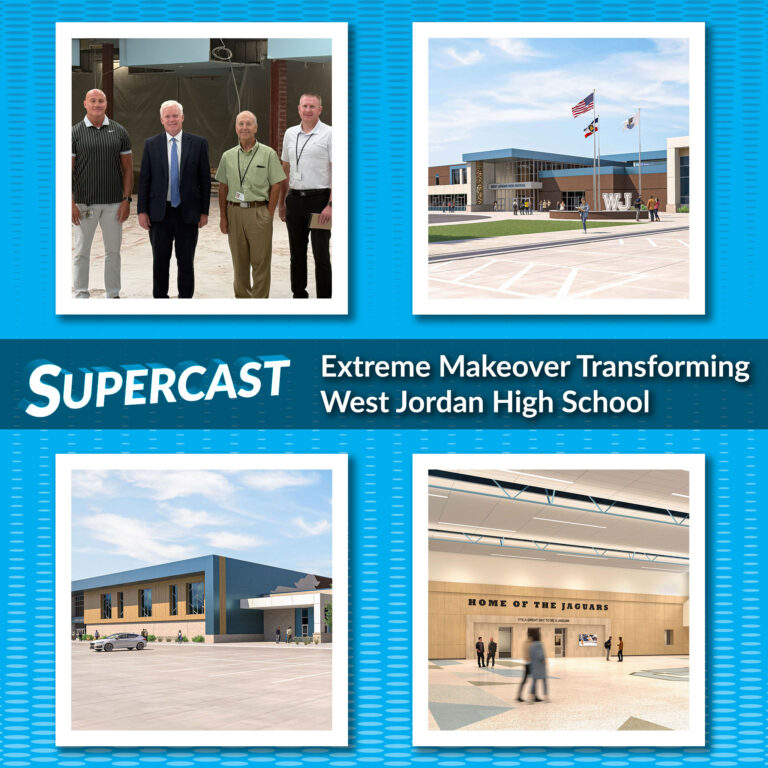
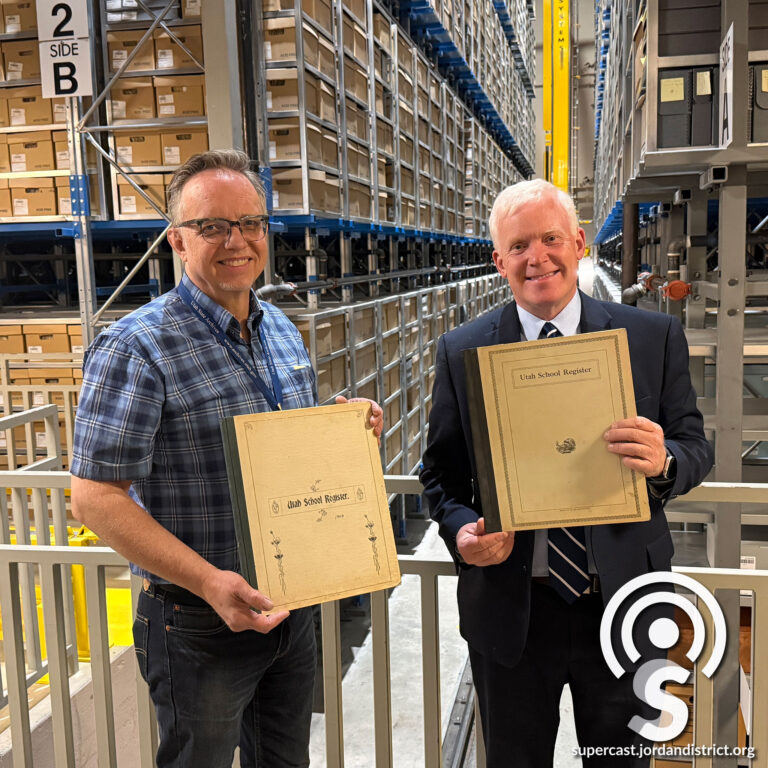
[MUSIC]