
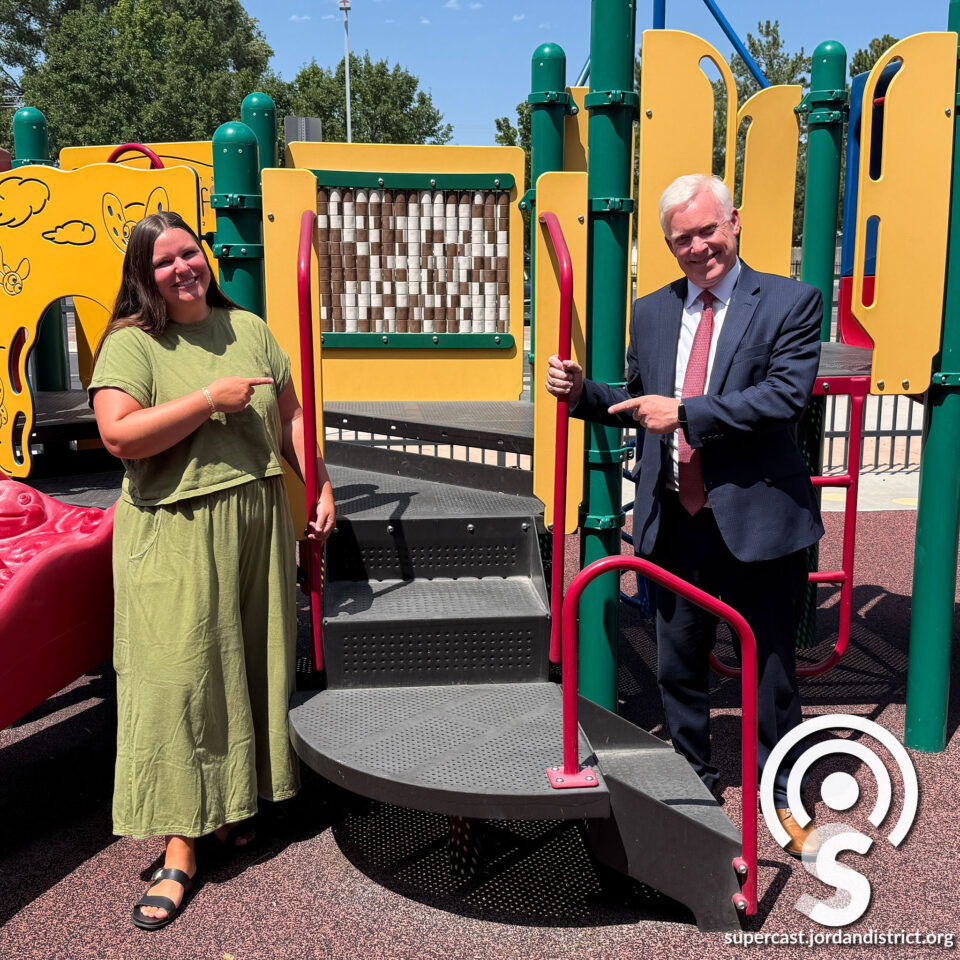
As we head into a new school year, a lot of students are probably thinking about more than just homework and new teachers. They wonder whether they'll make new friends, fit in, and make memories to last a lifetime.
On this episode of the Supercast, we talk to a school psychologist about the importance of making friends and how parents can access the tools and information they need to help their kids in the process. Find out how friendships can help build self-confidence, improve your child’s communication skills, and reduce feelings of loneliness and anxiety.
Audio Transcription
School Psychologist:
I think helping your child actively engage in opportunities to make friendships is important. School is a great setting to do that. There are also plenty of other things, right? Neighborhoods are a great thing. I did not grow up with a neighborhood of kids and so that is something I so desperately wanted.
Anthony Godfrey:
Hello and welcome to the Supercast. I'm your host, Superintendent Anthony Godfrey. As we head into a new school year, many students are thinking about more than just homework and new teachers. They're wondering whether they'll make new friends and fit in. On this episode of the Supercast, we talk with a school psychologist about how to make friends, keep friends, and how parents can access the tools and information they need to help their child in the process.
Anthony Godfrey:
We're talking today with Josie about how to make friends. Josie, introduce yourself and talk to us a little bit about your background in this area.
School Psychologist:
Okay, I work at Eastlake Elementary. I'm the school's psych. I've been there. This will be my sixth year, which is actually kind of crazy. Time flies, really, for sure. And so I teach the “Making and Keeping” class at Jordan Family Ed. So usually it's on Wednesday nights.
Anthony Godfrey:
Making and Keeping Friends class.
School Psychologist:
Yes, yes, that is the title actually. And we focus mostly on exactly that, making and keeping friends. So we start with really basic skills, like physically, like what your body should look like when you're trying to have a conversation or engage another person, right? So we call them body basics in that class. We talk about things like teasing and recognizing and expressing emotions. All of those kinds of things and how those play into making and keeping friends and why they matter.
Anthony Godfrey:
And I want to talk about all of those. First of all, for those who aren't aware, let's talk about the Jordan Family Ed Center and what those classes are like and how people can access them.
School Psychologist:
Yes, so the Jordan Family Ed Center is a free resource for anyone in our community, whether you attend Jordan District or not, which we actually get quite a few students who do not, which is wonderful. And students, there are classes for students, but there's also counseling for students. So you can come in. There's usually like an intake process if you are interested in counseling for your student or child. And then they kind of just like do an interview and figure out what the concerns are with that kind of thing. And then they set you up with someone who can match like your need. The counseling classes or the counseling sessions, I should say, are just in the evenings. So after school during the week. So that's the counseling side of it. And then the classes side of it, there are different topics for different grade levels. And then again, kind of like mix based on needs and targeted kind of topics that have been identified in our District. So there's things from like drugs, there's things about making and keeping friends, there's things about emotional regulation, there are parent seminars. So parents can come in and attend things if they have concerns or want to figure out how to help their child or like parenting classes almost. So we also have those. Again, evening times, they are in fall, winter, and spring. They run for six weeks in a session. And they are taught by our school psychs and our counselors in the District. So it kind of just depends on what the kind of need is for your student or your child. And then it's just a great free resource. And so it's one of those things that is really great for us as people in our buildings in our school to say we recognize that your child might need extra support. And so here's something we can do outside of school to also provide support in addition to what we do during school hours.
Anthony Godfrey:
And help them be more successful.
School Psychologist:
For sure.
Anthony Godfrey:
There are problems, the type that you describe, the the areas in which you provide support, where the problems may seem intractable. There's nothing I can really do to make this better. And making friends might be one of those. But there really are some things you can do to improve your ability to make and keep friends. For example, or solve other problems that might seem beyond reach. So let's talk about making and keeping as you called it. So how do students starting out a new school year approach making and keeping friends? Let's talk about some of the things that you mentioned earlier.
School Psychologist:
Okay. I think, I mean, there's an age consideration here, right? Younger kids and their friendships look considerably different from older kids and their relationships, right? When we're younger, I think we're focusing or what we're looking for from other kids are things like will you share with me and will you keep your hands to yourself? Do I feel safe, right? And then as we get older, I think there's more, there's a ton more nuance with it and what that really looks like is again the safety element, but also am I emotionally safe with you? Can I share those things with you? And then the playing obviously changes and morphs as we're older into more like that imaginative play and especially like I'm in elementary, the sixth graders, the play is conversational, right? A lot of that kind of thing. And so I think for making and keeping friends, it really just depends on the age of the kid and what they need to feel safe in that relationship and to build friendships.
Anthony Godfrey:
So then that's a clue toward what you need to do to be a friend, to be someone that everyone wants to be friends with and that is if you're younger, keeping sharing and keeping your hands and feet to yourself and later it's emotionally and through the conversations that you have, making sure the other person still feels safe.
School Psychologist:
Mm-hmm. Yeah, I think definitely. I think there's, there's a lot, kids sometimes feel a lot of pressure, right? Finding friends, especially when you're young, is very, can be very difficult because you might not know how or have the skills to relate to other people. You might feel uncomfortable, you might feel different, you might not feel like you fit in, and so I think helping students find themselves is really important and learning that I can be me and I can still have friends while being me, if that makes sense.
Anthony Godfrey:
So you get to be yourself and have friends, you don't have to try to say, "Okay, what do I have to mold myself into so that people will like me?"
School Psychologist:
Yes, yeah. I think there can sometimes be a little molding, right? If we're doing things the wrong way or inappropriately, right? A little learning curve there, maybe for some things, but generally people want people to be themselves and that's what they like about people.
Anthony Godfrey:
So you talked earlier about how body language can help you show that you want to be a friend. How does a student do that?
School Psychologist:
Yes, so our body basics, we call it FEVER.
Anthony Godfrey:
Body basics, FEVER.
School Psychologist:
Yes, it's an acronym for FEVER. Okay. So F stands for face the other person, right? We face our bodies specifically, usually like our shoulder and our hips towards the people that we're talking to.
Anthony Godfrey:
Okay.
School Psychologist:
That shows interest in that I am noticing that you are there, right? So F, face the other person. E stands for eye contact in our culture, right? Eye contact is a sign of respect when we're listening and talking to someone and so in our class at Jordan Family Ed, we do a little trick too for students who feel uncomfortable making eye contact because we recognize that happens, right? So our little trick for eye contact is looking at the center of their forehead that you're talking to. So face the other person, eye contact. V is appropriate voice, right? So recognizing that there is an appropriate way of using my words in different settings. So that could be...
Anthony Godfrey:
So shouting, "You are now my friend. It might not work."
School Psychologist:
Probably not. Might freak someone out a little bit. Yes, so that goes tone of voice and volume of voice. Those are some things to think about as well. The second E is facial expressions. So recognizing that in reading other people's, but also using my own facial expressions to communicate effectively, right? Because it doesn't make sense if I am sad about something and telling a sad story but my face is like happy and smiling, right? So a little bit of cohesion between those two things. And then the last one is R relax. We do talk about this one and it being sometimes kind of tricky, right? Because inside I might not feel relaxed but giving the illusion that I am relaxed through my body language, right? Relax shoulders, relax stance, all those things make people feel more comfortable. And so that's kind of how we... that's what we call our body basics is FEVER.
Anthony Godfrey:
I love that. It's very concrete, something to practice. It is hard to think about the FEVE and then do the R and be relaxed while you're thinking about all the other things. But it does make sense that you that you pull... if you can pull all of that together then it's inviting for people to talk with you and and to be your friend.
Anthony Godfrey:
Stay with us when we come back. More tips and tricks for making and keeping friends at school.
Male Voice:
Never miss an episode of the Supercast by liking and subscribing on your favorite podcasting platform. Find transcripts for this episode and others at supercast.jordandistrict.org.
Female Voice:
They're out on the job in the rain, sleet, snow, ice and in the sunshine. As Jordan School District students navigate their way to and from school every day, we are truly grateful for our city crossing guards. Always vigilant and looking out for students to ensure everyone's safety. Because they work so hard protecting our kids, let's give those crossing guards a hand. If you're driving near or around schools, slow down, pay attention, watch for students and staff and follow instructions from the school crossing guards. And know our cities are always looking to hire crossing guards. If you like kids and need some flexible hours, contact your local city and apply to be a crossing guard today. Together let's make this a safe and successful school year.
Anthony Godfrey:
What are some of the other things that you've talked about? Tell me about the teasing that you focus on.
School Psychologist:
With teasing, right, I think this one kind of ties into some of that recognizing and expressing emotions, right? Especially as students are older, the teasing element can sometimes change from like, "I'm teasing you to be mean to you," from "to I'm teasing you because it's funny," right? That I'm trying to like play with you.” And so I think there's a little bit of understanding and helping students understand and problem-solve through conversation with them, right? If they are feeling like they don't understand the teasing or "why is this happening to me?" or "why is somebody being mean to me?" Well, talk to me about that, right? Tell me what that really looks like. How are they teasing you? And then let's break that down. Are they really teasing you to be mean, right? Or are they teasing you to be mean? I mean, nice, right? There's this book, Julia Cook is a, I'm from Nebraska, so Boys Town is a big medical hospital in Nebraska. Julia Cook is an author and she writes and publishes under them and she has a book called Mean Tease versus Nice Tease or something like that. And that book kind of breaks down the difference between the two and helps students recognize the difference between the two to identify it and the appropriate way to react to it. So that kind of, I think, I think teasing is a lot of conversational breakdown. Just understanding what's behind it, why it's going on, and understanding the other person's perspective of it. Because if they're teasing to be mean, what are they really trying to communicate with me? And so that's where the recognizing and expressing feelings I think comes in.
Anthony Godfrey:
So teasing could mean more than just something mean. Suddenly I understand every time I've gone golfing with people my age, the teasing makes sense now. They wanted to be my friend. It's safe enough for us to make these jokes about each other because we know that we're friends.
School Psychologist:
Yeah, yeah. And I think that's part of it is that that student has to understand that this is a safe relationship for me to do that to you.
Anthony Godfrey:
Yeah.
School Psychologist:
You know what I mean?
Anthony Godfrey:
Right. And so that, yeah. That's it. I can understand as students get older and they're transitioning into that phase where teasing might have a positive tone to it or an undertone to it, that it's difficult for kids to make that transition and understand what's happening.
School Psychologist:
Definitely. And even when there is something that if it was a mean tease, right, understanding that mean tease and then responding in a way that's appropriate. Because I have to take that situation and understand it was meant to hurt my feelings. How do I respond to that in a way that is not going to make this situation worse or make, yeah, make anything worse, right?
Anthony Godfrey:
Reward their efforts to make me feel bad.
School Psychologist:
Right. So there is some of that too of learning how to appropriately provide feedback to someone when they've made you feel a certain way. And we call those like I statements or I feel statements are really good for things like that.
Anthony Godfrey:
As an elementary school psychologist, you must deal with a lot of the ups and downs of friendships that can turn from hour to hour.
School Psychologist:
Definitely. Definitely. I see that a lot. And I, yeah, honestly for the younger students who have some of those difficulties with making and keeping friends for me and my, and this looks different for all of our school psychs, right? Because the cool part about our job is that we can kind of do what we want to do and what we feel comfortable in how we want to deliver lessons, right? Or teach things. So like I really love using books for like our younger students because I can read them a book. They're engaged with the characters and it some in some ways doesn't feel like learning, right? It feels like I'm just reading a book with someone, but we're learning about things like teasing or we're learning about things like sharing or things like that. And the older ones, when they have more self-awareness or more able to express themselves, then we're shifting more into and in my experiences, more shifting into those, the conversational stuff, right? Tell me what's going on. Let's work through this together. How are we going to fix this together kind of thing?
Anthony Godfrey:
Tell me more about recognizing and expressing emotions. How do you use that as a tool to help kids make friends?
School Psychologist:
Yeah. So recognizing expressing emotions, how we use that is more, is that's kind of like the facial expressions in the body language, right? How do I read that to understand what someone might be feeling without them telling me? Because if someone is, has their arms crossed and is looking down, they're probably not receptive to having a conversation with me maybe right now, right? If they're giving off that they're upset, right? But if they are more open with their body language and they're facing me and they're making eye contact with me, that's telling me that they're more open to a conversation with me right now. So those things play into the kind of I feel or the I messages that we talked about. Are you familiar with I messages though?
Anthony Godfrey:
Let's talk about I messages.
School Psychologist:
Okay. An I message we say has three parts. So the first one is I feel. So you say I feel and you use a feeling words, right? So I feel angry when you push me. And the last part is and I want. So I feel angry when you push me and I want you to keep your hands to yourself. So an I message or an I statement that kind of have different names really clearly communicates to someone what you're feeling, why you feel that way and what you need to change, right? Or what needs to change in the situation. Nowhere in there is it saying you're mean, you're wrong, how dare you, all these things, right? It's about me. It's my internal feeling about what happened and what I am asking for to be different. And so I think giving kids tools like that, very simple, very straightforward, right? Three parts, but it gives them a way to clearly and effectively communicate those feelings when they need to in a situation because it's very easy when things get heated or when I'm sad or when I'm dysregulated, really in any way. It's really hard for anyone, even adults to communicate their feelings effectively, but giving that tool, the structure, helps them to kind of do so in a very laid out way.
Anthony Godfrey:
So it helps you process how you feel and it helps you express that in a meaningful, effective and non-accusatory way so that you can repair a relationship or avoid being mistreated.
School Psychologist:
Yes, yeah, I really like that. I think the non-accusatory is a big part of it because it's very easy when we feel those big emotions to blame, right? And to sometimes, right, for our little ones who are still learning to yell a name back or to hit even, right? And so learning to replace those things with things that are a reflection about me stating how I feel makes it easier.
Anthony Godfrey:
And if the friendly teasing turns into hurtful teasing, this would be a way to clarify and say, "I feel sad when you make fun of whatever."
School Psychologist:
Yes. "
Anthony Godfrey:
And I want you to stop making fun of me for wearing my suit everywhere I go."
School Psychologist:
Yes, perfect example of when to use that.
Anthony Godfrey:
Great.
School Psychologist:
Yes.
Anthony Godfrey:
Good, because the first example I had was, "I feel happy when I eat a hot fudge sundae and I want another one." But I think that was missing the point.
School Psychologist:
No, I don't think it is though because I think, and that's one of the things we talk about that night of that class is that it doesn't always have to be the negative emotions that we clearly communicate with. It can also be the things that I like that you're doing or the things that make me happy or the things that I'm really enjoying or make me feel silly, whatever. Those are okay things and good things to communicate too. It shouldn't just be the hard stuff.
Anthony Godfrey:
And it's a good way for you to process how you're feeling even if you're not sharing that with someone else. I think, "Okay, what's happening here with me?" Good. What advice do you have for parents who are helping their children navigate friendships or make friendships, maintain them? You know, they may be moving up to middle school or to a new school or to high school. What advice do you have for parents to help their children through that?
School Psychologist:
Yeah, I think, well, there's a lot of ways, right? I think helping your child actively engage in opportunities to make friendships is important. School is a great setting to do that. There are also plenty of other things, right? Neighborhoods are a great thing. I did not grow up with a neighborhood of kids, and so that is something I so desperately wanted when I got older. And so I think that neighborhood kids are a really cool thing that our communities, most of our communities have. And then even like clubs, anything that you can sign up for, there's all kinds of clubs or activities. Great way to meet people, not only the ones that are in your immediate community, but also the ones who are a little bit further away. Those are great ways. Other things, other tips, I think giving your student or your child the freedom to make the mistakes while making friendships because we're all going to make those mistakes and there's going to be things that happen along the way that are hard for us to see our child or our student go through, right? And so it's very easy in those moments to say, "Well, this happened to me and you should do this." And so giving them some of that more time to explore how they think they can get through this and helping them along the way. Almost like and not necessarily as like a do this, but like a what do you think? Let's do it together kind of thing. I think yeah, some of that freedom to make those mistakes and figure out really again who they are and what matters to them because also part of your friendships as you get older is what does matter to you and a friend. And we all individually I think have to figure that out. So.
Anthony Godfrey:
Well, I feel like at the end of this interview we're friends. Am I right?
School Psychologist:
I would say so.
Anthony Godfrey:
Absolutely. Well, thank you very much for helping us talk about how to make friends and keep them and hopefully everyone listening has lots of friends and is making even more in the coming year.
School Psychologist:
Awesome. Thank you so much.
Anthony Godfrey:
Thanks for joining us on another episode of the Supercast. Remember, “Education is the most important thing you will do today!” We'll see you out there.