They work tirelessly to give students every opportunity to find success in and outside of the classroom.
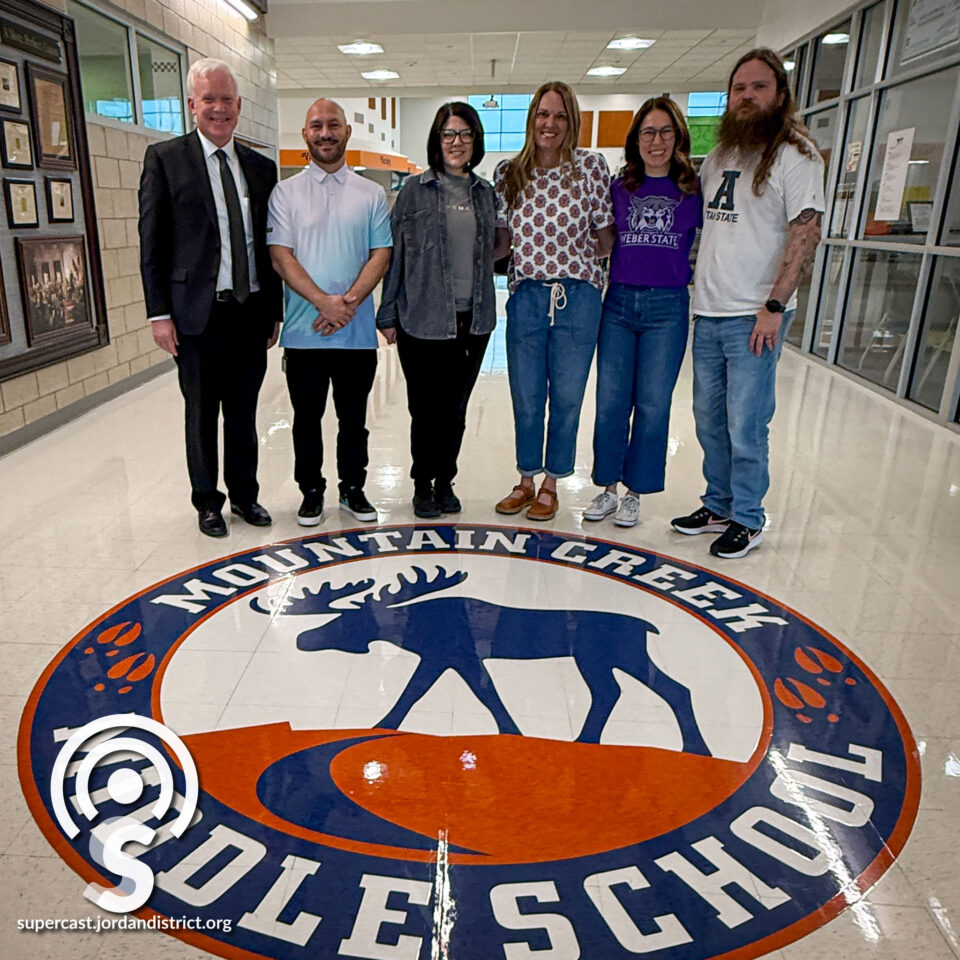
On this episode of the Supercast, meet the amazing counseling team at Mountain Creek Middle School, recently recognized as an American School Counselor Model Program. It is a prestigious national recognition that is not easy to come by and only given to the best of the best in comprehensive school counseling programs around the country.
Audio Transcription
Counselor:
We know what we do as a program is awesome, but how do we show that it's awesome? And so in order to get a RAM designation you have to show that through data.
Counselor:
41% of those kids that failed in semester one or quarter three, almost half of those kids made up that credit, so they weren't going into the high school as much credit efficiency.
Anthony Godfrey:
Hello and welcome to the Supercast. I'm your host, Superintendent Anthony Godfrey. They work tirelessly to give students every opportunity to find success in and outside of the classroom. On this episode of the Supercast, meet the amazing counseling team at Mountain Creek Middle School, recently recognized as an American School Counselor Model Program. It is a prestigious national recognition that is not easy to come by and only given to the best of the best in comprehensive school counseling programs across the country.
Anthony Godfrey:
We are at Mountain Creek Middle School today to talk about a really cool award, or a couple of really cool awards, that this dynamite team has achieved. But first let's just get to know each of them. Please introduce yourselves and talk to me about your career a little bit.
Josh Flores:
So hi, I'm Josh Flores. I'm the Lead Counselor here at Mountain Creek Middle School. This is my seventh year here. Me and David Parker over there started here when it opened, which was a thrill. But this is my thirteenth year as a school counselor.
Melissa Huffner:
Hi, I'm Melissa Huffner. This is my second year on the team. I was at a different middle school in the District for about eight years and have loved working at both schools and just really loved working with this team here at Mountain Creek.
Wendy Checketts:
I'm Wendy Checketts, and this is my first year as a counselor. I've been at Mountain Creek. I think this is my fourth year now. I was working with some students that were struggling academically and with this team and decided, "I want to be a counselor with these guys." So I went back to school and joined them.
Anthony Godfrey:
I think that's a pretty big deal that the team has a magnetic draw that even pulled you, like, "I've got to be part of this team." That's pretty exciting.
Amy Morris:
I'm Amy Morris. This is my third year on the team and third year as a school counselor. I actually used to run the New Student Orientation at Utah State University, and loved working with the students, and wanted to help them on the other side and help get them better prepared for college. I did my internship with this team and wanted to stay and be a part of the school.
Anthony Godfrey:
They pulled you into their orbit, and now, who knows, I may be a counselor by the time this is done. I may switch jobs.
David Parker:
I'm David Parker. I've been here since 2019 as well. And before that, I was just an intern in Canyons District for one year. So my first year was opening a brand new school in a pandemic.
Anthony Godfrey:
Well, that will put everything afterward into perspective for you. That changes the way you view the world. So, well, we're very glad that you traveled across the valley to be here at Mountain Creek. Now, tell us about this award, the ASCA RAMP Award. How did that come to be and what does it represent? This is the first school in Jordan School District to achieve that award. And I know that it's been a process that's taken a few years for us to get there, and I'm really excited to hear more about that.
Counselor:
I will shout out David Parker from the start. So, yeah, kind of something that was just going around in our minds. As we were, like our first year, we had to do a full review, which every school counseling department has to do. And really, we were just pulling from the national model the best we could. It was just three of us. And as David said earlier, it was his first year. It was my first year as a working in a public school and our lead counselor at the time, it was her first year as lead counselor. So we were just kind of doing what we could, trying to figure it out. As David said, the pandemic also happened, but we had like a bit of a framework. And so through the next few years, it had came up. David, if you don't know him well enough, when he gets into something, he gets very into something in pretty much only a good way.
Anthony Godfrey:
I've actually known that for a very long time about David. Yes. But go on.
Counselor:
Yes. And so when it got in his mind of like, “let's do it,” then he stuck with it. There was actually a time, I want to say last year, where we talked some more. I had said, “Hey, David, if this is like too much, if we're really not feeling it, like we're okay not to do it.” And he was like, “Well, you know me, I get into something, I got to finish it.” So he kept going. And like we all as a team have accomplished it. But I always want to give a shout out to David for really like the application part of it and the getting all the work together. He was about 90 percent of that. Then also a shout out to Melisa Christiansen, who's our District specialist. She walked David through a lot of it because she used to be a reviewer through, for RAMP. So yeah, a team effort in so many ways.
Anthony Godfrey:
So tell us about ASCA, tell us about RAMP, and what all of that means.
Counselor:
Okay. So yeah, good question. So RAMP stands for Recognized ASCA Model Program. So within that is another acronym, which is ASCA, and that's the American School Counselors Association. So essentially what that means is that we follow the national model of how to have a school counseling program. And we follow that as best as possible, which is why we got that recognition. A lot of that has to do with data. We know what we do as a program is awesome, but how do we show that it's awesome? And so in order to get a RAMP designation, you have to show that through data. So that's where a lot of that work that David was putting in, gathering all of that, that's where it shows that.
Anthony Godfrey:
So tell me some of the things that you do as a team that qualified you for this award and also aligned your work with the national standards.
Counselor:
They want it to be a very specific smart goal. And so you do come up with like, even though you're going to do it in other ways, there is like one guiding project, right? And so we came up with that goal and collected data on the specific cohort and kind of tracked them for a year and made sure that they were adhering to that. So one of that goal was we wanted to, we used a lot of data, SOAR reports, Panorama, things like that, and found that our ML, our multilingual students, more specifically the Latino students, were failing at a higher rate than any other student. So for ninth grade, they want three points of data. So that's why it's so specific for them. But our goal is to decrease their, that population's F's by 10% between semester one and semester two. And then we had some, we hired a Spanish-speaking tracker who is awesome, and then got stolen by the District.
Anthony Godfrey:
We do that sometimes. Sorry about that.
Counselor:
We're happy that we can share her, but we will miss her. Yeah, and just like different interventions that we did all year for that.
Counselor:
I'll just shout out David. He went ahead and got his ML endorsement and sits on our ML committee as well. So just really supportive of our ML kids.
Counselor:
I am riding their coattails because as I said, it was my first year with them. But they hired me to work with the students, the ninth graders that were struggling academically. So they also created a position where someone is working with these students specifically to help them get their grades up.
Anthony Godfrey:
That's been a focus as a District. In fact, it's one of the metrics that I've been asked to report to the Board on every December. Because when students, statistically, when students in ninth grade have a good start credit-wise and have that confidence academically, then when they go on to the high school, their chances of being successful and graduating are much higher. So I'm really excited to hear that there is a very specific position and you in particular working with those students to be sure they have a great launch before they head to the high school. As I understand it, there's a focus on data around student interactions. And like you said, it's not just a quick check-in; it's those deeper connections. Talk to me about the role of just tracking student interactions as part of this.
Counselor:
One thing I have loved about our team, for one, I mean, we connect really well. But I think a big focus, which is a focus for all school counselors, like shout out to Stacee Worthen, whenever she meets with us, she says, “Hey, if you're meeting with kids, you're doing your job.” And so a big focus for us is seeing our kids, them seeing our face. So, you know, from the start of the year with our seventh grade PCCRs, we're really just meeting with every seventh grader within the first couple of weeks to then like our Belonging Assembly, where we are hoping to just build better school culture. But we as student services, really, student services, including our school psychologist, our school therapist, our registrar, and our assistant there. And so we've got a whole team. We just do a whole bunch of things. We're in the cafeteria as often as we can doing activities. Right now it's College Week, so we've been in the cafeteria doing little college things. Getting our faces printed on posters and putting them in the hallways, we're really big on student connection. And so kind of just tracking that and seeing, you know, what those connections can do and how they can help and build from there.
Anthony Godfrey:
Well, it makes a huge impact. And as a District, we have really focused on bolstering our counselor ranks, adding counselors at middle and high school, adding a counselor to every elementary. And it pays huge dividends for us to have that support and connection for students. Now, ASCA RAMP, as you said, focuses on data. Let's talk about some of the numbers. Let's talk about some of the things you focused on in order to qualify for this award.
Counselor:
Part of the ASCA model is that we're with students at least 80 percent of our time. I think as a team, we do a really great job of meeting with students individually, either if they're asking to meet with us academically or if they're having a hard day, but also even something as simple as celebrating their birthdays or celebrating a big celebration they have at school. We have small groups where we meet with students. We're in the classrooms teaching a lot, and then our assemblies. So we're trying to meet the needs of being in front of our students on all sorts of levels. By getting RAMP, it gives us credibility with even the community showing, hey, we're our focus is to be with your students.
Counselor:
Another unique thing about our school is that we have a couple groups. One is called “Say Something” and we call these students our mental health minions. They get training on how to be mental health supporters in our school. We also have another group called “Choose Kind.” They are our kindness ambassadors, and they help with new students that come to our school. I think our students, our school also does a really good job with a program called “You Science.” Wendy has been really integral in getting that program going.
Counselor:
We're lucky that our teachers are on board with that. And so we get high numbers of participation. And it's interesting to have the students sit down and especially the parents during PCCRs to bring that out that shows areas that they might excel in, areas they have interest in and then bring them together and look at possible careers for the future.
Counselor:
So with RAMP, it's all about alignment, which you had mentioned earlier. Our goal had aligned with our school improvement plan as well, which is again tied into some of the District’s. So what RAMP does is it really shows through data and documentation that we have alignment with the school, with our district, with our state and nationwide. And so it kind of it goes from the bottom up in that. And so I know that so many schools in the state and in the District do RAMP, could have RAMP, but it's a very detail-oriented application and program. And so I know so many people out there are doing the work. It's just putting it in that form that they want is kind of the trick. But for us, we are really happy you can apply with, and the goal doesn't have to be met as long as you're showing the data because, you know, we're all in an experiment. We try different things, but we actually were lucky enough. Our cohort had about 13 students in that group, and we were trying to decrease F's from semester one to semester two so that they would get better. And we succeeded. They got 29.7% less F's. But what made us really, really excited is that they failed at a less rate. But additionally, through some of the interventions we offered and some of the things Wendy was working on is 41% of those kids that failed in semester one or quarter three, almost half of those kids made up that credit, so they weren't going into the high school as much credit efficiency. So we're really excited about that. Of our population, our students were about, our ML students, Latino specifically, was our highest percentage of a minority student. And they accounted for about 41% of the F's in our grade. So we're really excited that they made that up.
Anthony Godfrey:
Like you were saying, it's not just like a quick check-in. This is very intentional, purposeful interaction with students, support with a real, with very clear goals and a clear plan that is having a huge impact. Stay with us when we come back more with the team at Mountain Creek Middle School.
Male Voice:
Never miss an episode of The Supercast by liking and subscribing on your favorite podcasting platform. Find transcripts for this episode and others at supercast.jordandistrict.org.
Female Voice:
In Jordan School District, we like to support students in and outside the classroom along with their families. That's where the Jordan Family Education Center comes in, offering support services and a wide variety of classes for students and their families free of charge. You can take a class called "Bluesbusters" for children feeling sad or worried. "Just Breathe" is a class that helps students reduce stress. Or how about a class that supports parents in helping their children make and keep good friends. There are also support groups and free counseling, all provided by Jordan School District school psychologists and counselors. To find out how you can benefit from free family support services offered by the Jordan Family Education Center, call 801-565-7442 or visit guidance.jordandistrict.org.
Anthony Godfrey:
I also want to talk about David's award in the state. Now every time you guys have said his name, he has been visibly uncomfortable at even your recognition. So I can only imagine how a state-level recognition felt for you, David. But congratulations on this award and it couldn't have gone to a nicer guy or a more accomplished counselor. So thank you for everything that you're doing. It's really impressive. Tell me a little bit about this award. Why don't you tell me about the award? David's not going to talk about the award.
Counselor:
Yes. Yes. David, super humble guy. I mean, if you, as far as like working through our department, like if you need information, David's got it. If you need things organized in a certain way, David's got it. If you need to pull some data from somewhere, David's got it. Like he's such a go-to guy. So as far as the Counselor of the Year award for the whole state, like if you talk to anyone that's worked with him, it makes sense. It totally makes sense. But I think one reason David's loved so much is he comes through so humble. If you haven't seen him, you probably have if you don't think you have, but you probably have. He's got long hair. He's got a big beard. He's got some tattoos. But he's like he's so much more than that. And so getting to know him, you learn so much more in how much he cares about his kids, how much he cares about his coworkers, and counseling as a process, as a program. So like he's so deserving of it. He loves the recognition, but not the spotlight, if that's a good explanation for it.
Counselor:
This is just a small example of the power that David brings to this team. We're doing some presentations for our seventh graders today. Earlier in the week, I showed up and he had redone our entire PowerPoint presentation. He had also made a video or an audio version of that presentation for students that are going to be absent today so that they can listen at home. He's also a counselor that reaches out to his graduating seniors and sends them postcards and just recognizes their huge accomplishment. So he follows his students even into high school.
Counselor:
I was lucky enough to have David as my mentor my first year as a counselor on this team. So it just showed how much he cares about each of us individually, that as we can support each other, we can be that much stronger helping students. Just going in as far as daily check-ins or just randomly being like, "You're doing a great job." So there was a lot of encouragement, but then always being patiently willing to go through a scenario with me, so I made sure I was helping a new student or a student with the best possible solution.
Counselor:
He's my mentor this year, and he's part of the reason I went back to school and got my master's. He encouraged me when I said, "I really think I want to do this job." It was David that said, "Do it. You can do this." He wrote a letter of recommendation for me to go back to graduate school. He checks in often, makes sure that I'm doing okay, makes sure, you know, if there's a difficult situation with a student, he's there with me, walking me through it, helping me through these first-time situations. He's an excellent mentor.
Anthony Godfrey:
Well, David, this is a huge impact, not just directly on students, but on the people who you work with that then work with students. So your impact is just, it's huge. I can't thank you enough for the work that you do. Tell me about this team. What's it like to be on this team?
Counselor:
Well, they all say it's a skill. It kind of sounds controlling and creepy. But we, I think our team is very, like connection is what drives us a lot in our jobs and our team. And being kind of unified and aligned has been, we've gotten really lucky with that from day one. And so we seem to find good people that want to be here and help people. They're giving all the flowers, which I don't know who you guys are talking about. That other guy sucks. That hairy guy's a jerk. But no, like we, you know, Amy is the Middle School Counselor of the Year for our District. Josh had the Middle School Counselor of the Year before that. And so we've, it's a team effort that leads to some of the individual successes and what struggles with, yeah, I appreciate the recognition, but maybe not the big parade type thing like Josh had said. But if it brings an opportunity to kind of advocate for our program and the good people and, you know, public education and aligning, then that's, I don't like it, but I'll do it.
Anthony Godfrey:
I'm going to emphasize achievement over recognition. Great achievements from this team, from each of you individually and from the group. It's just really rewarding for me, and talk about progress from middle school. I was the assistant principal at David's high school. Yes, it's been a while. He actually has emailed me kind words as well, not surprisingly. So, thank you for your dedication for everything that you do and you guys are an incredible team. I feel better just talking with you guys this morning. I think I'm going to have a much better day because this is the way I started it.
Counselors:
Thank you. Thank you for the time and your time.
Anthony Godfrey:
Thanks for joining us on another episode of the Supercast. Remember, “Education is the most important thing you'll do today!” We'll see you out there.